Behavior & Training
Why Your Cat Meows at Night and How to Get Sleep
Cat meowing at night and keeping you awake? Learn the real reasons and practical fixes to get both of you sleeping better.
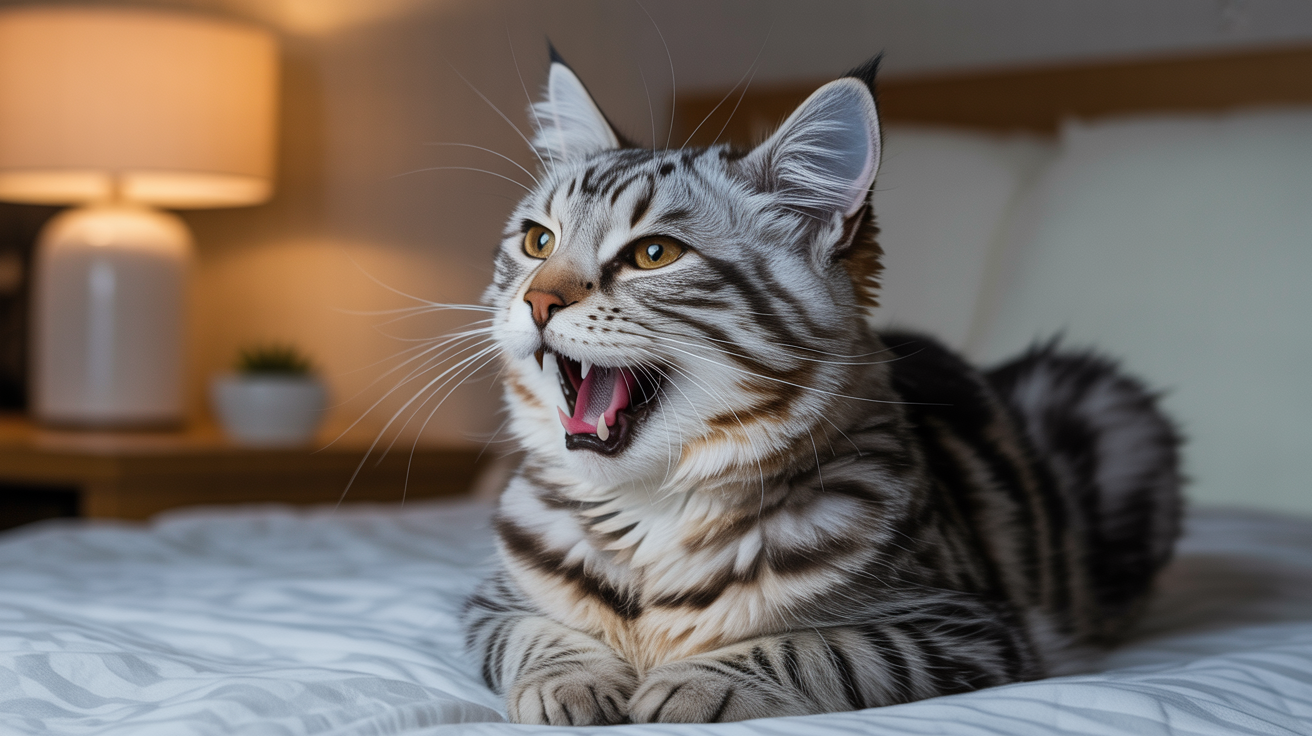
Cats are not nocturnal, they're crepuscular, meaning they're most active at dawn and dusk. But at 3 a.m., when your cat is yowling outside your door, that distinction feels academic. Here's what's actually driving the nighttime noise, and what you can do about it tonight (and this week).
The most common reasons cats meow at night
Not all nighttime meowing means the same thing. The cause shapes the fix, so it's worth thinking through which category your cat falls into.
Hunger and the hunting instinct
Cats in the wild hunt multiple small meals across a 24-hour period. A single large dinner at 6 p.m. leaves them genuinely hungry by midnight. Their internal schedule says "hunt," and their version of hunting is telling you about it loudly.
An automatic feeder set to dispense a small meal at 10 or 11 p.m. (or even 2 a.m.) can break this cycle within a week for most cats. You don't need to wake up, the feeder handles it.
Attention and learned behavior
Cats are quick to figure out that meowing gets results. If you've ever stumbled out of bed to feed or pet your cat just to stop the noise, congratulations: you've trained a night-meowing cat. This is the most common pattern in younger cats, and it's entirely fixable, though it takes consistency.
Medical causes
This is the category that actually warrants a vet call. Sudden onset of nighttime meowing in a cat that was previously quiet, especially in cats over 10 years old, can signal:
- Hyperthyroidism, which causes restlessness, increased appetite, and vocalization
- Cognitive dysfunction syndrome (cat dementia), where disorientation peaks at night
- Pain or discomfort from arthritis, dental disease, or other conditions
- Hypertension, often secondary to kidney disease or hyperthyroidism
If your cat is older and the meowing started recently, book a vet appointment before trying behavioral fixes. A blood panel and blood pressure check can rule out the big ones quickly.
Heat (intact females) and territorial calls
An unspayed female in heat produces a distinctive, persistent yowl. It's hard to mistake once you've heard it. Intact males also vocalize when they detect a female in heat outdoors. Spaying or neutering resolves this immediately and permanently. If your cat isn't altered, that's the first thing to address.
Boredom and understimulation
An indoor cat with nothing to do during the hours you're asleep will find something to do. Meowing at your door is one option; scratching furniture is another. Cats need outlets for predatory behavior, and if the day didn't provide any, the night will.
A practical plan for stopping nighttime meowing
Before trying anything, spend two or three nights noticing the pattern. What time does it start? What triggers it? What makes it stop? That information tells you which fix to start with.
| Cause | First fix | Backup fix |
|---|---|---|
| Hunger | Automatic feeder at late night | Puzzle feeder before bed |
| Learned attention-seeking | Stop responding entirely | Close the bedroom door |
| Boredom | 15-min play session before bed | Window perch + bird feeder outside |
| Heat cycles | Spay/neuter | Vet consult in the meantime |
| Medical (new onset, older cat) | Vet appointment | None, address the cause |
| Cognitive dysfunction | Vet consult | Night light, consistent routine |
The interactive play session before bed
This is the single most effective behavioral fix and it works across almost every non-medical cause. A 10 to 15 minute wand-toy or laser-pointer session about an hour before you want to sleep mimics the hunt-catch-eat-sleep sequence cats follow in the wild. After a real play session (one that gets them panting slightly), feed a small meal. Most cats will then sleep for four to six hours straight.
Cats that don't play much need some retraining to engage. Start with shorter sessions and experiment with toy types, some cats respond to feather wands, others prefer crinkle balls or mice. If your cat shows little interest in play, that itself can be a sign of understimulation or, in older cats, pain. Worth noting at your next vet visit.
Closing the bedroom door (and sticking with it)
If attention-seeking is the pattern, closing the door is the most direct fix. Yes, the meowing will get worse for two or three nights before it gets better. This is called an extinction burst and it's completely normal. The moment you give in and open the door, you reset the clock. Every. Single. Time.
Put a white noise machine outside the door, wear earplugs for a few nights, or move the cat to a room on the other side of the house at night. Harsh? A little. But it's the kindest long-term outcome for both of you. Cats that can redirect rough energy into appropriate play before bed are much easier to ignore at 2 a.m.
Environmental enrichment during the day
A cat that's mentally tired sleeps better at night. Puzzle feeders, rotating toys, window perches, and a bird feeder mounted outside a window all help. If you have a single indoor cat, a second cat is often transformative for nighttime behavior (though introducing cats has its own process). You want your cat burning energy during the day so the 3 a.m. zoomies don't land on you.
When to call the vet
Call sooner rather than later if:
- The meowing started suddenly in a cat that's been quiet for years
- Your cat is 10 or older
- The meowing is accompanied by weight loss, increased thirst, or changes in litter box use (a sudden litter box problem alongside nighttime vocalization is a real red flag for kidney disease or diabetes)
- The cat seems confused, disoriented, or doesn't recognize you during the episodes
- You hear pain sounds, a short, sharp cry rather than a sustained meow
These combinations suggest something medical rather than behavioral, and behavioral fixes won't help if the root cause is physical.
How long does it take to fix?
Behavioral causes usually improve within one to two weeks of consistent management. "Consistent" is doing the work: same playtime, same feeding schedule, same door policy every night. The cats that take longest are the ones whose owners are inconsistent, which is completely understandable at 3 a.m., but it extends the timeline.
Medical causes resolve when the underlying condition is treated. Hyperthyroid cats often calm down significantly within weeks of starting medication. Cognitive dysfunction is progressive, but environmental management (nightlights, familiar routines, keeping furniture in place so they can navigate) helps.
Frequently asked questions
My cat only meows at night, not during the day. Is that normal?
It's common, especially in cats that are bored or under-stimulated during daylight hours. It can also relate to the crepuscular rhythm, some cats are simply most vocal around dawn and dusk. If it started suddenly in an older cat, get a vet check.
Should I let my cat sleep in my bed to stop the meowing?
It depends on whether the meowing stops once they're in bed with you, or continues. Some cats settle immediately and everyone gets better sleep, that's fine if you're okay with it. Others will wake you up anyway through movement or additional meowing. Try it and see. If it works, it's not a problem.
Will getting a second cat help?
Often yes, especially for young, energetic cats. A companion can absorb a lot of the nighttime energy that's currently directed at you. The caveat is that introducing a second cat requires a proper slow-introduction process. Rushing it creates a different set of problems.
My cat meows right outside my door until I open it. How do I stop this?
Don't open the door. Seriously, even once, even at 4 a.m., even when it's been 20 minutes. Every time you open it, you confirm that the behavior works. Use earplugs, a white noise machine, or a fan for a few rough nights. Most cats give up within three to five nights if the door never opens.
Could my cat be meowing because the litter box is dirty?
Yes, absolutely. Some cats are vocal about a soiled box and will announce it to the household. If the timing lines up with when your cat last used the box, scoop more frequently or add a second box. A cat that suddenly increases nighttime vocalization while also having accidents outside the box needs a vet visit, not just a cleaner litter box.
This article is general guidance for cat owners, not veterinary advice. If you're concerned about your cat's health or behavior, a vet who can examine your cat is always the right call.