Behavior & Training
Why Cats Scratch and How to Redirect It to a Post
Cats scratch for real biological reasons. Here's how to stop cat scratching furniture by giving them a better outlet they'll actually use.
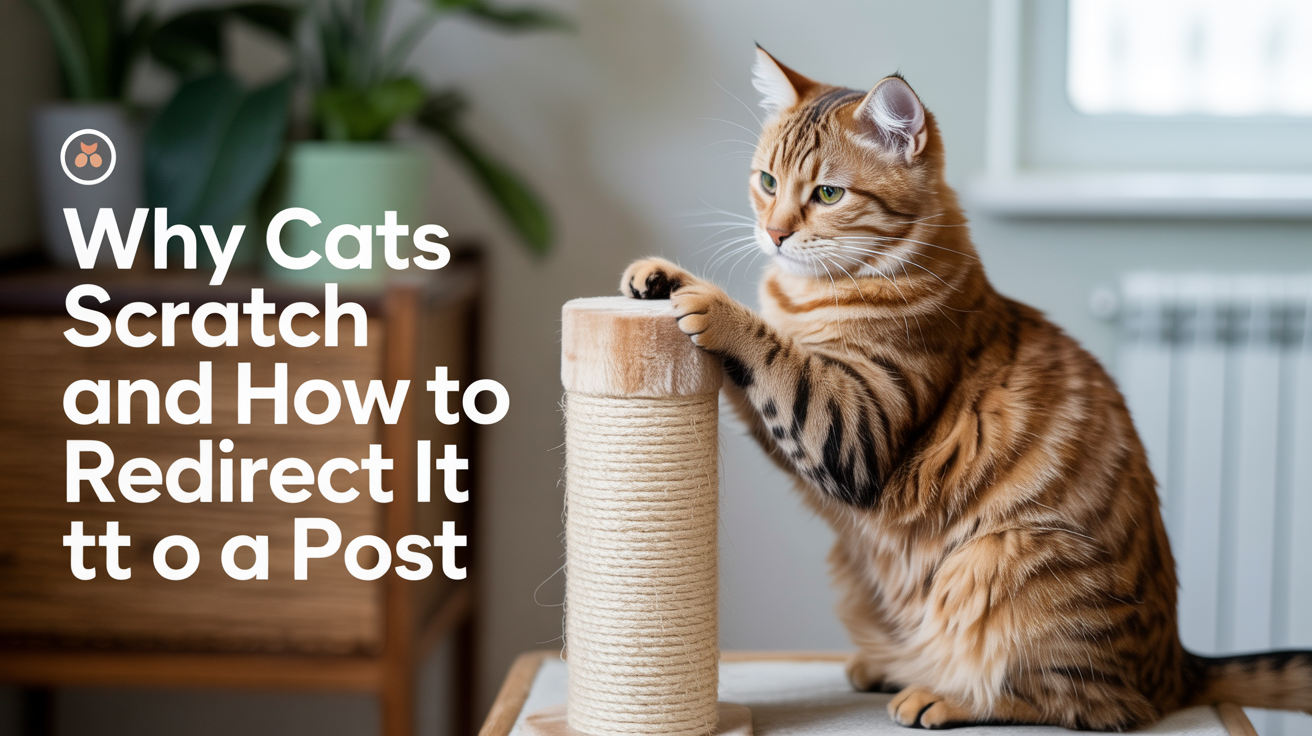
Scratching is one of the most common reasons people end up frustrated with their cats, and one of the most misunderstood. Your cat isn't being spiteful. She's doing something her body genuinely needs to do, and the couch just happens to be in the right spot. Once you understand what's driving the behavior, redirecting it becomes a lot more straightforward.
At a Glance
- Scratching stretches muscles, sheds the dead outer claw layer, and leaves a scent mark, it's maintenance and communication, not misbehavior.
- The ASPCA recommends redirecting rather than suppressing the behavior: "teach her where and what to scratch."
- A usable post needs three things at once: at least 90 cm (36 inches) tall for a full stretch, rock-stable, and covered in sisal or another texture your cat actually likes.
- Place the post right at the spot your cat already scratches, not in a back room, then move it gradually once the habit sticks.
- Never punish scratching on furniture, it just teaches your cat to scratch when you're not watching.
- Declawing is not a humane alternative; it's an amputation most veterinary associations oppose and many places have banned outright.
Why cats scratch in the first place
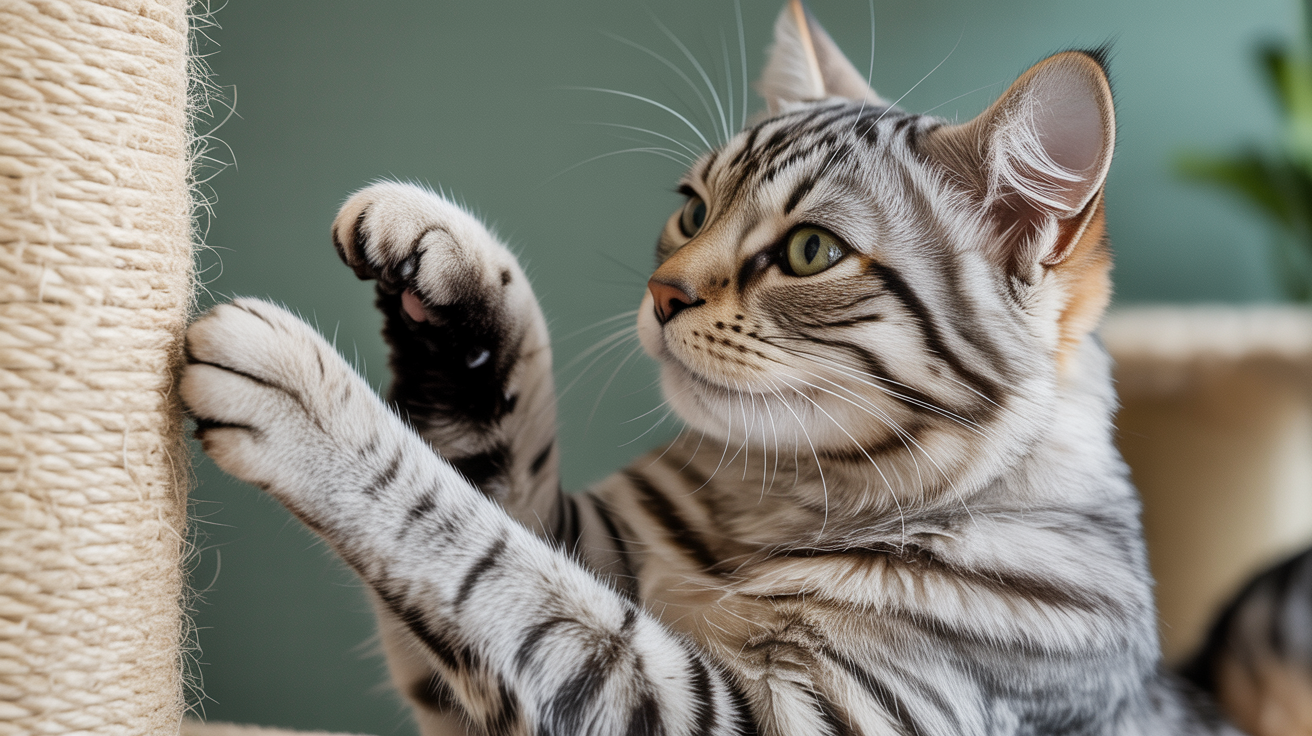
Scratching does several things at once. It stretches the muscles from shoulder to claw, which feels good the same way a long stretch feels good to you first thing in the morning. It removes the dead outer sheath from the claws, revealing sharper material underneath. And it leaves both a visual mark and a scent signal from glands in the paws.
That last part matters more than most people realize. Scratching is communication. The ASPCA notes that cats scratch "while stretching," "during play," and "to mark territory or as a threatening signal [to] other cats," which covers most of the scratching you'll see in an average home. Cats often scratch near the front door, by their sleeping spots, or at the edges of their territory. They're posting notices. A single cat living alone still does this, partly out of instinct and partly because it's just satisfying.
The scratching isn't going to stop. That's the baseline. The goal is to give your cat a surface she prefers over your furniture.
What makes a scratching post actually usable
Most scratching posts that come with cat trees are too short, too wobbly, or covered in looped carpet that snags instead of shreds. Cats abandon them fast, then go back to the couch. Here's what to look for:
- Height: The post needs to be tall enough for your cat to fully extend. For most adult cats, that's at least 90 cm (around 36 inches). If she can't get a full stretch, she won't use it.
- Stability: It cannot wobble. A post that tips once gets avoided permanently. Heavy base, or bolt it to the wall.
- Material: Sisal rope or sisal fabric is the gold standard. Cats like to drag their claws and feel resistance. Carpet is second-best, and some cats prefer raw wood or cardboard.
- Orientation: Most posts are vertical, which works well. But some cats prefer horizontal scratching. If yours always claws the carpet or the base of the sofa, try a flat corrugated cardboard scratcher on the floor.
- Location: Put it where the scratching is already happening, not in a back room where you'd prefer it to live. Placement near a window or a favorite napping spot helps.
A comparison of common scratcher types:
| Type | Best for | Downside | Rough cost |
|---|---|---|---|
| Sisal rope post (vertical) | Full-body stretching, claw maintenance | Needs to be very tall and stable | $25 to $60 |
| Sisal fabric panel (wall-mounted) | Space-saving, very stable | Less satisfying for cats who like to lean in | $15 to $35 |
| Corrugated cardboard flat | Cats that scratch low or horizontally | Wears out fast, leaves cardboard dust | $10 to $20 |
| Raw wood log or plank | Cats that scratch door frames or baseboards | Harder to find, takes up space | $20 to $50 |
How to train a cat to use a scratching post
"Train" here really means "make the post more appealing than the furniture, then reward the choice." It's less about commands and more about environmental setup and patience.
Step 1: Place the post right next to the problem spot. If your cat is destroying the corner of the sofa, put the post directly in front of that corner. Yes, this is inconvenient. Do it anyway. Once she's consistently using the post, you can move it a few inches every few days toward a better location, usually over the course of two to three weeks.
Step 2: Make the post irresistible. Rub a little dried catnip into the sisal (not spray, which can be overwhelming), or use silvervine if your cat doesn't respond to catnip, roughly a third of cats don't. You can also dangle a wand toy near the post so she bats at it and accidentally puts her paws on the surface. The moment her claws touch it, stop and give a treat and calm praise.
Step 3: Do not punish scratching on furniture. Squirting with water, clapping, or scolding teaches your cat that scratching is dangerous when you're watching. She'll just wait until you leave. It doesn't reduce the urge at all, it just moves the behavior out of sight.
Step 4: Make the furniture less appealing. Double-sided tape (sold specifically for this purpose) on the corner she targets is effective. Cats hate the sticky feeling on their paws. Loosely draped aluminum foil also works temporarily. Remove the deterrent once the post habit is established, usually after a few weeks.
Step 5: Reward use of the post every time you catch it. Treats, play, or just a calm "good girl" in the moment. You're building an association, so consistency matters more than intensity.
If you're also working through other unwanted behaviors at the same time, the approach is similar to how to stop a cat from biting and rough play, redirect, reward, be consistent, and never punish.
A rough timeline for what to expect, based on a well-placed post and consistent rewarding:
| Week | What you'll typically see |
|---|---|
| 1 | Cat investigates the post occasionally, mostly out of curiosity or catnip |
| 2 | Some claw contact during play; furniture scratching continues alongside it |
| 3 to 4 | Post use becomes more frequent; furniture scratching drops noticeably |
| 4+ | Post is the default choice at the original spot; safe to begin moving it gradually |
If week 3 arrives and there's been no meaningful shift, that's the signal to troubleshoot the post itself (height, stability, material) rather than waiting longer for the same setup to work.
Protecting furniture while the habit shifts
While you're training, you need a short-term solution for the couch and chairs. A few things that actually work:
- Furniture scratch guards: Clear plastic panels that stick to the corner or arm of the sofa. They peel off cleanly and don't damage most fabrics.
- Sofa covers or throws: Cats scratch partly for the texture. A tightly woven throw over the target area changes the feel and reduces the pull.
- Double-sided tape strips: Applied to the edge that gets scratched. Remove once the post habit is solid.
- Feliway spray on furniture (not the post): The synthetic cheek-pheromone can reduce the motivation to leave claw marks on specific spots.
None of these work forever on their own. They buy time while you build the habit with the post.
Trimming claws to reduce damage
Keeping your cat's claws trimmed to a blunt tip won't stop scratching, but it does reduce how much damage a scratching session leaves. Indoor cats need trimming roughly every 2 to 3 weeks. You're just clipping the clear tip, well above the pink quick.
If your cat is resistant to handling her feet, start by just touching her paws during calm moments, then press gently to extend the claw without cutting, then introduce the clipper. Go slow. One paw at a time is fine, and a session doesn't have to cover all four feet in one sitting. A vet or groomer can show you the technique in person if you're not sure what you're doing.
Declawing is not a solution. It's an amputation of the last bone in each toe and causes lasting pain and behavioral problems, including a higher risk of litter box avoidance from a painful paw touching litter. Most veterinary associations oppose it, and it's outright illegal in many countries and a growing number of US cities and states.
When scratching might signal something else
Occasionally, a sudden increase in scratching, especially if your cat is also restless, vocalizing more than usual, or seems to be scratching anxiously rather than for normal stretching reasons, can be a sign of stress or anxiety. If your household recently went through a change (new pet, new person, moved furniture, construction noise), that's likely the cause. Providing more vertical space, additional scratching surfaces, and consistent playtime usually helps, and giving the anxious behavior a few weeks to settle after the household change is reasonable before assuming it's a permanent shift.
If you've ruled out environmental changes and the behavior seems compulsive, mention it to your vet. Anxiety in cats is real and treatable, and it often shows up in ways that look like "bad behavior." Some of the same triggers that cause a cat to stop using the litter box, as covered in litter box problems and why cats stop using it, can also drive anxious or out-of-place scratching.
Frequently asked questions
How long does it take to train a cat to use a scratching post?
Most cats shift their preference within 2 to 4 weeks when the post is well-placed, appropriately sized, and you're consistently rewarding use of it. Cats that have had years of unrestricted furniture access may take a bit longer. If you're seeing no progress after a month, recheck the post itself: stability, height, and material are the most common problems.
My cat ignores every scratching post I buy. What am I doing wrong?
Usually it's one of three things: the post is too short for a full stretch, it wobbles when she leans in, or the surface doesn't have enough texture to feel satisfying. Try a different material. If she scratches carpet, try a flat cardboard scratcher. If she goes for wood trim, try a raw sisal rope post bolted to the wall. Location matters too: a post tucked in a corner of the spare room isn't going to compete with the main sofa.
Can I use spray deterrents on the furniture?
Yes, citrus-based sprays or commercial bitter deterrents on furniture surfaces can reduce the appeal of a specific spot. They work best combined with a post placed right next to the target area, so there's a clear alternative. Reapply every few days; the scent fades.
Should I get my cat's claws trimmed professionally?
If you're not comfortable doing it yourself, a groomer or vet tech can do it quickly and cheaply. After watching once or twice, most owners manage it at home with decent-quality nail clippers designed for cats. The main thing to learn is identifying the quick so you don't cut into it.
My cat only scratches when I'm not home. How do I redirect that?
Punishment-based approaches don't work on behavior that happens when you're absent. Double-sided tape on furniture and a well-positioned post are your best tools. You can also try a motion-activated deterrent mat (a light electric pulse, not a shock) near the furniture while you're out. Cats are practical: they'll scratch the easy, comfortable option. Make the post that option.
Do nail caps stop scratching?
Nail caps (soft vinyl covers glued over trimmed claws) blunt the damage from scratching but don't stop the behavior itself, your cat still needs a post to satisfy the underlying urge. They need reapplying every 4 to 6 weeks as claws grow, and some cats tolerate the application process better than others. They're a reasonable extra layer of protection, not a substitute for training.
This article is general guidance for cat owners, not veterinary advice. For anything involving your cat's health or behavior you're concerned about, consult a licensed vet.