Nutrition & Feeding
Is Grain-Free Cat Food Worth It?
Grain-free cat food lines premium shelves, but is the science behind it solid? Here's how to cut through the marketing and evaluate cat food by what actually...
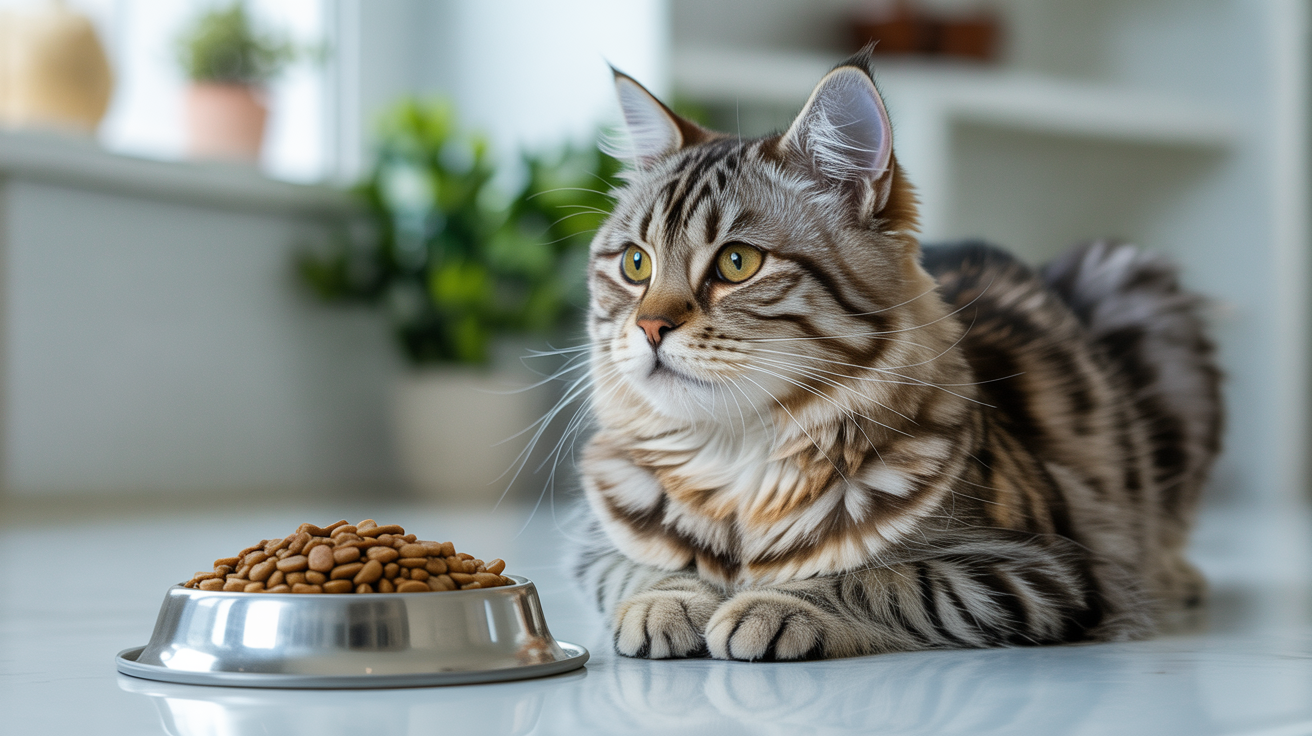
Walk down the pet food aisle and grain-free labels are everywhere. The packaging often implies that grains are fillers, carbs are dangerous, and the grain-free option is the biologically correct choice for your cat. Some of that framing has real merit. Some of it is marketing dressed up in scientific-sounding language.
Here is what grains actually do in cat food, when cutting them out genuinely helps, and how to evaluate any formula by looking past the front-of-bag claims.
At a Glance
- Grain-free is not automatically low-carb; pea-and-potato formulas can carry as many carbohydrates as grain-inclusive ones.
- Cats are obligate carnivores with a limited ability to use plant carbohydrates for energy, but moderate grains are not toxic to them.
- Grain-free tends to help most with true food sensitivities, diabetes management, and weight control, not healthy cats eating a balanced diet.
- Read the first three ingredients and the AAFCO statement before looking at the grain-free claim at all.
- The FDA's grain-free and DCM investigation centers on dogs; the concern has not shown the same pattern in cats.
- Confirm the label lists supplemental taurine; cats cannot make enough of it on their own and deficiency causes serious heart and eye disease.
What Grains Do in Cat Food
Grains like corn, wheat, rice, barley, and oats serve a few practical functions in manufactured pet food. They help bind kibble together, add caloric density, and lower the cost of production compared to animal protein. In wet food they are less common but still appear in some formulas.
The catch for cats is that cats are obligate carnivores. Unlike dogs or humans, they have limited ability to use plant carbohydrates for energy. Their digestive systems are wired to run on protein and fat. Cornell's Feline Health Center puts it plainly: cats rely on nutrients found only in animal products. They produce relatively low amounts of the enzymes that break down starch, and their livers cannot down-regulate certain metabolic pathways the way omnivores can.
That does not mean grains are toxic. A cat eating a moderate-grain kibble is not being poisoned. But it does mean grains are doing nutritional work the cat would not require if it were eating whole prey. Whether that matters in practice depends on the specific cat and the specific food.
When Grain-Free Is Genuinely Useful
For most cats eating a balanced, complete diet, grains are a non-issue. The grain-free argument becomes more relevant in a few specific situations.
True food sensitivities. Cats can develop sensitivities or allergies to protein sources in their food. The most common culprits are animal proteins, particularly chicken, beef, and fish, not grains. Genuine grain allergy in cats exists but is not especially common. If your cat has chronic loose stools, vomiting, skin irritation, or coat changes, a food sensitivity is worth investigating with your vet. The answer may or may not involve grains.
High-carbohydrate intake and weight concerns. Dry grain-inclusive cat foods can carry significant carbohydrate loads, sometimes 30 to 40 percent of calories or more. For an indoor, sedentary, or already overweight cat, that caloric density combined with unlimited access to food can contribute to weight gain over time. A grain-free kibble is not automatically lower in carbohydrates, but it can be if the replacement ingredients are primarily animal-sourced.
Diabetic cats. Feline diabetes is closely linked to diet in some cases. Veterinary nutritionists often recommend lower-carbohydrate diets for cats managing diabetes. Grain-free wet food formulas tend to be lower in carbohydrates than grain-inclusive dry food. If your cat has diabetes, work with your vet on specific dietary targets rather than relying on a label.
Outside of these situations, the benefits of grain-free for an otherwise healthy cat are mostly theoretical.
What Fills the Gap When Grains Come Out
This is where grain-free gets complicated. Cat food manufacturers have to replace the binding, caloric density, and cost that grains provided. Common substitutes include potatoes, sweet potatoes, peas, lentils, chickpeas, and tapioca.
These are not grains, but they are still plant carbohydrates. A grain-free formula with a large proportion of peas and potatoes may have a similar or even higher carbohydrate content than a grain-inclusive formula. The label on the front does not tell you that. The ingredient list on the back might.
Since 2018, the FDA has also been investigating a potential link between grain-free diets and dilated cardiomyopathy (DCM) in dogs. The FDA's own updates describe reports of DCM concentrated in dogs, including breeds without a known genetic predisposition to the condition, eating certain grain-free or legume-heavy foods. The research has not produced definitive conclusions, and the concern does not appear to apply to cats in the same way, partly because feline DCM has different nutritional drivers, historically linked more to taurine deficiency than to grain-free formulation specifically. But the episode is a useful reminder that ingredient substitutions in pet food sometimes have consequences that take years to surface, and it's part of why "grain-free" alone shouldn't be read as a mark of quality.
Grain-Free vs. Grain-Inclusive: What Actually Changes
| Factor | Typical grain-inclusive dry food | Typical grain-free dry food |
|---|---|---|
| Carbohydrate range | Roughly 30–45% of calories | Roughly 25–45% of calories, wide variation |
| Common binder/filler | Corn, wheat, rice | Peas, potatoes, lentils, tapioca |
| Protein source clarity | Varies by brand | Varies by brand, no inherent advantage |
| Cost | Generally lower | Generally 10–30% higher at retail |
| Best fit | Healthy cats with no sensitivities | Diagnosed sensitivities, diabetes management, some weight-control cases |
The table's point is the one worth remembering: swapping the carbohydrate source does not automatically change the carbohydrate amount. The ingredient list is the only reliable way to tell the two apart.
How to Evaluate a Cat Food Formula
The grain-free question matters less than what else is in the food. Here is a practical framework for reading any cat food label.
Start with the first three ingredients. Cat food ingredients are listed by pre-cooking weight. Named animal proteins should lead the list: chicken, salmon, turkey, lamb, and so on. Vague terms like "meat" or "poultry" are lower quality but not necessarily harmful. If grains, potatoes, or peas appear in the first three slots, the food is protein-light regardless of what the front label claims.
Count the protein sources. Single-protein foods make it easier to identify a sensitivity. A formula with chicken, chicken meal, and chicken broth as the primary sources is more useful for an elimination trial than one with five different protein types blended together.
Look for complete nutritional labeling. The AAFCO (Association of American Feed Control Officials) statement should say the food meets nutritional levels for your cat's life stage. "For all life stages" sounds convenient but often means higher calorie and protein content than an adult cat needs.
Check added taurine. Cats cannot synthesize taurine adequately on their own, and a taurine deficiency causes heart disease and blindness. Animal protein is the natural source of taurine, and processed food can deplete it. Most commercial foods supplement it; make sure the label reflects that.
For a deeper look at how to work through an ingredient list, how to read a cat food label like a pro walks through the label structure section by section.
Wet Food, Dry Food, and the Carbohydrate Question
If managing carbohydrate intake is a priority, the wet-versus-dry distinction often matters more than grain-free versus grain-inclusive. Most wet foods, whether grain-free or not, have lower carbohydrate percentages than most dry foods because the manufacturing process is different. Wet food does not require the same starch-based binding that kibble does.
For cats with weight concerns, urinary issues, or diabetes, the push toward wet food tends to come from this carbohydrate profile rather than from any grain argument. It also contributes to hydration, since cats have a relatively low thirst drive and can struggle to get adequate water from dry food alone.
Wet vs. dry cat food: how to choose covers how to think through that decision based on your cat's specific needs and your household logistics.
What "Grain-Free" Does Not Mean
A few things grain-free does not guarantee, despite the implied promise on the packaging:
- It does not mean low-carbohydrate. Pea-and-potato-based formulas can be high in carbs.
- It does not mean high-protein. Protein percentage still depends on what the rest of the formula contains.
- It does not mean hypoallergenic. Most food allergies in cats are protein-based, not grain-based.
- It does not mean better quality. Premium grain-inclusive foods can have higher-quality ingredients than budget grain-free formulas.
The label works best as a starting point. The ingredient list tells you more. For guidance on how much to actually feed once you have settled on a food, how much to feed a cat by weight and life stage has a straightforward breakdown.
And while you are thinking about ingredients to avoid, it is worth knowing which everyday human foods carry real risk for cats. Human foods cats can and cannot safely eat covers the common ones that show up in households.
Putting It Together
Grain-free cat food is not a scam, but it is not a universal upgrade either. The category emerged partly from legitimate observations about feline digestion and partly from marketing trends in the human food space. Both things can be true.
The cats who tend to benefit from a grain-free approach are those with documented food sensitivities, diagnosed diabetes, or persistent weight problems that do not respond to portion control on a grain-inclusive diet. For a healthy cat on a balanced formula, the grain-free distinction is largely academic.
What does matter, regardless of the grain question, is that the food leads with named animal protein, meets AAFCO standards for your cat's life stage, includes supplemental taurine, and fits your cat's actual caloric needs. A grain-inclusive food that checks those boxes is more useful than a grain-free food that does not.
If you are comparing two specific bags side by side, run through the same short checklist each time rather than trusting whichever one says "grain-free" or "natural" in bigger letters: named protein in the first three ingredients, a life-stage-appropriate AAFCO statement, supplemental taurine listed, and a calorie density that fits the portion math from your cat's target weight. A food that passes all four is a reasonable choice whether or not it contains grain. A food that fails two or more of them is worth skipping regardless of how the front of the bag is styled.
If you are considering a diet change because of a suspected food sensitivity or a health condition, bring your vet into the decision before switching. Food trials require some structure to be informative, and the underlying issue might not be diet-related at all. A typical elimination trial for a suspected food sensitivity runs eight to twelve weeks on a single novel protein with no treats or table scraps, since even small amounts of another protein can keep symptoms going and muddy the results.
Frequently Asked Questions
Is grain-free cat food better for cats? Not categorically. Grain-free can be a useful choice for cats with food sensitivities or medical conditions like diabetes, but most healthy cats do not show measurable benefit from avoiding grains. The more important factors are protein quality, taurine content, and meeting your cat's life-stage nutritional requirements.
Do cats need grain-free food? Cats do not have a dietary requirement for grains, and they are not optimally designed to process large amounts of plant carbohydrates. But they also do not need to be grain-free. The absence of grains only matters if grains are creating a problem, which in many cats they are not.
Can grain-free cat food cause digestive issues? Some cats do fine on grain-free and some do not, depending on how the grains are replaced. High-legume formulas (heavy on peas and lentils) can cause digestive upset in some cats. If you switch to grain-free and notice loose stools or increased gas, the formula may not suit your cat regardless of the grain-free label.
What cat food ingredients should I avoid? Generic meat by-products with no species named, artificial preservatives like BHA or BHT, excessive carbohydrate fillers in the top three ingredients, and added sugars or artificial colors. These concerns apply whether the food is grain-free or not.
My cat has a sensitive stomach. Will grain-free help? It might, but sensitive stomach issues are more often tied to protein sources than grains. A limited-ingredient food with a novel protein your cat has not eaten before is often a better starting point than simply switching to grain-free. Talk with your vet to rule out underlying conditions before committing to a specific diet change.
Is the FDA's grain-free warning something cat owners should worry about? The FDA's ongoing investigation into diet-associated DCM has centered on dogs, and the pattern researchers have described does not have a clear feline equivalent so far. That said, it is a reasonable reminder to choose foods, grain-free or not, that meet AAFCO standards and include supplemental taurine, since feline heart disease has its own, better-understood links to taurine specifically rather than to grain content.