Nutrition & Feeding
Wet vs Dry Cat Food: How to Choose
Wet or dry cat food? Learn the real trade-offs for hydration, dental health, cost, and your cat's life stage so you can make the right call.
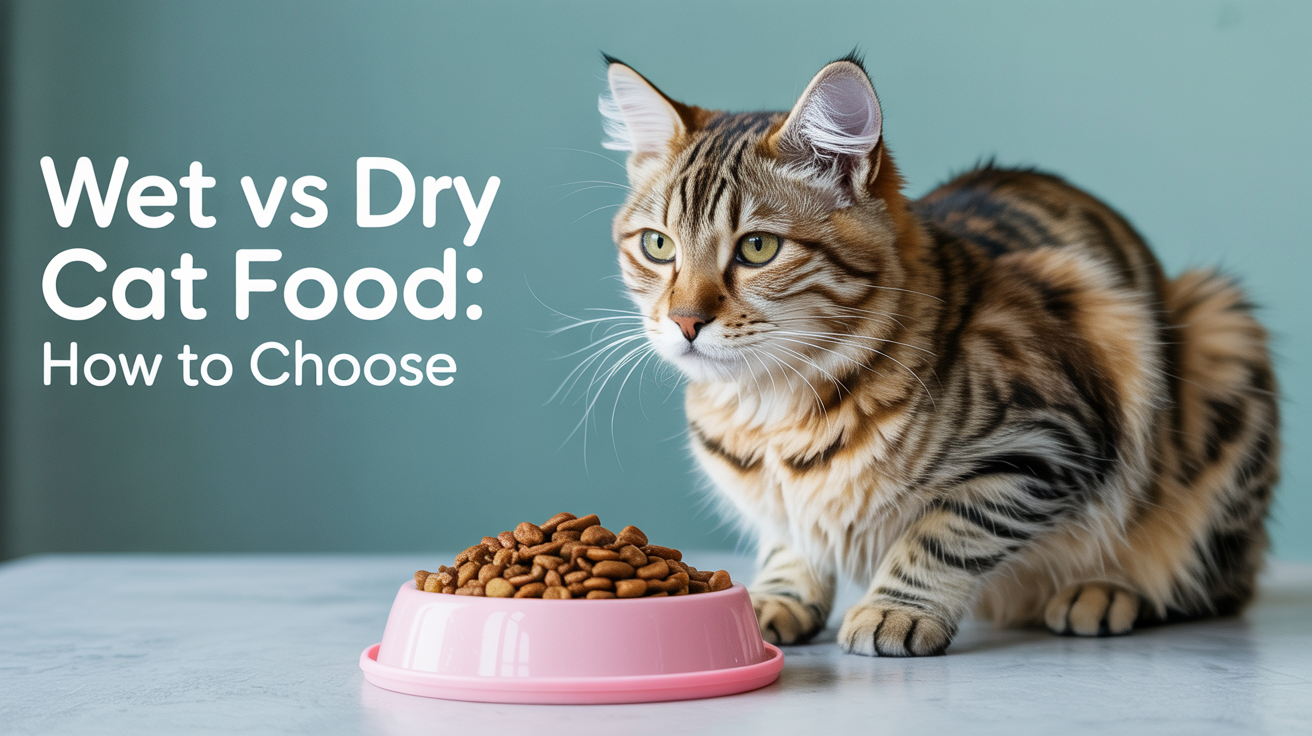
Both wet and dry cat food can support a healthy cat. The choice that actually matters is matching the format to your individual cat's hydration needs, health status, and daily routine, not following a universal rule.
Here's what the real differences are, where each format shines, and how to decide.
What wet food does well
Canned food is roughly 70–80% water. For cats, that matters a lot. Cats evolved from desert ancestors and have a naturally low thirst drive, which means they often don't drink enough on their own. Getting moisture from food is the most reliable way to keep them hydrated.
This becomes especially relevant if your cat has ever had urinary crystals, a UTI, or early kidney disease. Vets frequently recommend moving to wet food in those cases because higher water intake dilutes urine and reduces crystal formation. If your cat has any of those issues, ask your vet specifically about diet format, it's worth a direct conversation.
Beyond hydration, wet food tends to be more palatable (useful for picky eaters or cats who've lost some appetite with age) and often higher in protein with fewer carbohydrates, which aligns well with cats' obligate carnivore metabolism.
The downsides are real too: wet food costs more per calorie, goes bad within a few hours at room temperature, and requires refrigerating open cans. If you're away from home for long stretches, leaving wet food out is not a good option.
What dry food does well
Kibble is calorie-dense, shelf-stable, and easy to portion. For households with predictable schedules or cats who do fine on meal feeding, it's practical. It's also significantly cheaper per calorie than wet food, which matters when you're feeding multiple cats.
The claim you'll hear most often about dry food is that it cleans teeth. Honestly, the evidence for this is modest. Most cats swallow kibble with minimal chewing, and the pieces that do get chewed don't scrub down to the gumline where tartar forms. Dental-specific kibble with a particular texture can help somewhat, but it's not a substitute for actual tooth brushing or professional cleanings.
Dry food's biggest risk is that cats who eat only kibble tend to have lower overall water intake. For a young, healthy cat with no history of urinary or kidney issues, this may be fine. For older cats or those with any renal or urinary history, it's a reason to reconsider or at least supplement with wet food.
Comparing the two formats
| Factor | Wet food | Dry food |
|---|---|---|
| Moisture content | 70–80% | 6–10% |
| Calories per gram | Lower | Higher |
| Cost per calorie | Higher | Lower |
| Protein-to-carb ratio | Generally higher protein | Often higher carbs |
| Shelf life (open) | 2–4 hours at room temp | Months in a sealed bag |
| Palatability | Usually preferred | Varies by cat |
| Dental benefit | Minimal | Minimal (unless dental formula) |
| Good for urinary health | Yes | Use caution without supplemental water |
When mixing wet and dry food makes sense
A lot of cats eat a combination, and there's no reason not to. Mixing gives you the hydration benefit of wet food without the full cost of an all-wet diet. A common approach is feeding wet food once or twice a day (usually at scheduled mealtimes) and leaving a small measured portion of dry food available, or splitting meals between formats.
If you're going this route, the main thing to watch is total calorie intake. It's easy to overfeed when you're combining two different calorie densities. Check the feeding guidelines on both packages (they're based on weight and life stage) and adjust portion sizes to add up to the right daily total rather than feeding full recommended amounts of each.
For guidance on calculating the right daily amount, see how much to feed a cat by weight and life stage, it covers both wet and dry calculations with examples.
If you're switching between formats or introducing a new food, do it gradually. A sudden diet change can cause loose stools or outright refusal. The standard approach is a 7–10 day transition. You can find the exact method in how to switch cat foods without an upset stomach.
Choosing based on your cat's life stage and health
Kittens have high calorie and protein needs. Both wet and dry food marketed for kittens can meet this, but wet food's palatability makes it a good fit for young cats still exploring textures.
Adult cats (roughly 1–7 years) with no health issues can thrive on either format or a mix, as long as the food is nutritionally complete and portions are right.
Senior cats often benefit from wet food. Kidney function tends to decline with age, and hydration becomes more of a factor. Older cats may also lose muscle mass, so higher-protein foods can help. If your senior cat is eating dry food and you haven't had a kidney panel run recently, it's worth asking your vet about it at the next checkup.
Cats with health conditions should have their food format discussed with a vet. Diabetic cats often do better on lower-carbohydrate diets, which tends to favor wet food. Cats with dental disease sometimes struggle with harder kibble. Weight-management cases need careful calorie tracking regardless of format.
Before committing to a new food, it helps to know how to evaluate what's actually in it. How to read a cat food label like a pro walks through ingredient lists, guaranteed analysis percentages, and what the labels actually mean (and don't mean).
Frequently asked questions
Can I leave wet food out all day?
No. Wet food should be removed after 2–4 hours at room temperature. Bacteria multiply quickly in high-moisture foods, especially in warm kitchens. Refrigerate unused portions in a covered container and use within 2–3 days.
Is it okay to feed my cat only dry food?
For many cats, yes, especially young, healthy cats with no urinary or kidney history. The main risk is lower overall water intake. If you go dry-only, make sure your cat has multiple clean water sources and drinks regularly. A cat water fountain encourages more drinking for some cats.
My cat won't eat wet food. What should I try?
Start by warming the food slightly (close to body temperature) to make the smell more appealing. Try different textures, pate, chunks in gravy, shredded, since some cats are very texture-specific. You can also mix a small amount of wet food into dry food and gradually increase the ratio. If a cat flatly refuses wet food for weeks, that's a preference you'll probably have to work around rather than fight.
Does wet food cause dental disease?
Wet food doesn't directly cause dental disease, but it also doesn't help prevent it the way some dry food marketing implies. Dental health in cats depends on genetics, age, and whether their teeth are actually being cleaned. Neither food format eliminates the need for dental care. Tooth brushing at home and periodic professional cleanings are the real answers.
Which is better for weight management?
Wet food can make portion control somewhat easier because it's higher in water and generally lower in calories per serving, which means larger-seeming meals for fewer calories. Dry food makes free-feeding risky because it's calorie-dense and easy to overeat. That said, weight management comes down to total daily calorie intake, not format, a cat overfed on wet food will still gain weight.
This article is general guidance for educational purposes only and is not a substitute for advice from a veterinarian who can examine your individual cat.