Behavior & Training
How to Introduce a New Cat to Your Resident Cat
A phased guide to introducing cats to each other: separation, scent swapping, visual contact, and supervised meetings so both cats adjust without serious con...
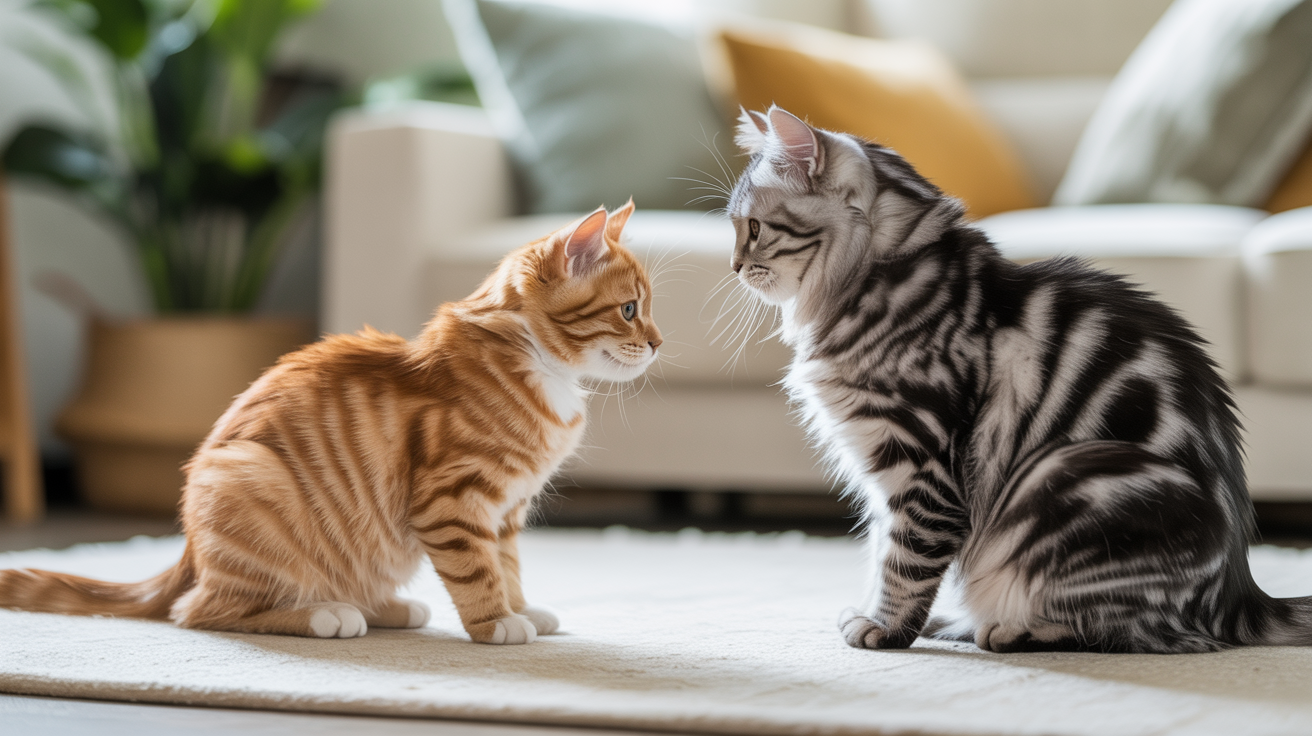
Introducing cats to each other slowly is the single most effective thing you can do to prevent a lasting conflict between a new cat and a resident one. Cats are territorial by nature, and dropping a stranger into their space without preparation tends to end badly for everyone involved. The good news: a phased introduction gives both animals time to adjust, and most cats can learn to coexist when the process is handled patiently.
This guide walks through each phase in order. Skip ahead at your own risk, but follow the steps in sequence and most introductions go far more smoothly than people expect.
Why Cats Need a Slow Introduction
When a resident cat first notices a newcomer, its brain registers a threat, not a potential friend. That reaction is instinctive, not mean. Your cat has claimed every room, piece of furniture, and feeding spot in the house as its own territory. A strange cat smells like competition.
If the two cats see each other before they have any positive associations built up, fear and aggression can set in quickly. Those first impressions are hard to undo. A slow introduction sidesteps that problem by letting both cats process the new situation at a pace that keeps stress manageable.
The whole process can take anywhere from one week to several months depending on both cats' temperaments. Some cats move through phases in days. Others need weeks at each stage. Let the cats' behavior guide your timing rather than your calendar.
Phase 1: Separate Spaces to Start
When the new cat first arrives, set it up in its own room with food, water, a litter box, and places to hide. Close the door completely. Do not let the cats meet face to face yet.
This separate space does two things. First, the new cat gets a chance to decompress after the stress of travel and a new environment. Second, the resident cat can smell something unfamiliar under the door without being overwhelmed by a direct encounter.
Keep both cats on their normal routines during this phase. Feed them at the same times, keep interactions calm, and give your resident cat extra attention so it does not feel sidelined. This phase typically lasts at least a week, though you can extend it as long as both cats seem to need it.
Signs the new cat is ready to move forward: it is eating normally, using the litter box reliably, and seems comfortable in the room rather than hiding constantly. A new cat that is still refusing food after three or four days may be stressed enough that a vet check is worthwhile.
Phase 2: Scent Swapping Before Any Visual Contact
Scent swapping cats is the core of a good introduction. Cats read the world primarily through smell, so getting each cat used to the other's scent before any face-to-face meeting takes most of the shock out of the eventual encounter.
A few practical ways to do this:
- Swap bedding. Take a blanket or towel the new cat has been sleeping on and place it near your resident cat's feeding area. Do the same in reverse. Let each cat investigate on its own terms.
- Feed on opposite sides of the closed door. Push food bowls close to the door so the cats eat near each other's scent. Gradually move the bowls closer to the door over several days until both cats are eating right at the threshold without signs of stress (growling, hissing, refusing to eat).
- Use a shared toy or cloth. Rub a cloth on one cat's face (around the cheeks, where the calming scent glands are) and leave it in the other cat's space.
Watch for reactions. A cat that sniffs the other's scent and walks away calmly is doing well. One that hisses, fluffs up, or refuses to eat near the door needs more time at this phase. Do not rush it. Scent swapping is not just a quick step. It can take a week or two of consistent exposure before both cats are relaxed around each other's smell.
Phase 3: Visual Contact With a Barrier
Once both cats eat calmly near the closed door, you can let them see each other without full access. A baby gate with a blanket partially draped over it works well, as does cracking the door just a few inches and propping it with a door stopper. The goal is controlled sight lines, not a full meeting.
Do short sessions of five to ten minutes, then separate them again. Watch their body language carefully.
Signs things are going well: casual glances, relaxed posture, returning to normal behavior after a brief look.
Signs you need to slow down: sustained staring, puffed tails, low growling, flattened ears, crouching as if to rush the barrier.
If either cat shows the second set of signs, close the barrier and go back to scent work for a few more days before trying again. A bad visual encounter can set the relationship back significantly.
Keep feeding both cats during these sessions if you can. Positive experiences (food) happening at the same time as seeing the other cat starts building a new association: that cat's presence means something good.
Phase 4: Supervised Time Together in a Shared Space
When both cats can see each other through a barrier without sustained tension, they are ready for a supervised meeting with no barrier between them. Do not leave them alone together yet.
Pick a neutral room if possible, meaning somewhere neither cat uses heavily for sleeping or eating. Let them explore at their own pace. Do not force them toward each other or pick either cat up to bring them closer.
Have a second person with you if you can. That way, if things escalate, one person can distract or gently redirect each cat without putting hands between them during a conflict. Keep sessions short, maybe ten to fifteen minutes, and end on a neutral or positive note.
Some hissing and swatting in these early meetings is normal. Cats work out hierarchy through communication, and a hiss or swat is part of that. What you are watching out for is sustained chasing, screaming, or a cat being cornered with no exit. If that happens, calmly separate them (a blanket tossed between them works better than grabbing) and go back to the previous phase.
Gradually extend the time they spend together as they become more comfortable. Most cats reach a stable truce after a few weeks of supervised sessions, even if they never become best friends.
When Cats Are Still Not Getting Along
Some pairs take longer, and that is not a failure. If your cats are several weeks in and still fighting during supervised time, it helps to look at a few variables.
Resources are a common trigger. Make sure there are enough litter boxes (one per cat plus one extra is the standard starting point) and that feeding stations are far enough apart that neither cat guards access to both. Conflict near litter boxes is a separate pattern worth reading about in more depth at litter box problems: why cats stop using it.
Stress from other sources compounds introduction problems. If your resident cat is already stressed by noise, changes in schedule, or something else in the environment, adding a new cat on top of that is harder. Stress-related nighttime meowing is one sign a cat is not coping well overall.
Redirected aggression is worth knowing about. Sometimes a cat gets overstimulated and swipes at the nearest thing, even if that thing is you or the other cat rather than the actual source of stress. If a cat in your household is suddenly scratching furniture more, it may also be expressing tension. Understanding why cats scratch can help you give both cats appropriate outlets during a tense introduction period.
If serious fighting persists despite a careful phased introduction, talk to your vet. A veterinary behaviorist can assess whether there is an underlying medical or behavioral issue making the introduction harder, and can suggest targeted strategies.
Frequently Asked Questions
How long does it take to introduce two cats? It varies a lot. Some cats move through all four phases in two to three weeks. Others take two to three months. The safest rule is to watch the cats' behavior rather than stick to a fixed timeline. Rushing a step because you are impatient is the most common reason introductions fail.
Is it normal for cats to hiss and growl during an introduction? Yes, some of it is normal. Hissing is communication, not necessarily a sign of lasting hostility. What matters is whether the hissing is brief and both cats disengage, or whether it escalates into chasing or fighting. Brief hissing that de-escalates on its own is part of the process.
Should I let cats "work it out" on their own? Not in the early stages. Unsupervised access before both cats are comfortable together can result in injuries and set the relationship back significantly. Once they have had many successful supervised sessions with no serious conflict, you can start giving them unsupervised time in short increments, watching for any signs of a problem when you return.
Can adult cats ever fully accept a new cat? Many do, though "accept" looks different for different pairs. Some cats become close companions. Others maintain a calm coexistence where they share space without interacting much. Both outcomes are fine. The goal of an introduction is not to force friendship but to prevent fear-based aggression.
What if one cat keeps stalking the other? Persistent stalking, where one cat repeatedly follows and corners the other, is a sign the introduction is moving faster than the stalked cat can handle. Go back to separation and scent work, and make sure the stalked cat has high spaces (cat trees, shelves) it can retreat to where the other cat cannot corner it. Vertical space is underrated in multi-cat homes.