Gear & Home
How to Choose the Right Litter Box: Size, Type, and How Many
Find the best litter box for your cat: the right size, covered vs. open, automatic or basic, and how many boxes your household actually needs.
The litter box situation in your home matters more than most cat owners expect. Get it wrong and your cat may quietly decide the laundry pile is an acceptable alternative. Get it right and you'll never think about it again. Here's how to work out the size, style, and quantity that actually fits your cat and your space.
At a Glance
- Size beats style: the box should be one-and-a-half times your cat's length, big enough to turn a full circle and dig without touching the walls.
- Follow the number-of-boxes rule from Ohio State's Indoor Pet Initiative: one litter box per cat, plus one extra, spread across different locations, not clustered in one room.
- Most cats prefer unscented, fine-grain clumping litter at 2 to 3 inches deep, scented litter is for human noses, not feline ones.
- Covered, top-entry, and automatic boxes all trade convenience for cat preference in different ways, none of them beats a well-placed, well-cleaned open box.
- Scoop at least once daily, deep-clean every 2 to 4 weeks, and replace the box itself every 1 to 2 years since plastic absorbs odor over time.
- A sudden change in litter box habits is a medical red flag first, a box or litter problem second.
Size: bigger is almost always better
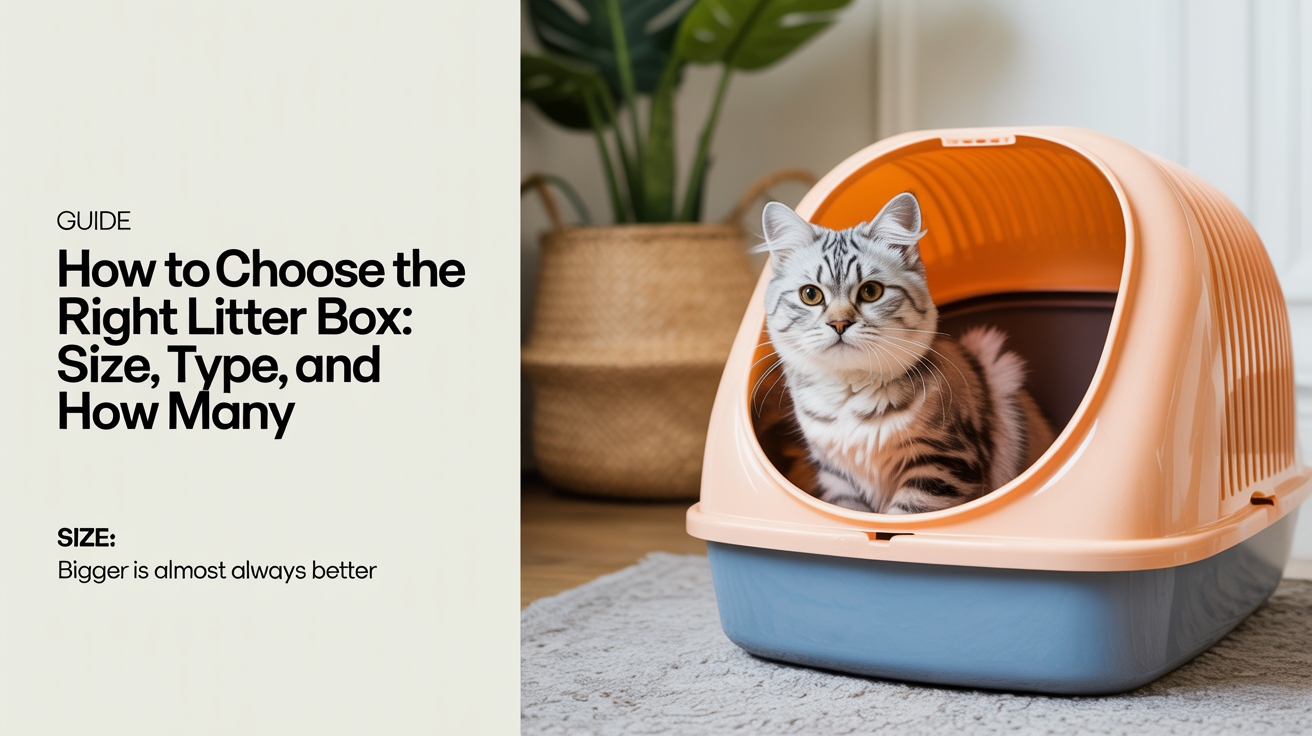
The standard rule is that a litter box should be one-and-a-half times the length of your cat from nose to tail base. For a typical adult cat, that works out to roughly 18 to 22 inches long. Most "standard" boxes sold at big-box stores fall short of that at 15 inches, which is fine for a small cat but cramped for anything larger. Ohio State's Indoor Pet Initiative puts it simply: the box should be "large enough for your cat to stand up (on all fours) and turn around in," which is a good gut-check if you don't want to measure your cat.
If you have a large cat (males over 12 lbs, Maine Coons, Ragdolls, or similar), look specifically for a large litter box for cats. Some owners repurpose 66-quart clear storage totes for this, they're cheap, easy to clean, and genuinely spacious at around 23 x 16 inches. The only trade-off is cutting a lower entry point for older cats or kittens.
Kittens need a box with a very low entry wall (2 to 3 inches) so they can get in and out without jumping. A high-sided box meant for an adult will put them off using it entirely. As a kitten grows, plan on sizing up the box roughly every couple of months until they reach adult size around 10 to 12 months.
High sides versus low entry
A box with high sides (5 to 7 inches) cuts down on litter scatter and is useful for cats that squat high or dig enthusiastically. Low-entry boxes work better for seniors with arthritis or kittens still developing coordination. Some owners solve both problems with a high-sided box that has one wall cut lower at the front.
Open versus covered: what cats actually prefer
The covered vs. open litter box debate comes up constantly, and the answer is that most cats don't have a strong preference, until they do.
Covered boxes appeal to owners because they contain odors (from your perspective) and give privacy. The problem is that from inside the box, odors concentrate significantly, sometimes enough that a cat starts avoiding a box that looks perfectly clean to you. A covered box with a flap can also feel like a trap to a cat that worries about being ambushed, something that matters a lot in multi-cat homes where one cat may guard the approach.
Open boxes are easier to keep clean because you can see soiling immediately, and cats can approach and exit from any direction, useful in a multi-cat household where escape routes matter. They scatter more litter, though.
A practical starting point: if your cat has been using whatever box you own without complaint, don't change it. If you're setting up for the first time, start with an open box. Move to covered only if your cat chooses it or if scatter is a genuine problem in your space.
Top-entry boxes
Top-entry boxes (where the cat jumps in through a hole in the lid) cut scatter almost entirely and are harder for dogs to raid. They're a real solution for some households. That said, they're not suitable for kittens, elderly cats, or cats with mobility issues, jumping in and out with a full bladder is not something every cat can do comfortably. If your cat is young and athletic and you have a dog, they're worth trying.
Self-cleaning and automatic boxes
Automatic litter boxes rake or rotate waste into a sealed compartment on a timer or after the cat exits. They genuinely reduce daily scooping. A few honest points:
- They're expensive upfront ($80 to $600 depending on the model).
- They require compatible litter (usually clumping, sometimes a specific brand).
- Some cats are startled by the motor and refuse to use them, especially kittens or naturally anxious cats.
- Mechanical parts can jam or fail, so you still need a backup box.
If you travel frequently or work long hours, the convenience can be real. If you're home regularly, a basic box scooped once or twice a day works just as well and costs nothing to maintain.
How many litter boxes do you actually need
The rule most vets and behaviorists give, echoed in the AAFP/ISFM Feline Environmental Needs Guidelines, is one box per cat, plus one extra. So one cat = two boxes, two cats = three boxes, and so on. This isn't fussiness, it reflects how cats actually use shared space.
In practice, having enough boxes means:
- A dominant cat can't block access to the only toilet in the house
- A cat that prefers to urinate and defecate in separate spots (not uncommon) can do so
- If one box is dirty when the cat needs to go, there's an option
| Number of cats | Minimum boxes | Recommended | Suggested layout |
|---|---|---|---|
| 1 | 1 | 2 | One main floor, one upstairs or in a second zone |
| 2 | 2 | 3 | Spread across at least two rooms |
| 3 | 3 | 4 | At least one per floor, none clustered together |
| 4+ | 4 | 5+ | One per floor minimum, plus extras near favored resting spots |
Location matters as much as count. Boxes clustered together in the same room effectively function as one location from a cat's perspective, so lining up three boxes side by side in the laundry room doesn't satisfy the "plus one" rule the way three separate locations would. Spread them across the home, including at least one on each floor if you have a multi-story house. Keep them away from food and water bowls, and away from loud appliances like washing machines that could startle a cat mid-use.
Litter depth and type
The box itself is only part of the equation. Most cats prefer 2 to 3 inches of unscented clumping litter, a preference Ohio State's Indoor Pet Initiative also notes, pointing out that "most cats prefer fine-grained, unscented litters." Scented litter is designed for human noses, not cat preferences, and many cats avoid it entirely rather than tolerate the smell. If your cat has been rejecting the box, switching to an unscented fine-grain clumping litter is one of the first things to try before blaming the box itself.
Deeper litter (4+ inches) lets enthusiastic diggers really go to town and produces better clumps, but it also costs more per change and adds weight to the box. Find what your cat actually uses without leaving deposits outside the box and stick with it.
Placement that works
Where you put the box is often more important than which box you buy. Cats want a location that feels safe, not cornered, and not too exposed. A quiet corner of a bathroom or bedroom usually works. A laundry room can work when machines aren't running. Basements can work for mobile cats but are poor choices for kittens, seniors, or cats that don't regularly go down there.
Avoid placing boxes next to automatic air fresheners or right beside a noisy furnace. Both can put cats off using a spot they'd otherwise be fine with, even if the box itself is spotless.
If you're thinking about the broader layout of your cat's environment, the same spatial logic applies to other gear. Where you place a cat tree or scratching post matters for the same reason: cats feel safer when they can observe their environment from elevated spots near high-traffic areas, not shoved in a corner they never visit.
Cleaning: the part that matters most
No box design compensates for inconsistent cleaning. Clumping litter should be scooped at least once daily, ideally twice. The whole box should be emptied, washed with hot water and mild dish soap, and refilled every 2 to 4 weeks. Avoid bleach regularly, traces can put cats off. Plastic absorbs odors over time, so replace the box itself every 1 to 2 years even if it looks fine.
A covered or automatic box doesn't reduce how often it needs cleaning. If anything, covered boxes need more attention because waste builds up out of sight, and a bad smell inside a covered box can drive a cat away long before you notice it from the outside.
Frequently asked questions
How do I know if my cat's litter box is big enough?
Watch how your cat moves in the box. If they hang over the edge, turn with difficulty, or seem to squat partly outside the box, it's too small. The practical test: your cat should be able to turn a full circle and dig without any part of them touching the walls.
My cat keeps going outside the box. Is it the box's fault?
Sometimes, but not always. First rule out a medical cause, urinary tract issues, constipation, and kidney problems can all change litter box habits suddenly. If the vet gives a clean bill of health, then look at box size, litter type, cleanliness, and placement. One of those is almost always the cause.
Can I use a dog crate tray or storage bin instead of a cat litter box?
Yes, plenty of people do. A large shallow storage tote works well for cats that kick litter everywhere. The main things to check: the plastic is smooth enough to clean easily, and the entry point is low enough for your cat to step in without jumping. Clear plastic is handy because you can see the litter level without lifting the lid.
Should I get an automatic litter box for a single cat?
It depends on your schedule and budget. If you're away from home 10+ hours a day regularly, an automatic box keeps things cleaner between scoops. If you're home most of the day, a standard box scooped once or twice daily is just as clean and far less expensive to buy and maintain.
How do I introduce a new litter box to a cat that already has one?
Just add it alongside the existing box. Don't remove the old one at the same time, give the cat the option to try the new one on their own terms. Most cats will use a new box within a day or two without any fuss. If your cat seems anxious about a new carrier or vet trip, that same low-pressure approach applies to other changes in their gear, including a cat carrier they'll actually tolerate.
Do kittens need a different box than adult cats?
Yes, at least at first. A kitten's box should have an entry wall no higher than 2 to 3 inches so they can climb in without jumping, and it should sit close to wherever the kitten spends most of their time, since young kittens don't yet reliably travel far to find a box. As they grow, transition to an adult-sized box gradually, usually by around 4 to 6 months, rather than switching abruptly.
And if you're thinking about your cat's hydration alongside their litter habits, it's worth looking at whether a water fountain or a bowl is the better fit for your household, urinary health and litter box behavior often connect more than people expect.
This article is general guidance, not veterinary advice, if your cat's litter box habits change suddenly, a vet visit is always the right call.