Gear & Home
Cat Water Fountains vs Bowls: Which Is Better
Fountains or bowls? We break down the real differences, when each makes sense, and how to encourage your cat to drink more.
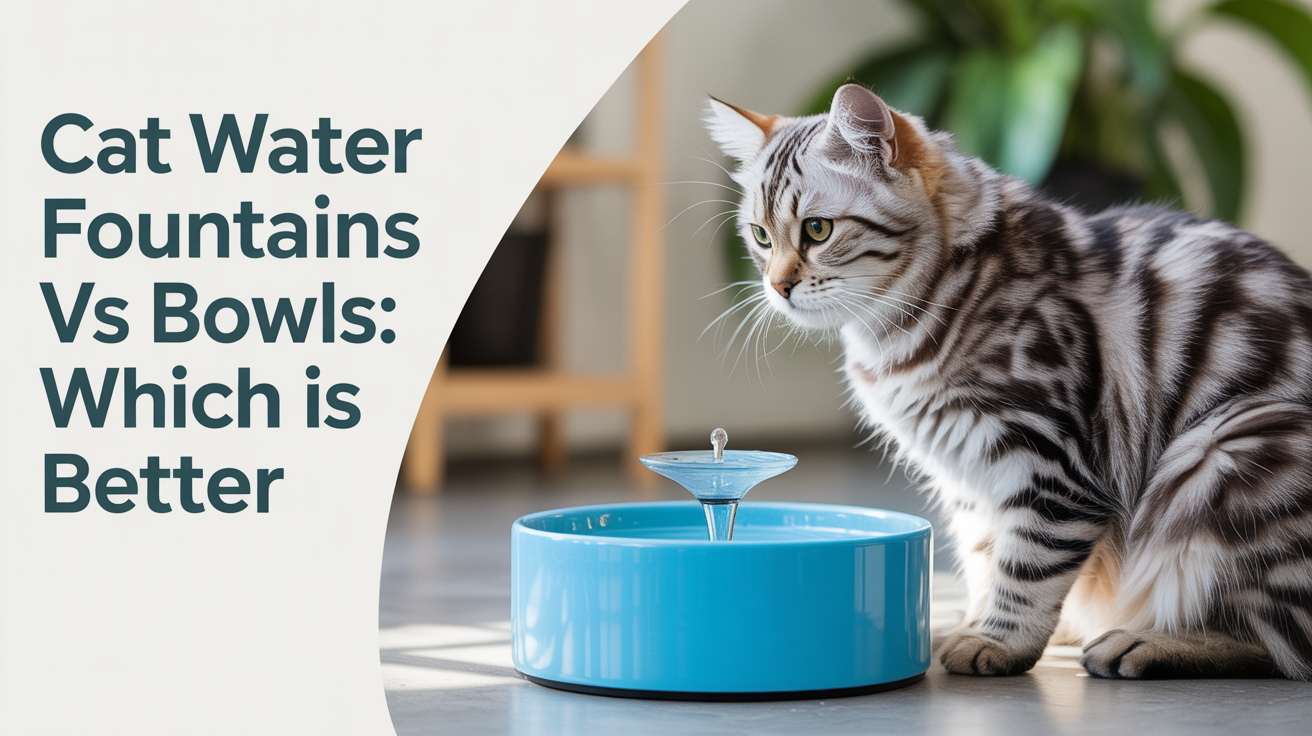
Most cats don't drink enough. That's just the reality of living with an animal whose desert ancestors got most of their moisture from prey. Whether a fountain or a plain bowl helps your particular cat drink more depends on the cat, your household setup, and how much you want to stay on top of cleaning. Here's a straight look at both options so you can make a practical call.
Why hydration matters more than most owners realize
Cats who eat primarily dry food are at a constant low-level hydration deficit. Wet food is around 75–80% water; dry kibble is closer to 10%. Even cats on wet food benefit from having clean, appealing water readily available, because kidney disease and urinary tract problems are among the most common (and expensive) health issues in domestic cats, and both are closely linked to fluid intake.
This isn't a reason to panic. It's a reason to pay attention.
Signs your cat may not be drinking enough include dark yellow urine in the litter box, straining to urinate, or lethargy. If you notice any of those, talk to your vet before changing equipment, that's a health question, not a gear question. If you're just wondering how to set up a litter box situation that makes monitoring easy, that's a separate but related piece of the puzzle.
Fountains: what they actually do well
A cat water fountain keeps water moving. That matters for two reasons.
First, running water stays oxygenated and tastes fresher (many cats are genuinely fussy about stale water, and this isn't quirky behavior, it's instinct). Second, most fountains have a basic filter, usually activated carbon, that traps some debris and reduces the smell of chlorine from tap water.
Anecdotally, cats who ignore a still bowl will drink readily from a fountain. That's real and worth taking seriously if your cat seems chronically uninterested in their water.
The practical downsides:
- Cleaning burden. A fountain needs to be fully disassembled and scrubbed every 1–2 weeks. The pump impeller is a magnet for slime and biofilm. Skipping this defeats the point.
- Upfront cost. Decent fountains run $25–$60. Cheap ones have noisy pumps and crack faster.
- Power dependency. It needs an outlet nearby, which limits placement options.
- Plastic vs. stainless/ceramic. Plastic scratches and harbors bacteria in those scratches. Stainless steel or ceramic fountains cost a bit more but are worth it, especially for cats prone to chin acne.
Still bowls: underrated and genuinely fine for many cats
A plain water bowl is not a failure. Plenty of cats drink happily from a wide, shallow bowl refreshed daily (or twice daily in warm weather). The key word is "wide", cats don't like their whiskers touching the sides. A wide, low-sided ceramic or stainless bowl works well.
The main thing a bowl has going for it: simplicity. You rinse it, refill it, and you're done. There's no pump to fail and nothing to disassemble. If you travel or board your cat, a bowl is easier for a sitter to maintain correctly.
Where bowls fall short is consistency. Tap water sitting out for 12–24 hours collects dust, pet hair, and develops an off-taste some cats reject. You can solve most of this by refreshing more frequently and placing the bowl away from the food dish (cats, like us, generally don't love eating and drinking in the same spot).
Head-to-head comparison
| Feature | Fountain | Bowl |
|---|---|---|
| Encourages drinking | Often yes, especially picky cats | Adequate for most cats |
| Cleaning effort | High (weekly disassembly) | Low (daily rinse) |
| Upfront cost | $25–$60+ | $5–$20 |
| Ongoing cost | Filter replacements (~$5–$10/mo) | Minimal |
| Best material | Stainless steel or ceramic | Stainless steel or ceramic |
| Travel/boarding friendly | No | Yes |
| Works without power | No | Yes |
How to encourage your cat to drink more (regardless of which you pick)
The container matters less than the habits around it. A few things that actually move the needle:
- Place water away from the food bowl. Cats in the wild wouldn't find water and prey in the same spot.
- Use multiple stations. One bowl in the kitchen, one in a bedroom or wherever your cat spends time. More access points mean more sips.
- Clean it more often than you think you need to. Every day for bowls; every 1–2 weeks for fountains (full disassembly, not just a rinse).
- Try different bowl depths. Some cats prefer drinking from a nearly-full bowl so they don't have to reach down.
- If your cat likes running water from a tap, a fountain is worth trying. If they drink fine from a bowl, don't fix what isn't broken.
The same attention to placement and environmental enrichment applies to other gear choices. When you're thinking about how to pick a cat tree and scratching posts, you end up making similar calls about location and whether your cat will actually use something.
Frequently asked questions
Do cats actually drink more from a fountain?
Some do, some don't. Studies on this are limited and self-reported cat behavior is obviously not laboratory-controlled. In practice, many owners report increased drinking after switching to a fountain, particularly in cats who ignored their bowl. If your cat already drinks well, a fountain is a nice-to-have rather than a necessity.
How often do I really need to clean a fountain?
Weekly is the minimum, and that means taking the pump apart, not just rinsing the bowl. Biofilm builds up on the pump impeller and inside the tubing. If your cat's fountain starts smelling musty or you can see a slimy film, it's overdue. Filter cartridges need replacing roughly every 4 weeks.
My cat only drinks from the tap. What does that mean?
It means they like fresh, moving water, which is completely normal feline behavior. A fountain often solves this by simulating that running-water quality. You can also try a bowl positioned under a slow drip temporarily to see if they take to moving water in general.
Is filtered water worth it for cats?
Standard tap water is fine for most cats in most places. If your tap water is heavily chlorinated, a basic carbon filter (built into most fountains) makes a noticeable difference in smell and taste. Distilled water, on the other hand, lacks minerals and isn't recommended as a sole water source.
Where should I put the water bowl (or fountain)?
Away from the food dish, away from the litter box, and in a spot your cat already hangs around. Quiet, low-traffic corners work well. If you're rethinking your whole cat setup, it's worth reading about making vet trips easier and keeping a carrier accessible, a well-stocked, well-organized cat space just makes daily care go more smoothly.
This article is general guidance for healthy adult cats; it is not veterinary advice. If your cat is showing signs of urinary issues, kidney disease, or changes in thirst, consult your vet.