Gear & Home
Choosing a Cat Tree and Scratching Posts That Get Used
Find a sturdy cat tree and scratching post your cat will actually use — with placement tips, material breakdowns, and size guidance.
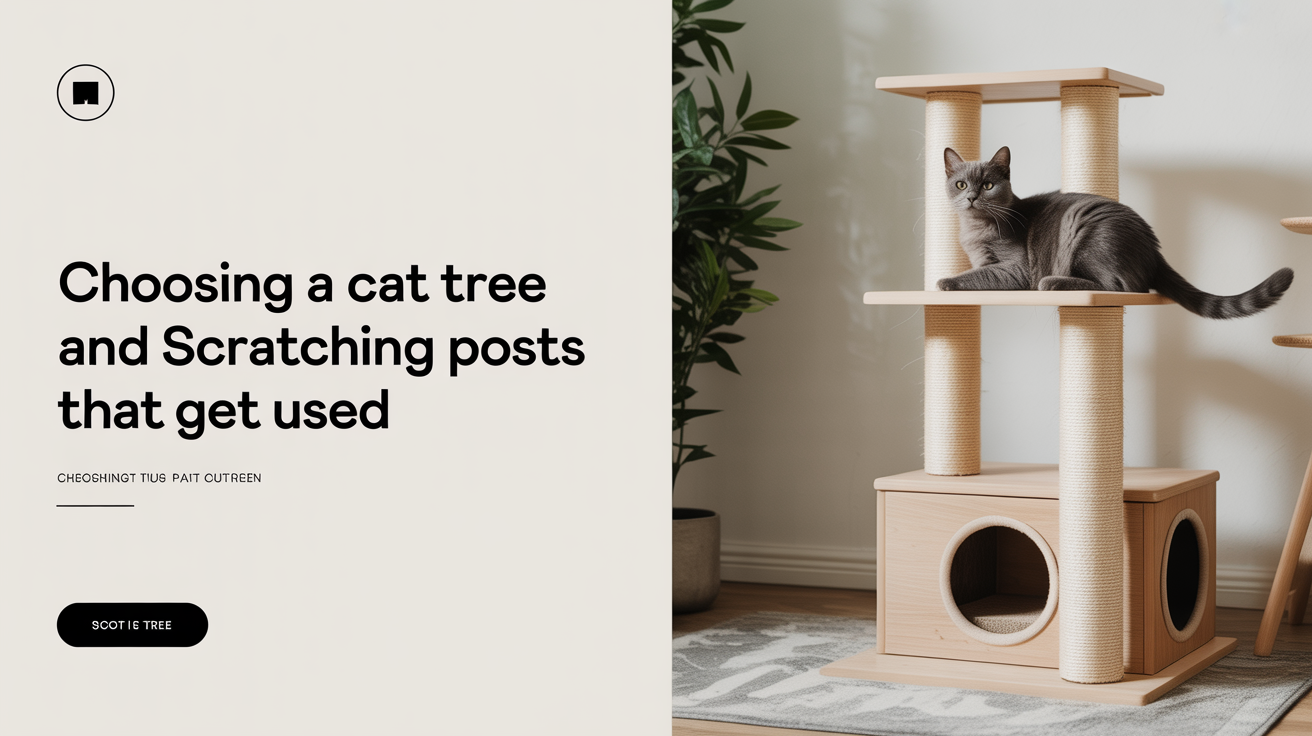
Most cat trees end up ignored in a corner while your cat scratches the couch. The problem usually isn't the cat, it's that the tree was too wobbly, in the wrong spot, or wrapped in material that doesn't satisfy the scratch urge. Get those three things right and your cat will use it every single day.
What actually makes a cat tree sturdy
Wobble is the number-one reason cats avoid a tree. A cat that jumps and feels the whole thing sway won't go back. Before buying anything, check the base dimensions relative to the height. A 60-inch tower needs a base at least 18 by 18 inches; taller units (70+ inches) should be wider or come with a wall anchor.
Weight capacity matters too, especially for large breeds. Most budget trees top out around 15–20 lbs per platform. If you have a Maine Coon or a chunky domestic shorthair, look for trees rated to 25 lbs per perch and platforms made from solid engineered wood rather than cardboard-core particleboard.
Frame materials, roughly ranked by durability:
| Material | Durability | Weight | Price range |
|---|---|---|---|
| Solid engineered wood (HDF) | Excellent | Heavy | $$ – $$$ |
| Particleboard | Moderate | Moderate | $ – $$ |
| PVC/metal frame | Good | Light | $$ |
| Cardboard core | Poor | Light | $ |
Posts should be at least 2 inches in diameter. Thinner poles flex, which feels unstable under a jumping cat and degrades faster under regular scratching.
Scratching surface: sisal beats carpet almost every time
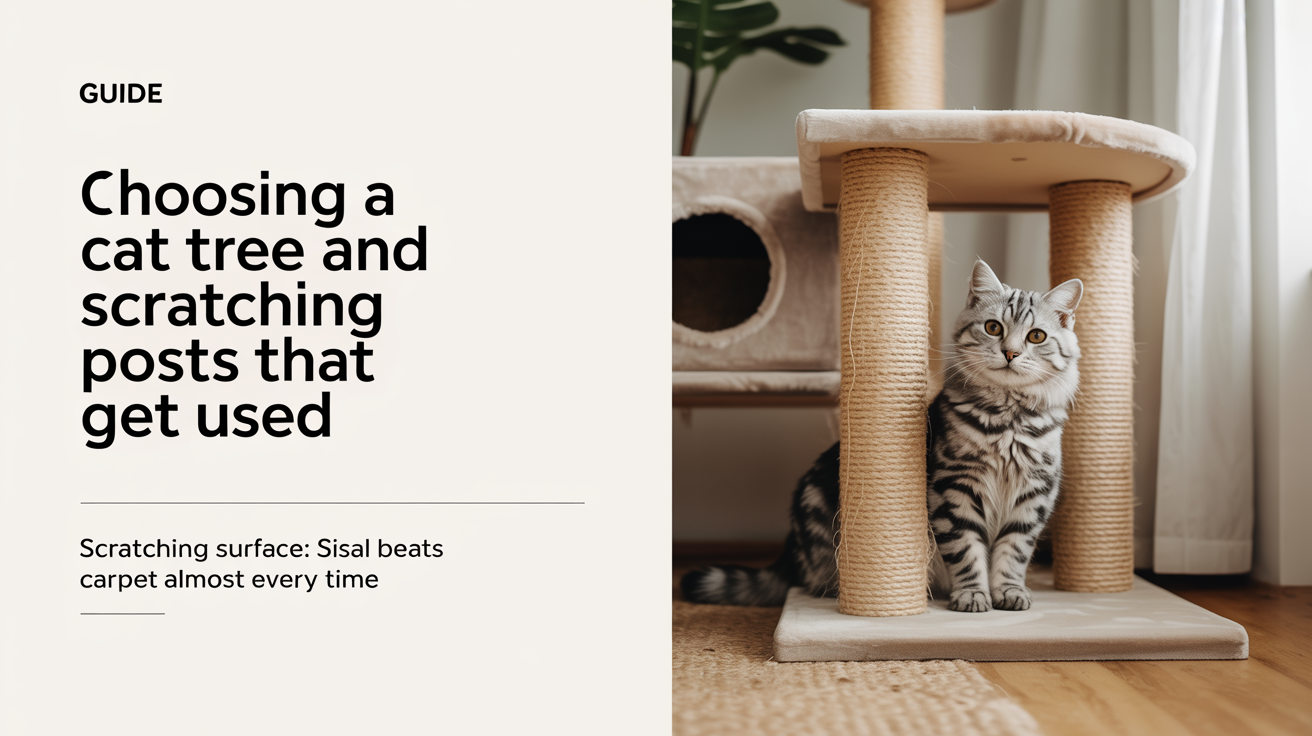
Cats scratch to shed claw sheaths, stretch their shoulders, and mark territory. The texture matters a lot. Sisal rope gives satisfying resistance and holds up well, most cats take to it quickly. Carpet is softer and cheaper but tends to snag claws, can trap odors, and wears down in a few months with a dedicated scratcher.
Corrugated cardboard scratchers (the flat or angled ones you find cheaply) are genuinely popular with a lot of cats. They're worth having as a supplement, not a replacement, they shred fast and need regular swapping. Some cats prefer them over anything else, so it's worth trying one alongside a sisal post before investing in a full tree.
One thing to avoid: posts that are too short. A scratching post needs to be tall enough for your cat to fully extend while scratching. For most adult cats, that means at least 28–32 inches. Shorter posts teach cats to scratch low, which is exactly the angle your sofa presents.
Where to put a cat tree
Location is probably the most underrated factor. Cats are social even when they act otherwise. A tree shoved in a spare bedroom gets ignored. Put it where the family actually spends time, living room, home office, anywhere you're present for a few hours a day.
Near a window is a reliable win. Cats spend hours watching birds, squirrels, and passing cars. A perch at window height gives them environmental enrichment that no toy can fully replace. Just make sure the tree is stable enough that it won't rock when they leap from the windowsill onto a platform.
Avoid corners where the cat is boxed in with no escape route. Cats like to be able to see the room. An L-shaped or open corner (two walls behind, room in front) is better than a full corner placement.
If you have a multi-cat household, a tree with multiple separate perches at different heights reduces conflict. Dominant cats claim the top; others settle below. A single hammock shared by two cats often leads to one cat just giving up on the tree entirely. If your cats don't always get along, read up on managing territory with multiple litter boxes, the same spatial thinking applies to vertical space.
Matching the tree to your cat
Size matters in both directions. A tiny kitten on a 70-inch tower with large platforms may never feel comfortable jumping that high. An adult cat on a low two-platform tree will outgrow it quickly. A good general guide:
- Kittens (under 6 months): Start with a shorter tree (36–48 inches) with closer-spaced platforms and lower perches. Add height as they grow.
- Adult cats (average size, 8–12 lbs): A standard 54–66 inch tree with at least three platforms works well. Look for at least one enclosed condo and one open perch.
- Large or senior cats: Lower platforms with easier access, wider perches (at least 14 by 14 inches), and solid construction. Senior cats with joint issues shouldn't have to leap more than 18–20 inches between levels.
Enclosed condos (the little box sections) are worth having for cats that are shy or like to hide. But some cats never use them. If your cat hides under the bed rather than in a covered bed, a condo probably won't change that behavior.
If you're also working through the carrier question for vet visits, the guide to picking a cat carrier has some overlap in terms of what cats actually find comfortable versus what we assume they like.
Getting your cat to actually use it
New furniture smells wrong to a cat. Rub a fleece toy or an old T-shirt over the platforms before introducing the tree to transfer familiar scents. Sprinkling a little dried catnip on the perches can help too, though not every cat responds to catnip.
Don't force it. Put the tree in place, leave it alone for a day or two, and let curiosity do the work. If your cat is still ignoring it after a week, try moving it six feet, sometimes a slightly different position makes all the difference.
Dangling a wand toy from a higher platform encourages climbing. Once they've been up there a few times and found it stable, most cats start using it on their own.
For scratching posts specifically: if you catch your cat scratching the couch, don't punish them. Just carry them calmly to the post and let them sniff it. The goal is association, not correction. Cats scratch because they need to, your job is to make the right surface more appealing than the wrong one.
Keeping your cat hydrated and enriched matters alongside good furniture. If you're weighing whether to add a cat water fountain, the same logic applies: make the right option more convenient and interesting than the alternative.
Frequently asked questions
How tall should a cat tree be?
For most adult cats, 54–66 inches gives enough vertical range to be interesting without being so high that it feels unstable. Very large cats or multi-cat households benefit from taller trees (66–72 inches), provided the base is wide and anchored. Kittens do better with shorter, sturdier options until they're confident jumpers.
Why won't my cat use the new cat tree?
Usually one of three reasons: it wobbles (cats test stability immediately), it smells unfamiliar, or it's in a low-traffic room. Try rubbing your hands or a used blanket on the platforms, moving it to where you spend time, and hanging a toy on it to encourage climbing. Give it at least a week before giving up on a placement.
How often should I replace a scratching post?
When the sisal is shredded down to exposed rope core or the post wobbles noticeably. A well-used sisal post typically lasts 6–18 months depending on how hard your cat works it. Cardboard scratchers need replacing every 1–3 months. A post that's too worn stops satisfying the scratch urge and your cat will look elsewhere.
Is carpet or sisal better for a scratching post?
Sisal for most cats. It's rougher, which cats prefer for shredding, and it doesn't snag claws the way carpet loops can. Carpet posts also absorb odors faster. The exception is if your cat strongly prefers soft textures, some do, and you'll know because they'll ignore sisal entirely and gravitate toward upholstered surfaces instead.
Do I need a separate scratching post if I have a cat tree?
Often yes. A cat tree's posts may be in one part of the house, but cats scratch in multiple locations as territory marking. Putting a secondary scratching post or cardboard scratcher near the furniture they're currently targeting gives them a legitimate option right where the urge strikes.
This article is general guidance for cat owners, not veterinary advice, for health concerns or behavioral issues that aren't resolving, consult a licensed vet who can actually examine your cat.