Grooming & Care
How to Brush Your Cat Based on Their Coat Type
Learn how to brush a cat properly based on their coat type — from short to long hair — with tips on tools, frequency, and matting prevention.
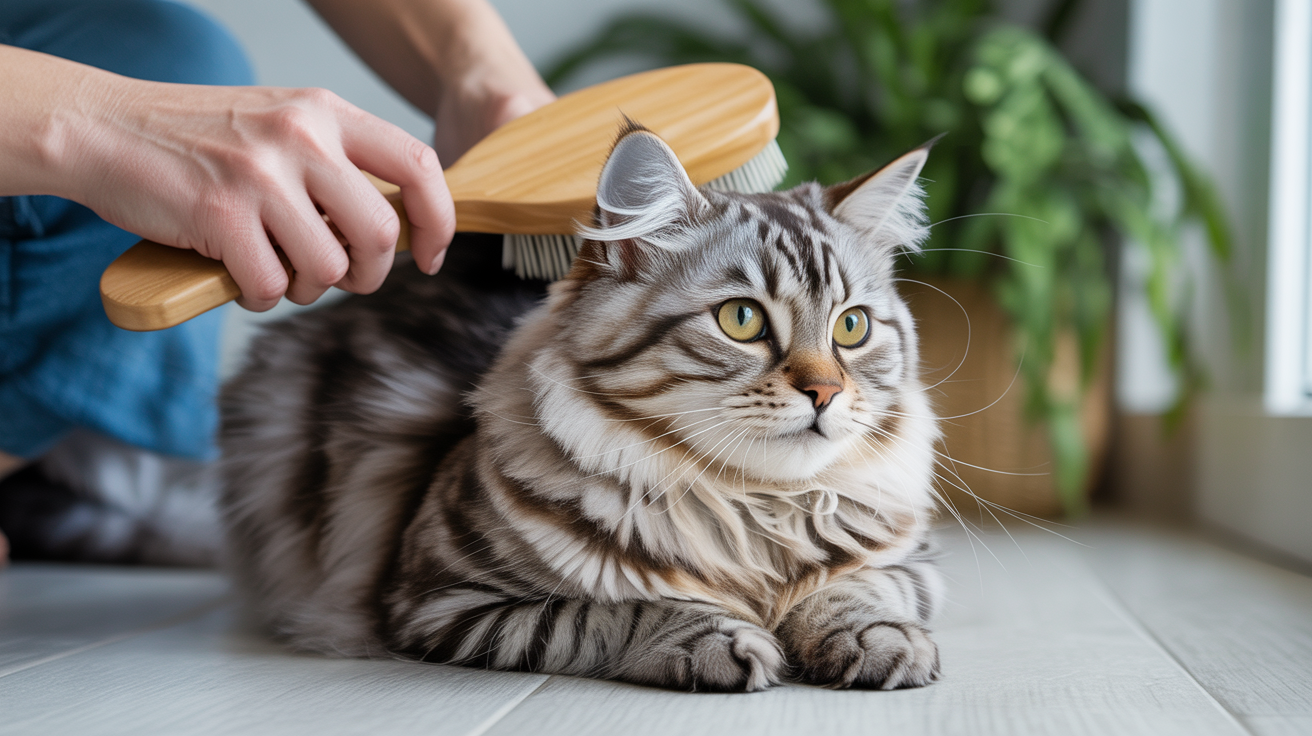
Brushing your cat isn't complicated, but getting it right depends almost entirely on what kind of coat your cat has. A five-minute session with a slicker brush is perfect for a short-haired tabby and nearly useless for a Maine Coon in winter coat. Get the tool and technique matched to the coat, and the whole thing becomes quick, low-drama, and genuinely useful for your cat's skin and comfort.
Here's how to do it, broken down by coat type.
Why brushing actually matters
Regular grooming isn't just about shedding. Brushing distributes the natural oils in your cat's skin along the hair shaft, which keeps the coat looking healthy rather than dull and greasy. It also gives you a regular chance to check for lumps, skin irritation, fleas, or anything that's changed since last week.
For indoor cats, shedding accumulates in corners, on furniture, and in your cat's stomach as hairballs. Brushing reduces all of that. For longer-coated cats, it's the only practical way to prevent mats, and mats that go unaddressed long enough have to be shaved out by a groomer or vet, which is stressful and avoidable.
A calm, short grooming routine also builds trust. Most cats who hate brushing had bad early experiences: too much force, the wrong tool, or a tangle pulled instead of worked through. Starting slowly and keeping sessions short (five to ten minutes) is almost always enough to turn things around.
Coat types at a glance
Before buying any tool, figure out which category your cat falls into. The table below covers the most common coat types and their basic needs.
| Coat type | Examples | Typical brush frequency | Key concern |
|---|---|---|---|
| Short, dense | British Shorthair, American Shorthair | Once a week | Shedding buildup |
| Short, fine | Siamese, Abyssinian | Every 10–14 days | Minimal; mainly bonding |
| Medium | Ragdoll, Maine Coon (juveniles) | 2–3 times per week | Early mat prevention |
| Long, fine | Persian, Himalayan | Daily | Severe matting risk |
| Long, coarse | Norwegian Forest Cat, Siberian | 2–3 times per week | Dense undercoat mats |
| Hairless / minimal | Sphynx, Peterbald | Weekly skin wipe | Oil buildup on skin |
Mixed-breed cats are trickier to classify. Look at the length around the collar, the belly, and the back of the haunches, those areas mat first on longer-coated cats, so they're the best diagnostic spots.
Short-haired cats: easy but still worth doing
Short-haired cats largely groom themselves well, but that doesn't mean brushing is pointless. During seasonal sheds (spring especially), a short-coated cat can lose a remarkable amount of fur. A five-minute session once a week makes a visible difference on your furniture and reduces hairball frequency.
Best tools for short coats
A rubber grooming mitt or a soft bristle brush is usually all you need. Run it in the direction of hair growth, from neck to tail. For heavier shedders, a fine-toothed metal comb once a week pulls out the loose undercoat more effectively than a brush alone.
Avoid slicker brushes with stiff wire pins on very short, fine coats, they can scratch the skin if you press too hard, and there's not enough coat to justify the tension.
Technique
Work in short, light strokes. Short-haired cats have thin skin and often find heavy pressure uncomfortable. If your cat starts flicking their tail or shifting away, ease up or stop. Three minutes of comfortable brushing beats eight minutes of squirming every time.
Long-haired cats: where most problems start
Honestly, long-haired cats are where brushing earns its keep. A Persian or Himalayan left unbrushed for two weeks will develop mats behind the ears, in the armpits, and along the belly, all spots the cat can't easily reach themselves.
The core rule: never brush through a mat. Tugging at one with a brush causes pain and makes the cat associate grooming with discomfort. Work the mat out first, then brush.
How to work out a mat
For a loose mat, hold the base of the mat with your fingers (so you're not pulling the skin) and gently tease it apart with a mat splitter or a wide-tooth comb, working from the outside edges inward. Use a detangling spray formulated for cats if the mat is stubborn, a light mist helps.
For tight mats that won't budge, stop and book a groomer. Trying to cut them out at home with scissors risks cutting skin, which is easier to do than you'd expect since the skin tents up under the mat.
If your cat has extensive matting, a vet visit first is worth it. Cats with severe mats sometimes need sedation for a full clip, and that's genuinely safer than multiple stressful home sessions. You might also want to check the guide on bathing a cat when you truly need to since some long-haired cats need an occasional bath alongside their brushing routine.
Best tools for long coats
- Wide-tooth comb: use this first to find and loosen tangles before any brush touches the coat
- Slicker brush (with flexible pins, not rigid): good for finishing and fluffing after combing through
- Undercoat rake: helpful for dense-coated breeds like Norwegians and Siberians during heavy sheds
- Mat splitter or mat comb: a narrow, sharp-toothed tool for working through knots without pulling
Work in sections. Lift the top layer of fur and brush the underlayer first, then let the top layer fall down and brush that. This method catches mats before they tighten, rather than sliding over the surface and missing the problem.
Daily sessions don't have to be long. Ten minutes of careful daily combing on a Persian is far more effective and less stressful than an hour-long once-a-week battle.
Medium-coated and semi-longhaired cats
Cats like Ragdolls and adult Maine Coons land in a middle zone. They don't need daily brushing the way a Persian does, but skipping a full week will let the undercoat start to knot. Two to three sessions per week, around ten minutes each, is a reliable rhythm.
Use a wide-tooth comb on the belly and ruff first, then a slicker brush over the back and sides. Pay extra attention behind the ears and where the legs meet the body, those friction zones mat faster than anywhere else.
Shedding is substantial in this coat category, particularly in spring and fall. A deshedding tool (sometimes called an undercoat rake or a shedding blade) once a week during peak season removes the dead undercoat before it forms a felt layer close to the skin. Go gently on the belly; the skin there is sensitive and the undercoat thinner.
Hairless cats: a different kind of grooming
Sphynx cats don't need brushing in the conventional sense, but their skin needs regular attention. Without fur to absorb the oils produced by skin glands, those oils accumulate on the surface and in skin folds around the neck and armpits. Left uncleaned, this leads to blackheads, greasiness, and a distinctive smell that owners tend to describe charitably.
Wipe down a Sphynx with a damp, unscented cloth or a cat-safe grooming wipe once a week. Pay attention to the skin folds, under the chin, and around the ears. Their ears also tend to produce more wax than furred cats, checking and cleaning them regularly is part of the routine. The guide on how to clean your cat's ears and eyes safely covers that part of the process in detail.
Making brushing a habit your cat tolerates (or actually enjoys)
The single biggest factor in whether a cat accepts brushing is how the sessions start. A cat who's already calm and comfortable, after a nap, after a meal, while purring on the couch, is far more likely to sit still than one who's just been startled or called over for the purpose.
A few things that consistently help:
- Keep the first few sessions very short (two to three minutes) and stop while the cat is still relaxed, not when they've had enough
- Let the cat sniff the brush before you use it; some cats accept tools more readily if they've had a chance to investigate
- Pair brushing with something the cat already likes (petting afterward, a treat, or simply ending while they're calm)
- Work around the cat's body language, if they start grooming themselves during your session, that's usually fine; if the tail starts lashing, wrap up
Trimming claws before a grooming session can reduce the damage from a sudden squirm. The guide on trimming your cat's claws without the drama is worth reading if that's still a two-person job in your house.
Frequently asked questions
How often should I brush my cat?
It depends on coat length. Short-haired cats do well with once a week or even every two weeks. Medium-coated cats need two to three sessions per week. Long-haired cats with fine coats (Persians, Himalayans) generally need daily brushing to stay mat-free. When in doubt, brush more often during spring and fall when shedding peaks.
My cat hates being brushed. What should I do?
Start with the softest tool you have (a rubber grooming mitt works well for resistant cats) and keep sessions under three minutes. Don't restrain the cat, let them move away and simply try again later. Consistency over weeks usually gets results. If a cat has a history of mat-related pain or a bad grooming experience, it may take longer. Some cats with extreme brush aversion do better with a professional groomer who has handling techniques that aren't practical at home.
Can I brush a cat too much?
For short-coated cats, over-brushing can irritate the skin, particularly with stiff wire tools. For long-coated cats, the risk is more about being rough with tangles than about frequency. Gentle daily brushing on a long coat won't cause harm. Watch your cat's reaction, if they start flinching or moving away more than usual, ease up on pressure and reduce the session length.
What's the best brush for deshedding a cat?
For heavy shedders, an undercoat rake or a rubber deshedding tool works better than a standard brush, because they reach the dead undercoat rather than just the top coat. These work best on medium and long coats; for short, fine-coated breeds, a grooming mitt or a rubber curry brush is gentler and equally effective at pulling loose fur.
When should matting be handled by a vet or groomer?
Any time the mats are tight, numerous, or close to the skin. A mat you can't work through with your fingers and a wide-tooth comb in a few minutes is a mat that needs professional help. Cats with full-body matting, or mats in sensitive areas (belly, armpits, groin), should go to a groomer or vet, cutting close to skin at home carries real injury risk. If the cat is elderly, in pain, or has skin conditions, a vet visit is the right call over a grooming salon.
This article is general guidance for healthy adult cats and is not a substitute for advice from a veterinarian who can assess your individual cat.