Grooming & Care
How to Trim Your Cat's Claws Without the Drama
A calm, step-by-step guide to trimming your cat's claws at home — how to find the quick, which tools to use, and how to handle a resistant cat.
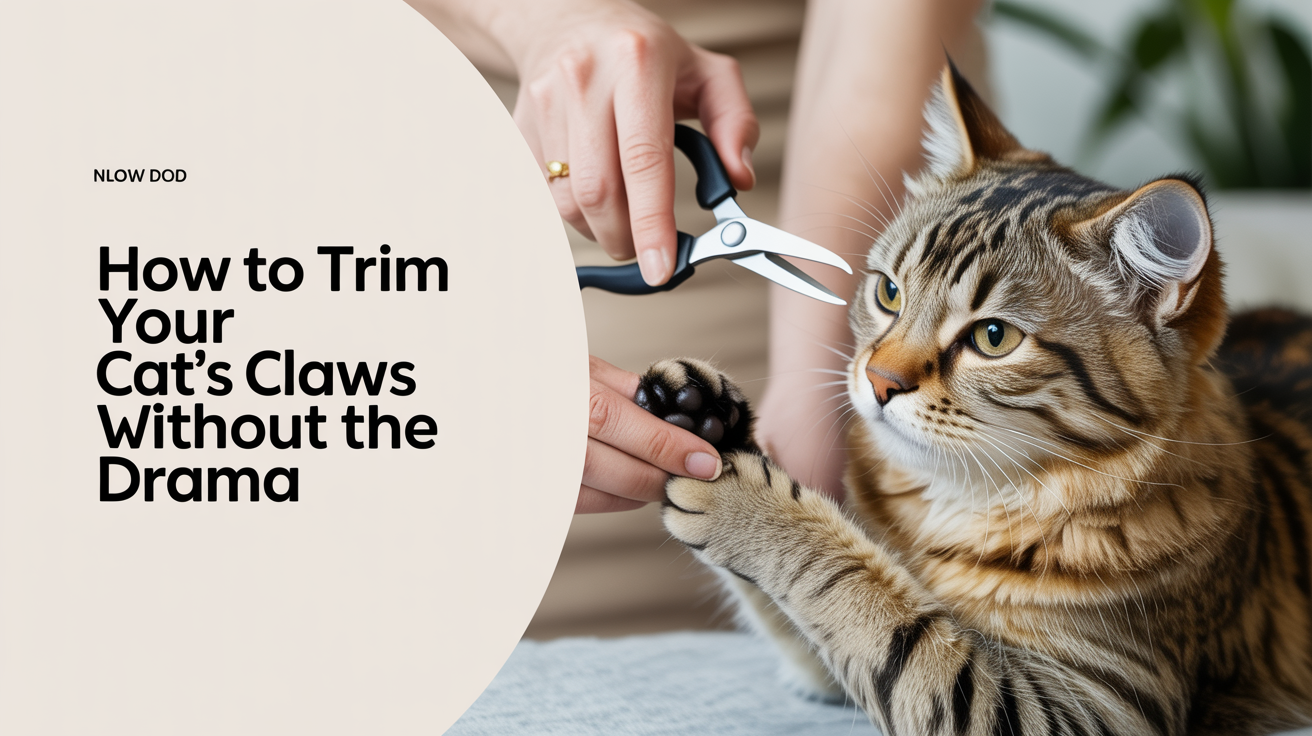
Trimming your cat's claws at home is completely doable, even if your cat currently treats the clippers like a medieval torture device. Most cats resist the first few sessions, then gradually tolerate it once the routine becomes familiar. The key is going slow, keeping sessions short, and knowing exactly what you're looking for before you cut.
What you need before you start
You don't need much. A pair of scissor-style or guillotine-style cat nail clippers works fine, standard human nail clippers can also work in a pinch, though they sometimes cause splitting. Keep a small container of styptic powder nearby in case you nick the quick (it stops bleeding fast). That's genuinely it.
A few things that also help:
- A well-lit spot, since you need to see through the nail clearly
- A towel or blanket you can wrap a squirmy cat in
- Treats your cat actually likes (not just the ones gathering dust in the cupboard)
- A second person, if your cat has strong opinions about being held
Some people find it easier to clip with the cat on their lap facing away from them. Others prefer having the cat on a table. Neither is wrong, use whatever gets you both reasonably settled.
Understanding the quick
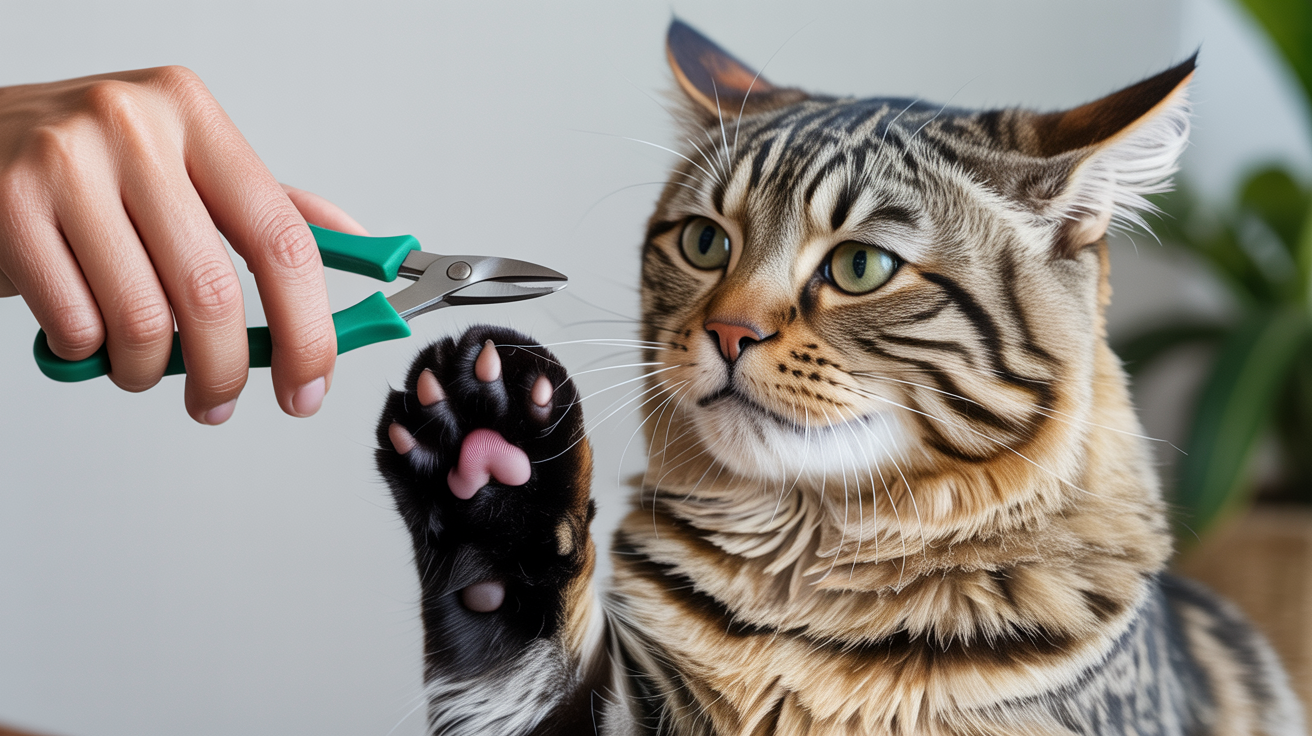
The quick is the pink, living tissue inside the nail that contains blood vessels and nerve endings. Cut into it and it bleeds; it also hurts. This is the thing most people are afraid of, and reasonably so.
On cats with pale or white nails, you can see the quick as a pink zone running partway down the nail. Leave at least 2mm of white nail between your cut and where the pink ends.
On cats with dark nails, you're working a bit more by feel. Clip small amounts at a time from the tip, and stop as soon as you notice the cut surface looks slightly darker or has a small grey or black dot in the center, that dot means you're close to the quick. Don't go further.
If you do nick it: press styptic powder firmly against the tip for 30 seconds, then keep your cat calm and off rough surfaces for a bit. It's uncomfortable but not dangerous.
How to actually trim the nails
Work one paw at a time and take breaks between paws if your cat needs them. It's fine to do two paws today and two tomorrow, partial sessions still count.
- Gently hold one paw and press the pad from behind to extend a single claw.
- Look at the nail and identify where the quick ends.
- Cut the hooked tip only, you're removing the sharp point, not trying to make the nail short.
- Release the claw, let your cat retract it, then move to the next one.
- Give a treat after each paw (or after each nail, if your cat is particularly suspicious).
Most adult cats have 18 claws total: five on each front paw (including the dewclaw on the inner side of the leg) and four on each back paw. Don't forget the dewclaws, they don't touch the ground, so they don't wear down naturally and can actually curl back into the paw if neglected for too long.
For frequency, every three to four weeks is a reasonable target for most indoor cats. Outdoor cats who walk on hard surfaces wear their claws down more, so they may need less frequent trimming or none at all, depending on the individual.
Handling a cat who won't cooperate
Some cats sit there like little zen masters. Others act as though you've personally betrayed them. Both responses are normal.
If your cat fights the clippers actively, start with desensitization well before you need to trim. Leave the clippers out for a few days so they stop being a novel threat. Handle your cat's paws regularly during calm moments, just hold a paw briefly, release, treat, repeat. You're building the association that paw-handling equals something good.
The burrito method (wrapping your cat snugly in a towel with one leg exposed at a time) works well for cats who object to being held still. It's not harsh, it actually reduces how much the cat can thrash, which makes the whole thing calmer and faster.
If your cat is genuinely fractious, scratching hard enough to draw blood, screaming, shutting down completely, don't push through it. A vet or groomer can handle difficult cats with proper restraint techniques and, when necessary, short-acting sedation. Forcing a traumatic experience at home just makes every future session harder.
The grooming relationship you build with your cat now pays off later. If you're also working on brushing your cat based on their coat type, combining a brief brush session with nail trims (doing one after the other) can make both feel like part of a normal routine rather than separate ambushes.
A quick comparison: claw trimming methods
| Method | Best for | Downsides |
|---|---|---|
| Scissor-style clippers | Most cats; gives good control | Requires a steady hand |
| Guillotine-style clippers | Thinner nails; fast action | Blade dulls faster; can crush the nail if dull |
| Human nail clippers | In a pinch | Can split the nail; not ideal long-term |
| Professional groomer | Very resistant cats; new owners | Cost; scheduling; cat has to travel |
| Vet clinic trim | Anxious or aggressive cats | Cost; may need sedation for extreme cases |
Signs something is wrong with your cat's claws
Most trimming goes fine. But occasionally you'll notice something that warrants a closer look.
A nail that has already grown into the pad needs a vet visit, not a home trim, removing it at that point requires cleaning and sometimes antibiotics. You'll usually notice it by limping, reluctance to walk, or a swollen-looking toe.
An unusual color change in the nail (yellowing, browning, pitting) or a nail that breaks off entirely can sometimes point to a fungal issue or an injury worth having checked out. Cats who are losing nails more often than occasionally, or who seem to have painful feet without an obvious cause, should see a vet.
Other routine grooming tasks can tip you off too. When you're cleaning your cat's ears and eyes, it's easy to do a quick paw check at the same time, looking at pads and nails together takes only a minute and catches issues early.
Frequently asked questions
How do I know if I cut the quick?
The nail will bleed, sometimes quite a bit for a small amount of tissue. Your cat will likely pull the paw away quickly or vocalize. Press styptic powder against the nail tip firmly for 30 seconds. If bleeding doesn't slow within a few minutes, contact your vet.
Can I use human nail clippers on my cat?
Yes, but with caveats. Human clippers can work on young cats with thin nails, but they're more likely to split or crush the nail than clippers designed for pets. If you're using them regularly, the cut quality is just not as clean. Cat-specific clippers aren't expensive and make a noticeable difference.
How often should I trim my cat's claws?
For most indoor cats, every three to four weeks. You'll know it's time when you start hearing the clicking of nails on hard floors, or when your cat's claws are visibly curving into a hook. Kittens tend to need trimming more often because their nails grow quickly.
My cat has retractile claws that are hard to extend. What do I do?
Press gently but firmly on the top and bottom of the toe simultaneously, the claw should extend. If a cat is very tense, the muscles that hold the claw retracted will resist you. Try again when the cat is more relaxed, or wait until after a nap when muscle tone is lower.
Is it okay if I only trim the front claws?
Yes. Front claws do more damage to furniture and people, and they tend to grow faster. Many owners trim only the front claws and leave the back ones, especially if the cat goes outdoors and uses the back claws for climbing. The back claws also tend to be easier for cats to wear down naturally.
This article is general guidance for healthy adult cats, it's not a substitute for veterinary advice. If you have concerns about your cat's nails, paws, or health, a vet who can examine your cat is always the right call.