Grooming & Care
Bathing a Cat: When You Truly Need To, and How
Most cats never need a bath, but when they do, here's how to do it calmly and safely — step by step, without the chaos.
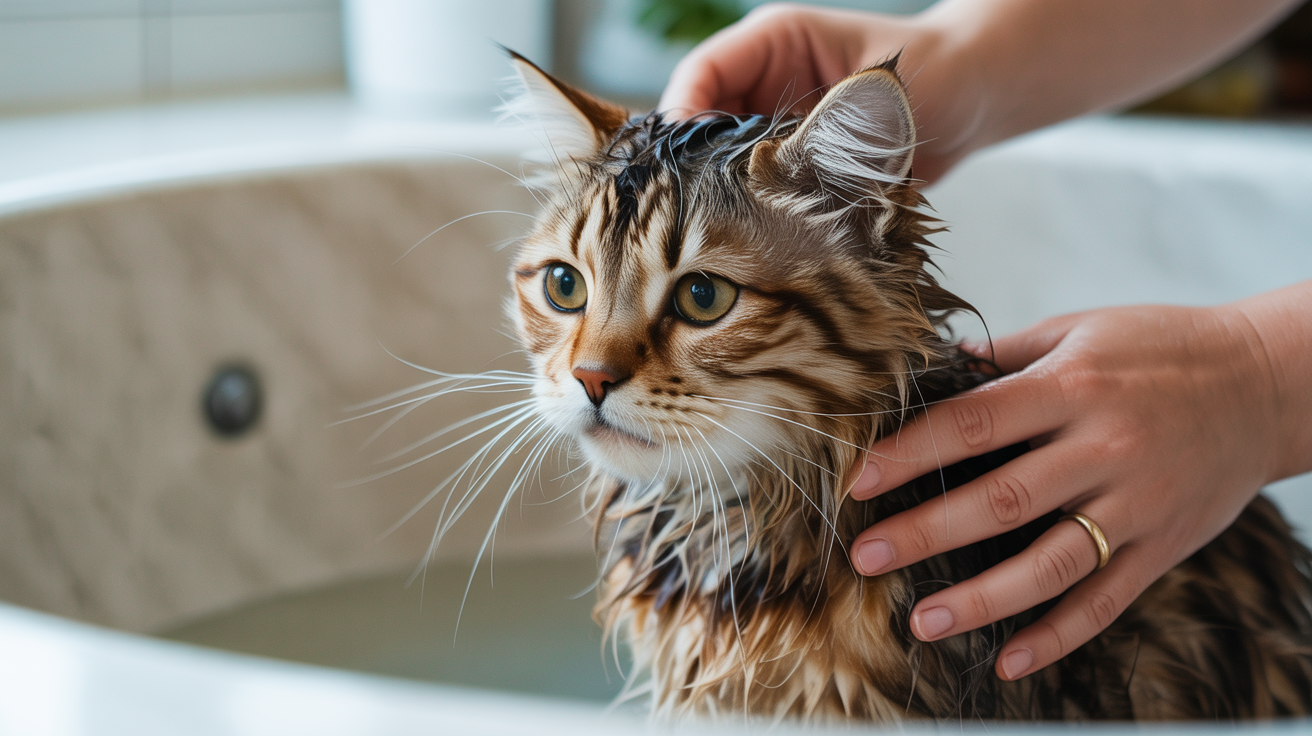
Most cats handle their own grooming better than we give them credit for. That rough tongue, the meticulous paw-washing routine, the ten-minute post-nap coat check, it adds up to a remarkably clean animal. So the honest answer to "do cats need baths?" is: usually no. But sometimes the answer flips, and when it does, a calm, well-prepared bath makes all the difference between a manageable experience and a minor disaster.
When a bath is actually necessary
Skipping unnecessary baths is the right call. Bathing strips natural oils from the coat, can spike stress hormones, and is simply pointless when the cat is already clean. That said, there are real situations where a bath is not optional.
Coat contamination. If your cat has walked through something toxic, motor oil, paint, certain pesticides, or any chemical that shouldn't be licked off, bathe immediately and call your vet or poison control to confirm the substance is safe to wash at home versus treated medically.
Severe flea infestation. A flea comb and topical treatment handle most infestations, but a heavy load in a kitten or elderly cat sometimes warrants a bath with a vet-approved flea shampoo. Check with your vet before bathing any cat under 12 weeks or one who is unwell.
Skin conditions or medicated shampoos. Some dermatological or fungal conditions require periodic medicated baths as part of treatment. Your vet will specify the shampoo and frequency; follow their instructions over anything written here.
Mobility issues and obesity. A cat who can't reach their hindquarters or belly to groom will accumulate grease and debris over time. This is a long-term management situation, not a one-off fix.
The "something disgusting happened" scenario. Litter that stuck to a long coat, a run-in with a skunk, an encounter with cooking grease, these happen and a bath is the fastest fix.
If none of these apply, regular brushing does more for coat health than any bath. See how to brush your cat based on their coat type for a breakdown by coat length and texture.
What to gather before you start
Improvising mid-bath while a wet cat tries to escape is a bad plan. Have everything ready in the room before the water goes on.
| Item | Notes |
|---|---|
| Cat-safe shampoo | Human shampoo, including "gentle" baby shampoo, can irritate cat skin; use a product formulated for cats |
| Warm water source | Sink or tub; test temperature on your wrist (lukewarm, not hot) |
| Non-slip mat | A rubber bath mat or folded towel on the sink/tub bottom prevents panic from slipping |
| 2–3 towels | One for the immediate wrap, one for continued drying |
| Washcloth | For the face, never run water directly over a cat's head |
| Cup or detachable sprayer | For rinsing without the full-force tap noise |
| Treats | High-value ones; save them for during and after the bath |
Trim your cat's claws a day or two before (not right before, they'll be on edge). Read our guide on how to trim your cat's claws without the drama if you're due for a session. Keep the bathroom door shut and the room warm; a damp cat chills faster than you'd expect.
Step-by-step: how to bathe a cat
Fill the basin first
Running water sounds and feels alarming to most cats. Fill your sink or tub with a few inches of lukewarm water before bringing the cat in. A sprayer on low is less startling than a running tap for the rinse stage.
Get the cat wet gradually
Lower your cat into the water feet-first. Let them stand on the mat and use the cup or sprayer to wet the coat from the neck back. Work slowly and talk to them in a low, calm voice. Avoid the face, ears, and top of the head entirely for now.
Apply shampoo and work it in
Use a small amount of cat shampoo and work it into the coat in the direction the fur grows, from neck to tail. Give some attention to the belly and legs, which accumulate the most grime. Don't scrub hard, gentle but thorough.
Rinse completely
This is the step most people rush, and it matters. Shampoo residue left in the coat causes itching and skin irritation. Rinse until the water running off the coat is completely clear and the fur no longer feels slippery. That usually takes longer than you think.
Clean the face last, with a damp cloth
Dampen a washcloth (no shampoo) and wipe gently around the eyes, chin, and outer ear area. Never pour water over the head or into the ears. If your cat has discharge buildup around the eyes, our guide on how to clean your cat's ears and eyes safely covers that in more detail.
Wrap and dry
Lift your cat out and wrap them in a towel immediately. Press gently rather than rubbing, rubbing tangles the coat and doesn't actually dry faster. Keep them in the warm, draft-free room until the coat is mostly dry. Most cats will take over from there once you set them down.
A blow dryer on the lowest heat setting, held well away from the coat, works for thick-coated cats who take forever to air-dry. Some cats tolerate it; many don't. If yours is stressed by it, skip it.
Making the experience less awful over time
A cat who has only ever been bathed in a crisis is going to panic every time. If bathing is a recurring need for your cat, because of a skin condition, mobility issues, or a particularly adventure-prone personality, it pays to invest in desensitization.
Start small. Let your cat explore the empty sink or tub. Turn on the faucet without putting them in. Work up to wetting their paws. Over several sessions, the goal is "cat who is slightly annoyed" rather than "cat who is terrified." High-value treats at every step help more than anything else.
Keep the sessions short. Even if the bath isn't complete, ending on a calm note is worth more than pushing through a full scrub while your cat is panicking.
One other thing: cats who are bathed when they're tired and full tend to tolerate it better than cats who are hungry and wired. Post-mealtime is usually a reasonable window.
Frequently asked questions
How often should I bathe my cat?
For most cats, never, their self-grooming is sufficient. Indoor cats who don't get into trouble rarely need a bath at all. If your cat has a medical reason to be bathed, your vet will give you a frequency; otherwise, let the coat and situation guide you. Once or twice a year at most for the average house cat.
What shampoo is safe to use on a cat?
Use a shampoo specifically formulated for cats. Human shampoos, dish soap, and baby products are not pH-balanced for feline skin and can cause dryness or irritation, even when they seem gentle. If you're dealing with a flea situation or skin condition, ask your vet which product to use.
My cat is terrified of water. Is there an alternative?
Yes. Waterless cat shampoos (foam or spray) handle light dirt and odor without a full bath. They're not a substitute when there's actual chemical contamination or a heavy flea infestation, but for general freshening-up between baths they work reasonably well. Grooming wipes are also useful for spot-cleaning.
Can I bathe a kitten?
With caution. Kittens under 12 weeks have trouble regulating their body temperature and are more fragile than adult cats. If a young kitten genuinely needs a bath, use warm water, work quickly, dry them thoroughly, and keep them in a warm space afterward. For kittens with flea infestations, talk to your vet before using any shampoo, many products are not safe for very young animals.
My cat scratched me during the bath. Do I need to worry?
Wash the wound with soap and water immediately. Cat scratches can cause cat scratch disease (Bartonella), so if a scratch is deep, becomes red or swollen, or you develop a fever, see a doctor. Keep your claws trimmed between baths to reduce the risk; it's worth doing as a regular habit.
This article is general guidance for healthy adult cats and is not a substitute for veterinary advice.