Grooming & Care
Grooming a Long-Haired Cat Without the Fuss
A practical guide to grooming a long haired cat at home. Learn daily brushing routines, mat removal, and bathing basics that keep your cat comfortable.
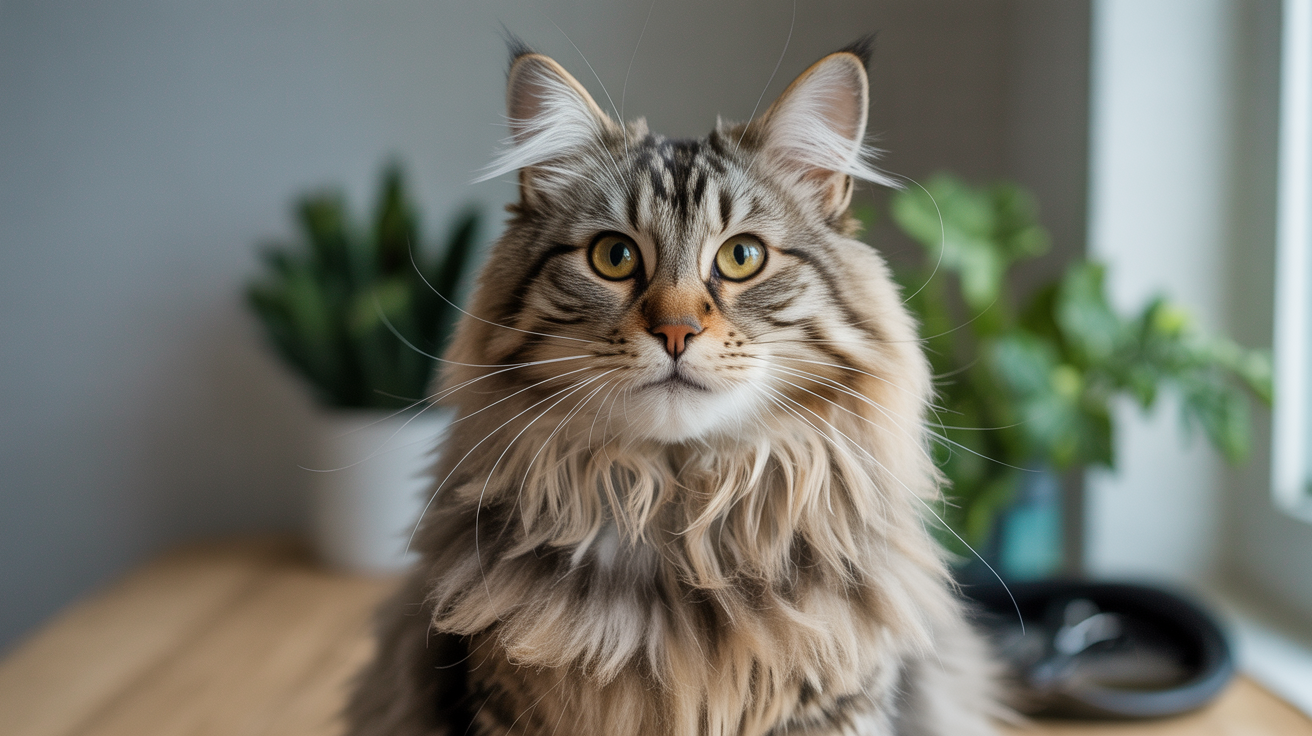
Grooming a long-haired cat is a regular commitment, but it does not have to be a battle. The cats that sit calmly for a brush are almost always the ones whose owners started early and kept sessions short. If you are picking this up with an older cat that has learned to distrust the comb, the same principles apply, just more gradually.
The short answer: brush daily, use the right tools, tackle any mats before they tighten, and keep bath time genuinely rare. Everything below fills in the details.
At a Glance
- Brush daily for five to ten minutes; work in layers rather than one quick pass over the top coat.
- Tackle a fresh, loose mat right away with fingers and a wide-tooth comb; a tight, weeks-old mat usually needs a groomer or vet.
- Check the armpits, behind the ears, the belly, and the collar area every session, since those friction zones mat first.
- Most long-haired cats need a bath only a few times a year, if that; daily brushing does most of the cleaning work.
- Trim nails every two to four weeks so grooming sessions stay safe for both of you.
- Start kittens on gentle, brief handling as early as possible so grooming never becomes a fight later.
Why Long-Haired Cats Need More Attention Than Short-Haired Ones
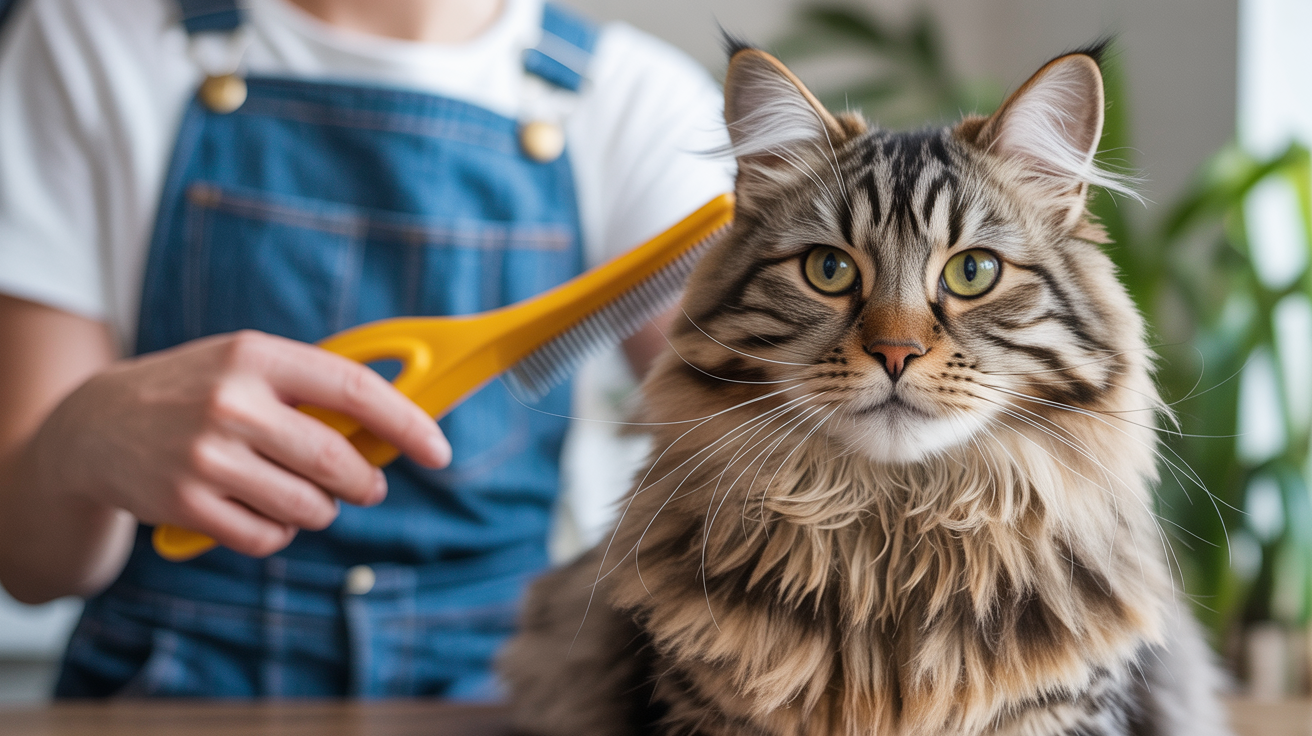
A short-haired cat can manage most of its own coat. A long-haired cat cannot, and that is not a flaw in the cat. The length and density of the fur simply overwhelm what self-grooming can handle.
Without regular human help, a few predictable problems follow. Loose hair mixes with the coat and forms tangles that tighten into mats. Mats pull at the skin, trap moisture and debris, and can become painful or infected under the surface where you cannot easily see them. Cats also swallow more fur when they are not brushed, which raises the chance of hairballs that cause vomiting or, in worse cases, a blockage that needs veterinary attention. The ASPCA notes that frequent brushing reduces both shedding and the incidence of hairballs, which is a large part of why the daily habit matters more than any single grooming tool you buy.
Breeds like the Persian, Maine Coon, Ragdoll, and Norwegian Forest Cat each have slightly different coat textures, but the basic daily brushing routine suits all of them. Persian cat grooming tends to need the most attention because the fur is dense and soft, which mats more readily than a coarser-textured coat. A Maine Coon's guard hairs are coarser and shed water more easily, so mats tend to concentrate around the ruff and britches (the leg fur) rather than across the whole body. Knowing where your specific breed mats first lets you spend your five minutes where it counts instead of brushing the same easy spots every day and missing the ones that actually cause problems.
The Tools That Actually Make a Difference
You do not need a cabinet full of grooming equipment. A small, well-chosen set covers almost every situation.
A wide-toothed comb. This is the workhorse for long hair. The wide spacing lets you work through the coat without yanking, and it will catch hidden tangles before they become mats. Metal combs with rounded tips are easier on the skin than plastic ones.
A slicker brush. The fine wire pins lift loose fur and fluff the coat after you have combed through it. Use light pressure; pressing too hard with a slicker brush on sensitive skin is uncomfortable.
A dematting comb or mat splitter. Keep one on hand for the occasional tangle that the wide-tooth comb cannot simply pull through. The curved blades of a mat splitter cut through a mat with less pulling than trying to work it apart with a regular comb.
Stainless scissors with rounded tips. For mats that are too close to the skin to split safely, carefully trimming them out is the right call. Rounded tips protect against an accidental nick if the cat moves.
If you are not sure which comb suits your cat's specific coat texture, the guide on how to brush your cat based on their coat type walks through the differences.
Building a Daily Brushing Habit
Daily brushing for long hair is not excessive. It takes five to ten minutes once you and your cat have a routine, and it prevents the kind of matting that would take much longer to fix.
Pick a time that works for your cat. Many cats are most relaxed right after a meal or during a natural nap wind-down. Avoid sessions when the cat is already active and wants to play, or when you are rushing and might get impatient.
Start where the cat is comfortable. Most cats accept brushing along the back and sides without much fuss. Save the belly, legs, and armpits for later in the session once the cat has settled. Those areas mat easily but also feel more vulnerable to the cat, so going there first often triggers resistance.
Work in sections, not sweeps. Rather than running the comb from neck to tail in one pass, part the fur and work through layers. Lift the top coat, comb the underlayer, then smooth everything back down. This catches loose fur and tangles that a surface pass would miss.
Keep it positive and brief. End the session before the cat is done with it, not after. Finishing while the cat is still calm means the next session starts from calm rather than from where the last one ended badly. A treat at the end helps, but the absence of stress matters more in the long run.
Consistency beats intensity here. A cat brushed for six minutes every day sheds a fraction of the loose undercoat that a cat brushed for forty-five minutes once a month does, and the daily version never gives mats time to form in the first place. If a session gets interrupted or skipped, just pick back up the next day rather than trying to make up for lost time with a longer catch-up session, which tends to wear out the cat's patience and yours.
For a detailed walkthrough of technique by coat type, see how to brush your cat based on their coat type.
Handling Mats Before They Get Worse
Mats are easier to deal with the moment you find them than a week later. A fresh tangle that has not fully locked together can often be worked apart with fingers and a wide-tooth comb. A tight mat that has been sitting for weeks is a different situation.
The finger-first approach. Hold the mat at its base with one hand so you are not pulling at the skin. Use your other hand to gently tease apart the outer edges of the mat, working from the ends of the fur inward. Once the outside is loosened, try the wide-tooth comb from the tip of the mat toward the base in small strokes.
When to use a mat splitter. If the mat will not give with fingers and a comb, a mat splitter can divide it into smaller sections. Work slowly. The goal is to separate the mat, not to saw through it quickly.
When to cut. If a mat is tight against the skin, cutting is safer than pulling. Slide a comb between the mat and the skin to create a barrier, then cut above the comb. Never point scissors toward the skin. If the mat is large, close to a delicate area, or if you cannot see where the skin is, a groomer or vet is a better option than risking a cut.
Mats in the armpits and behind the ears are common trouble spots on long-haired cats. Check those areas at every grooming session. A rough guide: if you can pinch the mat and lift it away from the body with a bit of give, it is usually workable at home. If it sits flat with no movement between the mat and the skin, treat it as a professional job.
Bathing, Nail Trims, and the Occasional Extras
Most long-haired cats do not need regular baths. A healthy coat that is brushed daily stays clean on its own. Bathing becomes worthwhile when a cat has gotten into something oily or sticky, when a vet recommends it for a skin condition, or when a very dense coat like a Persian's starts to look greasy at the roots despite regular brushing.
When a bath is needed, the article on bathing a cat when you truly need to and how covers the full process without glossing over the parts that usually go wrong.
Nail trims are a separate routine from coat grooming but worth mentioning here because long-haired cats that resist grooming tend to resist nail trims too. Short nails make the grooming sessions safer for both of you, and they reduce the damage if the cat does swipe. A step-by-step guide to how to trim your cat's claws without the drama covers how to make it less of an ordeal.
For the area around the eyes and face, especially on flat-faced breeds like Persians, check daily for discharge that can collect in the skin folds. A damp cloth is usually enough to keep that area clean. If you notice redness, persistent tearing, or any sign of irritation, a vet visit is the right step rather than trying to treat it at home.
Grooming time is also a useful health check. Because it puts your hands over nearly the whole body on a regular basis, it is often the first place you will notice a new lump, a scab, a flea, or a patch of thinning fur. A 2021 AAHA and American Association of Feline Practitioners feline life-stage guidance notes that changes in grooming habits, in either direction, can be an early sign of a health issue worth mentioning at the next vet visit, so a cat that suddenly stops tolerating brushing, or one that starts over-grooming a specific spot, is telling you something even if nothing looks obviously wrong yet.
A Practical Grooming Schedule at a Glance
| Task | Frequency | Why it's on this schedule |
|---|---|---|
| Full comb-through and brush | Daily | Prevents loose undercoat from tangling into mats |
| Check for mats in armpits, behind ears, belly | Daily | These friction zones mat first and fastest |
| Wipe eye area (flat-faced breeds) | Daily | Prevents discharge from collecting in skin folds |
| Nail trim | Every 2 to 4 weeks | Keeps handling safe during grooming |
| Bath (if needed) | Only when necessary | Daily brushing handles most coat maintenance |
| Full professional groom | Every few months if coat is dense | Backstop for the mats a home routine misses |
Frequently Asked Questions
My long-haired cat hates being brushed. Where do I start?
Start smaller than you think is worth it. Literally one or two strokes on the back, then a treat, then done. Do that for a few days without pushing further. The goal at first is just to change the cat's association with the brush from negative to neutral. Once the cat stops tensing up, you can gradually extend the session. Rushing it typically sets the process back rather than speeding it up.
How do I know if a mat needs a vet or a groomer rather than home treatment?
If you cannot find where the mat ends and the skin begins, if the skin underneath looks red or irritated, or if the cat reacts with pain when you touch the area, take them to a professional. A vet or groomer with the right tools can remove a mat safely in minutes. Trying to handle it at home when you cannot see clearly risks cutting the skin, which then needs its own treatment.
Can I use human detangling spray on my cat?
No. Human hair products are not safe for cats. Cats groom themselves and will ingest anything applied to their fur. If you want to use a detangling spray to help work through a mat, look for a product specifically formulated and labelled as safe for cats. Even then, use it sparingly.
My Persian's coat looks clean but feels greasy. Is that normal?
A greasy feel at the roots on a Persian is fairly common and usually means the coat needs a bath or a more thorough comb-through to remove sebum buildup. It is not automatically a health problem, but if it appears suddenly, is accompanied by other changes, or does not improve with grooming and bathing, have a vet take a look to rule out a skin condition.
At what age should I start grooming a long-haired kitten?
As early as possible, ideally within the first few weeks at home. Kittens that are handled gently and introduced to combs and brushes early tend to become cats that tolerate grooming well. Even if the kitten's coat does not technically need it yet, going through the motions with a soft brush helps build the habit on both sides.
How much shedding is normal versus a sign of a problem?
Long-haired cats shed heavily, especially with seasonal coat changes in spring and fall, and daily brushing that fills a small bag with loose fur over a week is normal. What is not normal is bald patches, skin visible through thinning fur in one specific area, or shedding paired with scratching, redness, or scabs. Localized hair loss or skin changes are worth a vet visit rather than assuming it is just seasonal.