Behavior & Training
Curbing Counter-Surfing and Other Cheeky Habits
Learn how to stop cat jumping on counters using humane, reward-based redirection. Practical tips to keep cats off kitchen tables and surfaces for good.
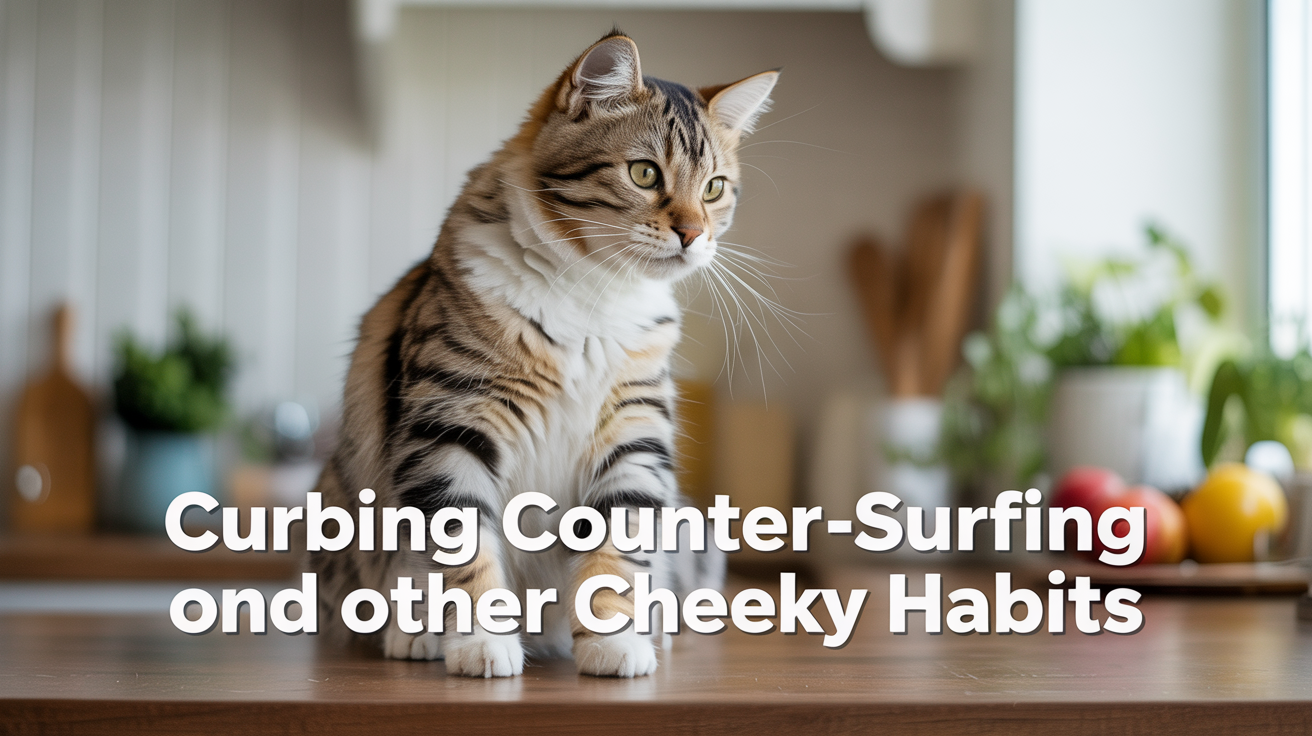
Your cat leaps onto the kitchen counter the second your back is turned. You shoo her off, she lands gracefully, and she is back up again before you have finished turning around. Sound familiar? Counter-surfing is one of the most common complaints from cat owners, and it makes sense once you understand what drives it. The good news: you can absolutely curb this habit without punishment, spray bottles, or a battle of wills.
Why Cats Love Counters in the First Place
Before you can redirect the behavior, it helps to know why it happens. Cats are not being defiant. They are following instincts that served their wild ancestors well.
Height is security. High surfaces give cats a wide view of their territory and a safe vantage point away from perceived threats, including the dog, loud appliances, and unpredictable children.
Counters smell interesting. The kitchen is the most scent-rich room in your home. Food residue, crumbs, cooking smells, and running water all pull cats toward that surface like a magnet.
It is warm up there. Appliances give off heat, and cats are heat-seekers by nature. The top of the refrigerator or a spot near the stove is often one of the warmest flat surfaces in the house.
They have learned it gets them something. If jumping on the counter has ever resulted in your cat getting fed faster, or even just getting attention from you, the behavior has been rewarded. Cats are fast learners in that direction.
Understanding these drivers points you toward solutions that actually work: give your cat better alternatives that meet the same needs.
The Core Strategy: Replace, Do Not Just Remove
Trying to stop cat jumping on counters by punishment alone tends to backfire. Cats do not generalize "no counters ever" from a scare tactic. What they often learn instead is "do not jump up when the human is watching." The counter-surfing continues; it just moves to when you are asleep.
Effective redirection works differently. You make the counter less rewarding while making an alternative more rewarding, consistently, over time.
Step one: reduce the pull. Clear food off counters right after meals. Wipe surfaces to remove lingering smells. Keep the stovetop clean. A boring counter is a less tempting counter.
Step two: provide a better vertical option. If your cat is on the counter because she wants height, a tall cat tree placed near the kitchen solves the root problem. Position it so she can still observe the cooking action from her perch. Most cats will take the upgrade once it feels established and safe.
Step three: reward the right behavior. When your cat uses her cat tree, a window perch, or any surface you have approved, quietly mark that with a treat or soft praise. You are building a habit, so consistency matters more than enthusiasm. A brief "good girl" and a tiny treat every time she chooses the right spot does more over two weeks than any scolding.
Deterrents That Work (and a Few That Do Not)
Some owners find it useful to make the counter itself less appealing as a short-term bridge while the new habit forms. A few options worth knowing about:
Texture deterrents. Cats dislike sticky or crinkly surfaces underfoot. Double-sided tape on the counter edge or a textured mat can interrupt the habit during the training window. Remove these once your cat is reliably using her alternative.
Foil. Many cats do not like the sound or feel of aluminum foil. Laying sheets along the counter edge is an old trick that works for some cats and does nothing for others.
Motion-activated deterrents. Small compressed-air canisters that trigger when a cat jumps up exist specifically for this purpose. They work without you being present, which closes the "I only do it when you are not watching" loophole. Use these sparingly and always pair them with a positive alternative so your cat has somewhere to go.
What tends not to work well: Spray bottles. Squirting your cat may startle her off the counter in the moment, but it does not teach her where to go instead. It can also damage your relationship and raise her general stress level without solving anything. The same goes for loud clapping or physical pushing. These approaches are not harmful in a single instance, but as a repeated strategy they create anxiety without creating new habits.
If you notice your cat is suddenly spending more time on surfaces or seems generally more anxious, it is worth considering whether something in her environment has changed. Stress and insecurity often show up as increased vertical behavior. A new pet, a schedule change, or a move can all be factors. For behavioral changes that seem sudden or severe, a conversation with your vet or a feline behavior consultant is a reasonable next step.
A Practical Room-by-Room Approach
Counters are the most common flashpoint, but cats with a taste for height or exploration tend to have opinions about other surfaces too. Here is a quick breakdown:
| Surface | Why cats like it | What to do |
|---|---|---|
| Kitchen counter | Food smells, height, warmth | Clear food, place cat tree nearby, reward alternative |
| Kitchen table | Height, warmth, proximity to humans | Same as above; feed cat before family meals so hunger is not driving it |
| Bathroom counter | Running water, interesting items | Provide a cat water fountain; keep items stored away |
| Desk or bookshelf | Near you, warm from electronics | Offer a dedicated cat bed or perch at desk height |
| Stovetop | Very warm, especially after cooking | Never leave an unattended warm stove; a stovetop cover can help block access |
The stovetop deserves a specific mention. This is the one surface where physical access prevention is genuinely important for safety reasons. Burns from a hot burner are a real risk. A lightweight stovetop cover used after cooking (and when burners are cold) is a practical solution for cats who are drawn to that warmth.
Other Cheeky Habits Worth Addressing the Same Way
The same replace-and-reward approach that works for counter-surfing applies to related habits that owners often deal with at the same time.
Midnight zoomies and yowling. These tend to have different roots, often linked to hunting instincts, schedule, or age-related changes. A solid play session before bed and timed feeding can help. For more on nighttime noise, why your cat meows at night and how to get sleep covers that in detail.
Scratching furniture. Scratching is a physical and communication need, not spite. The fix is always to provide something better, not to punish the scratching itself. Why cats scratch and how to redirect it to a post walks through the specifics.
Litter box avoidance. When a cat starts eliminating outside the box, there is nearly always a reason worth investigating. Diet, box cleanliness, placement, and medical issues all play a role. Litter box problems: why cats stop using it goes through the common causes.
The connecting thread across all of these: cats behave in ways that make sense to them given their needs and environment. Finding the need and meeting it more effectively is nearly always a better path than focusing entirely on stopping the unwanted behavior.
Building the Habit Over Time
Most cats do not change a well-established behavior in a day or two. Expect the process to take two to four weeks of consistent redirection before the new habit feels natural to your cat.
A few things that help the process along:
- Keep treats small (a tiny pinch is enough to mark good behavior without overfeeding).
- Redirect calmly rather than dramatically. Picking your cat up and placing her on her tree without a fuss works better than a big reaction.
- Make sure the alternative surface is genuinely appealing. A rickety cat tree pushed into an unused corner is not competing with the warm, smell-rich kitchen counter. Location and stability matter.
- Stay consistent across everyone in the household. If one person allows the counter behavior, the cat will keep trying with everyone.
Patience and consistency do most of the work here. Cats are trainable, even if they would prefer you not know that.
Frequently Asked Questions
My cat only does this when I am out of the room. How do I stop it?
This is the most common pattern because it means your cat has learned the behavior gets interrupted when you are present. The solution is making the counter less appealing even when you are not there (texture deterrents, cleared surfaces) while making the alternative more rewarding. A motion-triggered deterrent can help bridge that gap during training since it works regardless of whether you are watching.
Is it ever okay to let cats on the counter?
That is a personal choice and there is no universal right answer. Some households are fine with cats on counters; others are not, for hygiene or safety reasons. The guidance here applies if you have decided you want to deter cat from surfaces. If you are comfortable with it, the main exception to keep in mind is an active stovetop.
My cat keeps jumping on the kitchen table specifically during meals. What helps?
Timing matters here. Feeding your cat just before your own mealtimes takes the edge off food-driven interest. A perch or cat tree positioned so your cat can see the table from a distance gives her a place to observe without being on the table itself. Some cats settle quickly once they have a spot that meets the need for height and proximity to the family.
Can I use a spray bottle to keep my cat off counters?
Spray bottles tend to create cats that are wary of you rather than cats that understand where they should go instead. They may interrupt the behavior in the moment, but they do not teach an alternative, and they can raise general stress levels. The redirection approach takes a bit more patience but produces a more lasting result without the side effects.
My cat was never a counter-surfer and has suddenly started. Should I be concerned?
Sudden behavior changes are worth paying attention to. If your cat has developed a new interest in surfaces, is unusually restless, or the behavior change came alongside other changes in appetite, thirst, or elimination habits, a vet visit is a reasonable step. Sometimes what looks like a training issue has an underlying physical cause.