Gear & Home
Choosing Cat Litter: Clumping, Clay, and Natural
A plain-language guide to clumping vs non-clumping litter, natural cat litter, and low-dust options so you can pick the right type for your cat.
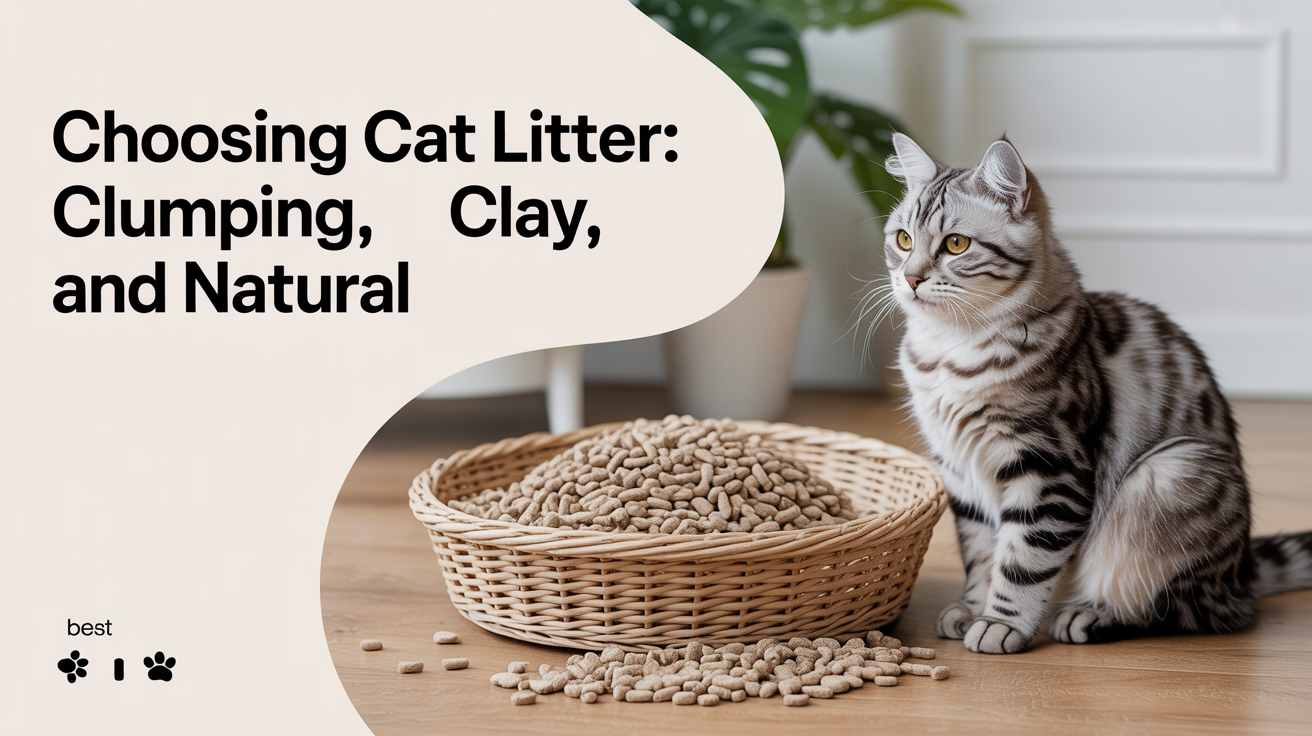
The best cat litter is mostly the one your cat will actually use. Beyond that, the choice comes down to a few practical trade-offs: how often you want to scoop, how much dust you can tolerate, and whether you care about what goes into the landfill. This guide breaks down the main litter types, explains what separates them, and helps you figure out which fits your situation.
Clumping vs Non-Clumping Litter
This is the first fork in the road, and it shapes almost everything else about your litter routine.
Clumping litter forms a solid mass around urine and solid waste. You scoop those clumps out, and the rest of the litter stays clean and reusable. Most people find this easier to manage day to day because you only need to do a full litter change every few weeks rather than every few days. It also makes it simple to spot how much your cat is urinating, which can be useful early information if something changes health-wise.
Non-clumping litter absorbs moisture but does not bind it into a removable clump. The entire box needs replacing more frequently, roughly every one to two weeks depending on how many cats use it and how large the box is. Non-clumping types often cost less upfront per bag, but the more frequent full changes can close that gap.
For most single-cat households, clumping litter is easier to keep clean with less effort. Non-clumping is sometimes recommended for kittens under a few months old, since very young kittens may accidentally ingest litter and the non-clumping type carries less risk if that happens. If you have a kitten, it is worth asking your vet which type they prefer you start with.
Clay, Silica, and Natural Litters
Once you decide on clumping or non-clumping, you choose the material. Each has real trade-offs.
Clay Litter
Clay is the most widely available type. Clumping clay uses sodium bentonite, which swells and hardens on contact with liquid. It is effective, affordable, and most cats accept it without fuss because the texture is close to the fine sand cats seek out in the wild.
The downsides are weight and dust. Clay litter is heavy to carry and heavy in the bin. Conventional clay also produces fine dust that can settle on nearby surfaces and, for cats or owners with respiratory sensitivities, may cause irritation over time. If dust is a concern, look for formulas labeled "low dust" or "99% dust-free," which use a denser granule or a different processing method. These usually cost a bit more but can make a real difference.
Silica Gel Litter
Silica gel litter uses small, porous crystals that absorb moisture and then dry out, rather than clumping. A single bag can last longer than an equivalent weight of clay because the crystals keep working until they are saturated. Odor control tends to be strong.
The texture is coarser and harder than clay. Some cats object to walking on the crystals, particularly cats with sensitive paws. It is also higher in price per bag, though the longer replacement cycle softens that. Because it does not clump, you stir it daily and replace the whole box once the crystals stop absorbing.
Natural and Plant-Based Litter
Natural litters are made from materials like corn, wheat, pine, walnut shells, paper, or wood fiber. Most are biodegradable and some are flushable (always check local guidelines before flushing anything). A few are compostable, though composting cat waste carries its own sanitation rules.
Clumping plant-based litters have improved significantly and many cats accept them well. The clumps tend to be softer and less dense than clay, so you need to scoop carefully to avoid breaking them. Some natural litters have a distinct scent, which most cats do not seem to mind, but a small number will avoid a box that smells unfamiliar.
Paper-based litter is the softest option and is often recommended after surgery or for cats with paw injuries because it does not stick to wounds. It is almost always low or zero dust. The trade-off is weaker odor control and no real clumping.
Low-Dust Litter and Why It Matters
Dust is worth thinking about more carefully than most packaging suggests. Fine clay dust contains silica particles that, with repeated exposure, can irritate airways. For cats with asthma or chronic respiratory issues, a litter that kicks up a lot of dust when they scratch can worsen symptoms. The same applies to owners who are sensitive.
Low-dust litters are not a single category. Clay, silica, and natural types can all be formulated to minimize airborne particles. When evaluating dust levels:
- Check whether the bag says "low dust" or "dust-free" and whether that claim applies to the litter itself or just the pouring process
- Watch what happens when your cat digs vigorously, since that is when most dust becomes airborne
- Notice whether there is a fine powder coating surfaces near the box
If your cat has been diagnosed with feline asthma or upper respiratory disease, talk to your vet about litter choice specifically. It is one of the easier environmental changes to make, and a low-dust or paper option may be recommended as part of managing the condition.
Litter Type Comparison
| Type | Clumps? | Dust Level | Odor Control | Eco-Friendly | Notes |
|---|---|---|---|---|---|
| Clay (standard) | Yes | Medium-high | Good | No | Most affordable; accepted by most cats |
| Clay (low-dust) | Yes | Low | Good | No | Worth the small price bump for sensitive cats |
| Silica gel | No | Very low | Excellent | No | Lasts longer; some cats dislike the texture |
| Corn / wheat | Yes | Low | Moderate-good | Yes | Softer clumps; some are flushable |
| Pine / wood | Varies | Low | Good (natural scent) | Yes | Distinctive smell; well-tolerated by most |
| Walnut shell | Yes | Very low | Good | Yes | Darker color makes spotting blood easier |
| Paper | No | Near zero | Poor-moderate | Yes | Best for post-op or injured paws |
Switching Litters Without a Battle
Cats are creatures of habit with their litter boxes, and a sudden switch can lead to a cat avoiding the box entirely. A gradual transition takes a little longer but avoids that outcome.
Start by mixing a small amount of the new litter in with the existing type, roughly a quarter new to three-quarters old. Over one to two weeks, shift that ratio until the box holds mostly or entirely the new litter. Most cats make this transition without incident if the changeover is slow enough.
If your cat refuses the new litter even after a gradual switch, go back to the previous type and try a different texture or material. Some cats have strong preferences for fine versus coarse particles. A cat that stops using the box is a problem worth solving quickly, since house-soiling can become a habit and some causes (like a urinary issue) need veterinary attention.
See also: How to Choose the Right Litter Box: Size, Type, and How Many, which covers placement and box count alongside litter choice.
For context on the rest of your cat's setup, Choosing a Cat Tree and Scratching Posts That Get Used and Picking a Cat Carrier and Making Vet Trips Easier are worth a look once litter is sorted.
Frequently Asked Questions
Is clumping litter safe for kittens?
Very young kittens, typically under eight to ten weeks, may sample litter out of curiosity. Most vets suggest waiting until a kitten is reliably past that stage before using clumping clay, since ingested clumps can cause blockages. Paper or non-clumping options are a common recommendation for the youngest kittens. Check with your vet if you are unsure about the right age to transition.
How much litter should I put in the box?
About three to four inches is the standard starting point for clumping litters, which gives cats enough depth to dig and cover waste while allowing the clumps to form fully without sticking to the bottom. Silica gel typically needs only about an inch and a half to two inches. Some cats prefer shallower fills; others like to dig deep. You will figure out your cat's preference fairly quickly.
Why does my cat track litter everywhere?
Litter tracking is mostly a texture and particle size issue. Finer particles stick to paw pads and fur more readily than larger granules. Low-tracking formulas use heavier or larger particles that fall off before the cat reaches the carpet. A litter mat placed just outside the box catches what does cling, regardless of the litter type.
Can I use scented litter to control odor?
Many cats avoid heavily scented litter. Their sense of smell is far more acute than ours, and what registers as a mild fresh scent to us can be overwhelming in a confined box. Good odor control comes from scooping frequently (once or twice daily is ideal), choosing a litter with good absorption, and keeping the box itself clean. If odor is a persistent problem despite regular scooping, the litter type or box location may be the real issue rather than the scent.
How often should I replace the entire box of litter?
With clumping litter and daily scooping, a full litter change every two to four weeks is typical for a single cat. Non-clumping litter needs changing more often, roughly every one to two weeks. Silica gel can go three to four weeks before saturation. These are rough guidelines; the right interval depends on the size of the box, how many cats use it, and how consistently you scoop.