Gear & Home
Beds, Perches, and Hideaways Cats Actually Use
Learn which cat bed types, window perches, and hiding spots cats actually sleep in, plus where to put them so your cat doesn't ignore the whole setup.
Walk into any pet store and the sleeping-and-resting section takes up half the floor. Bolsters, caves, hammocks, heated pads, wall-mounted shelves, window perches. It is easy to buy one of each and then find your cat parked on a folded towel next to the radiator.
The reason cats skip expensive beds is usually placement or design mismatch, not ingratitude. Cats rest somewhere between 12 and 16 hours a day, so they have strong opinions about where those hours go. Understanding a few things about how cats choose a spot makes the difference between gear that earns its keep and gear that collects dust.
How Cats Choose Where to Rest
Cats are both predator and prey, and their resting preferences reflect that dual role. They tend to seek spots that are warm, offer a sightline to the room, and have at least partial cover overhead or at the back. A cat sleeping in an open stretch of carpet is a cat that trusts the environment completely. Most cats, most of the time, prefer something with a bit more security.
Three factors drive almost every choice a cat makes about where to settle:
Temperature. Cats run warmer than we do and are drawn to any retained heat source: sunny windowsills, the top of a cable box, a spot above a vent. A cozy cat bed on a cold tile floor may get skipped in favor of a throw blanket on the sofa simply because the sofa holds warmth.
Height. Elevation gives cats information about their environment without requiring them to move. A cat on a high perch can monitor foot traffic, watch for the dog, or simply feel less exposed. This is why cat trees get used more than floor beds in multi-pet or busy households.
Enclosure. Covered or cave-style beds appeal to cats that want to disappear. An enclosed space muffles sound slightly, blocks light, and reduces the number of directions from which another animal or person can approach. Many cats that seem to ignore every bed will immediately investigate a cardboard box.
Types of Beds and What Suits Each Cat
There is no single best cat bed for all cats. Choosing by the cat's existing habits is more reliable than choosing by what looks good.
Bolster or donut beds have raised edges on three sides. Cats that like to press their backs against something and curl up tend to use these. The raised sides also make it easy for a cat to drape a leg or chin over the edge. Good for confident cats in lower-traffic areas.
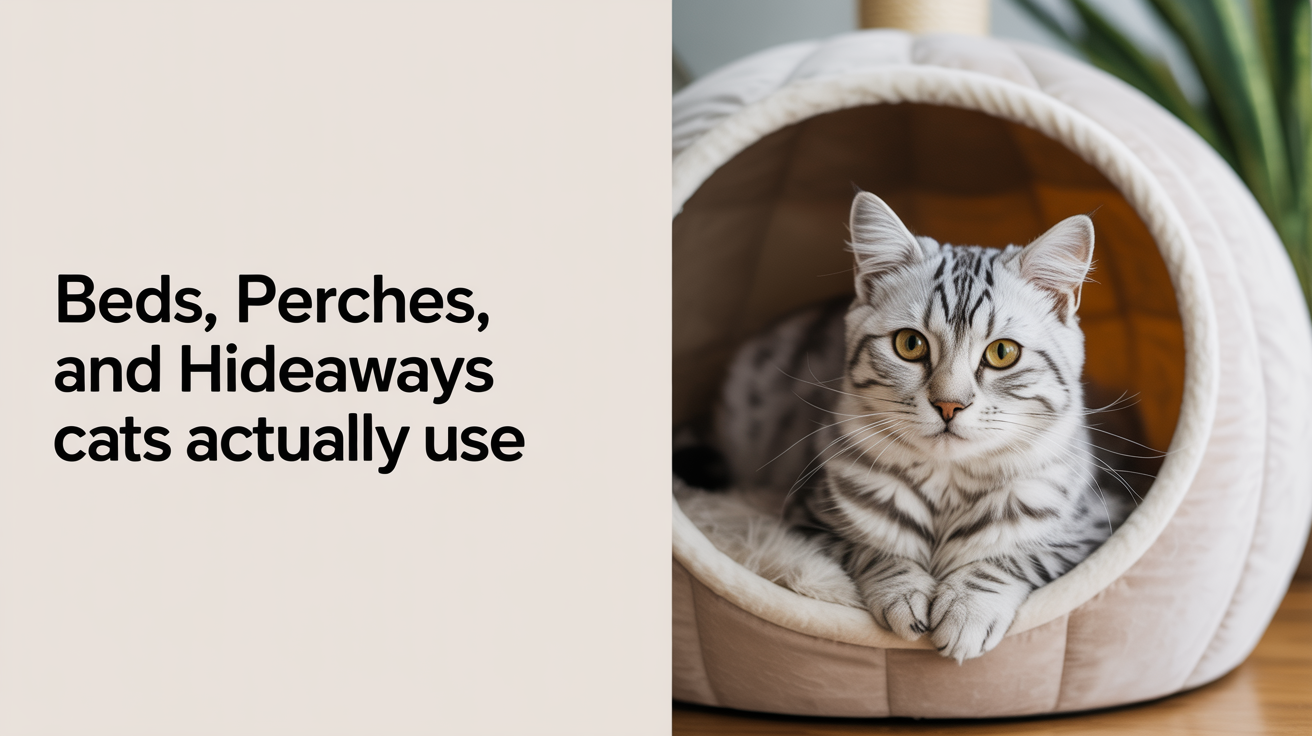
Cave or hooded beds are fully enclosed with a small opening. These suit cats that already seek out cat hiding spots on their own: under the bed, inside closets, behind furniture. If your cat is the type to vanish for hours, a cave bed placed in a quiet corner will likely get used.
Flat or cushion-style beds are the simplest option. They work best when placed somewhere already warm and elevated, like on a bench by a sunny window or on top of a bookshelf. A flat cushion placed at floor level in a cold room is a tough sell.
Hammock-style beds often attach to a radiator or fit inside a cat tree. Cats that enjoy warmth from below and a bit of sway tend to like these. Worth trying if the radiator is a known napping spot.
Heated beds have a low-wattage warming element or a self-warming insert that reflects the cat's own body heat. Older cats, cats with arthritis, or cats in colder homes often take to these quickly. Standard heated pads should stay at a gentle warmth rather than hot; if you use one, check that the cat can move off it freely.
Window Perches and Why Height Matters
A window perch for cats gives them two things at once: warmth from sunlight and a view that functions like live television. Even indoor cats track birds, squirrels, and street movement for hours. A perch that fits a standard window ledge or attaches with suction cups is inexpensive and tends to get used consistently as long as it sits near an active window.
A few practical notes on perch placement. South- or east-facing windows give the most direct sun during the hours cats are most active in the morning. A perch with a small lip or raised edge prevents the cat from rolling off while deeply asleep. Make sure the window is secure if you open it in warm weather; a sturdy screen matters more than any piece of furniture.
If you are also considering a cat tree, a window perch and a cat tree are not redundant. The tree provides a climbing route and scratching surface; the perch is specifically about sun and the view. For more on how to pick a tree that actually gets used, see Choosing a Cat Tree and Scratching Posts That Get Used.
Placing Beds and Hideaways So Cats Use Them
Placement matters more than the product itself. A few principles that hold up in most homes:
Put resting spots where the cat already rests. If your cat sleeps at the foot of the bed, place a bed there. If the cat naps on a specific chair, add a washable cover or cushion. Working with your cat's instincts means less work convincing the cat to change.
Avoid high-traffic corridors. A bed in a hallway means the cat gets walked past, startled, or stepped near repeatedly. Cats generally rest well in spots where they can see the room without being in the middle of it.
Offer one enclosed option and one elevated option. Most cats rotate between a few spots depending on time of day, season, and mood. Having variety increases the chances that something in your home fits what the cat is looking for at a given moment.
Keep sleeping areas separate from the litter box area. Cats do not eat or sleep near their toilet by preference. If you are thinking through your litter box layout at the same time, How to Choose the Right Litter Box Size, Type, and How Many covers the spacing and placement logic.
| Bed Type | Best Placement | Suits Cats Who |
|---|---|---|
| Bolster / donut | Elevated surface near window | Like to curl with back support |
| Cave / hooded | Quiet corner, inside wardrobe area | Seek enclosed cat hiding spots |
| Flat cushion | On a warm surface or shelf | Sleep stretched out anywhere warm |
| Hammock | Radiator or mid-level cat tree | Want warmth from below |
| Heated bed | Quiet low-traffic room | Older cats, cold climates |
| Window perch | South or east-facing window | Sun-seekers, bird watchers |
A Note on Sudden Changes in Hiding Behavior
Cat hiding spots are normal. Most cats spend time tucked away, and a cat that retreats to a quiet corner for a few hours after a stressful event (a visitor, a loud noise, a trip in the carrier) is behaving normally.
What warrants attention is a change from the cat's baseline. A cat that previously slept in open spots and suddenly starts hiding for most of the day, is difficult to locate, or seems reluctant to come out even for food can be showing early signs of illness or pain. Cats mask discomfort instinctively, and increased hiding is one of the more common early signals.
If your cat's hiding pattern shifts noticeably and lasts more than a day or two, that is worth a call to your vet rather than an assumption that the cat is just being a cat. A vet who can examine the animal is the right person to rule out a physical cause.
Separately, if your cat hides before or during vet trips, that is a solvable problem. A carrier your cat treats as furniture rather than a trap makes a real difference. Picking a Cat Carrier and Making Vet Trips Easier covers how to approach that.
Frequently Asked Questions
My cat ignores every bed I buy. What am I doing wrong?
Usually it is placement rather than the bed itself. Try moving the bed to wherever the cat already rests, even if that means putting it on the couch. Cats are more likely to adopt a new surface if it sits in a familiar spot with familiar scents. Adding a worn T-shirt or small blanket from your own laundry can help the cat accept a new bed faster.
How many sleeping spots should a cat have?
There is no fixed number, but most cats rotate between two to four spots depending on light, temperature, and what else is going on in the home. Offering one elevated spot, one enclosed spot, and one soft surface in a favorite room gives a good range without overwhelming the space.
Are heated beds safe?
Self-warming beds that reflect body heat carry no electrical risk and are safe for most cats. Electrically heated pads should stay at a low setting and always give the cat a way to move off if they get too warm. Check the cord periodically for damage if your cat tends to chew.
Why does my cat prefer cardboard boxes over anything I buy?
Cardboard holds warmth, muffles sound, and provides the enclosed-back-to-the-wall setup cats seek. It also carries no unfamiliar scents. It is not a sign that your cat is difficult; it is a sign the box hits several comfort criteria at once. Leaving a box out alongside a bought bed and seeing which one gets used over a week can give you useful information about what your specific cat values.
At what age should I switch to a heated bed?
There is no set age, but older cats or cats with joint stiffness often benefit from gentle warmth at the sleeping surface. If you notice your cat moving more slowly in the morning, hesitating before jumping, or seeking warm spots more actively than before, a heated option is worth trying alongside a vet conversation about whether the stiffness itself needs attention.