Health & Wellness
The Core Vaccines Every Cat Needs
A practical guide to the cat vaccination schedule every owner should know, including core vs non-core vaccines, indoor cats, and rabies boosters.
Most cats hate the carrier, the car, and the vet office, in that order. So it helps to know exactly which vaccines actually matter, how often they're due, and what you can skip. The short answer: a handful of core vaccines protect every cat, regardless of lifestyle, and a vet can help you decide if any extras make sense for yours.
What makes a vaccine "core"
Veterinary guidelines divide feline vaccines into two groups: core and non-core. Core vaccines are recommended for every cat, full stop. They protect against diseases that are either widespread, severe, life-threatening, or transmissible to humans. Non-core vaccines are given based on individual risk, your cat's lifestyle, location, and exposure to other animals.
The American Association of Feline Practitioners (AAFP) publishes feline vaccination guidelines that most vets in North America follow. The current core vaccines are:
- Feline panleukopenia (FPV), sometimes called feline distemper; a parvovirus that attacks the immune system and gut, often fatal in kittens
- Feline herpesvirus-1 (FHV-1), causes upper respiratory infection; most cats exposed once carry the virus for life
- Feline calicivirus (FCV), another major cause of upper respiratory disease and oral ulcers
- Rabies, required by law in most US states and Canadian provinces; universally fatal once symptoms appear; transmissible to humans
The first three are almost always given together as a single combo shot commonly called FVRCP (feline viral rhinotracheitis, calicivirus, panleukopenia).
The standard kitten vaccination schedule
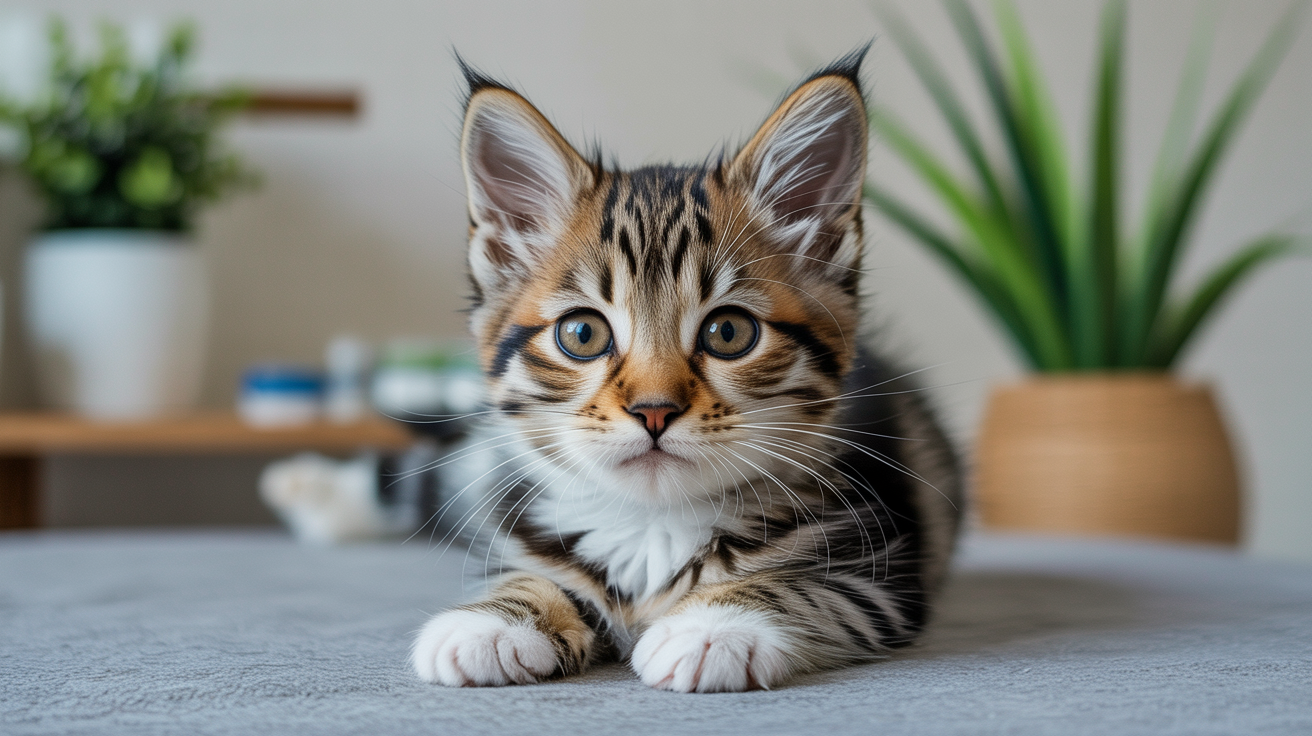
Kittens need a series of shots because maternal antibodies from the mother's milk can block a vaccine from working. The series spaces out doses so at least one lands after maternal immunity fades, which usually happens between 8 and 16 weeks.
| Age | Vaccines |
|---|---|
| 6–8 weeks | FVRCP (first dose; some shelters start early) |
| 10–12 weeks | FVRCP (second dose) |
| 14–16 weeks | FVRCP (third dose) + rabies |
| 12 months | FVRCP booster + rabies booster |
Some vets give a fourth FVRCP if a kitten's first dose was before 8 weeks. Ask your vet what schedule they follow, there's some flexibility depending on your area's disease pressure and the kitten's history.
After the 12-month boosters, most adult cats go on a longer schedule. FVRCP is typically repeated every 3 years. Rabies is either annual or triennial depending on the vaccine product used and local law.
Do indoor cats really need vaccines?
Yes, at least the core ones. It's one of the most common questions I hear from cat owners, and honestly, it makes sense to ask. If your cat never goes outside, what's the risk?
The thing is, indoor isn't the same as hermetically sealed. Windows get left open. Cats escape. Bats and rodents occasionally get inside. You can bring viruses in on your clothing or shoes. And if your cat ever needs to board, go to a groomer, or stay with a friend, they'll be in contact with other animals.
Panleukopenia is extraordinarily hardy, it can survive on contaminated surfaces for up to a year. An indoor cat has a real, if lower, chance of exposure. Rabies is legally required in most places regardless of lifestyle, and with good reason.
Non-core vaccines are different. The feline leukemia virus (FeLV) vaccine, for instance, is recommended for kittens and outdoor or high-exposure cats, but a strictly indoor cat with no exposure may reasonably skip it after kittenhood. That's a conversation to have with your vet based on your actual situation.
If you're ever noticing your cat is off, less energetic, eating less, hiding more than usual, it's worth checking our guide on signs your cat is sick and when to call the vet before assuming it's nothing.
Rabies booster timing and the law
Rabies vaccines come in two varieties: 1-year and 3-year products. The difference isn't the formula so much as the licensing, a 3-year product has been tested in trials over a longer interval. Your vet will use whichever product matches your local legal requirements.
In most US states, after the initial rabies shot and the 12-month booster, cats on a 3-year product don't need another dose until 3 years after their last one. Some states still mandate annual boosters regardless of product. Check your local ordinance, or just ask your vet, they know the rules for your area.
Missing a rabies booster isn't just a health issue. If an unvaccinated cat bites someone or is potentially exposed to a rabid animal, the legal consequences can include mandatory quarantine or worse. Staying current is straightforward protection.
Non-core vaccines worth knowing about
You don't need every non-core vaccine, but you should know what's available so you can have an informed conversation with your vet.
Feline leukemia virus (FeLV): Strongly recommended for kittens and any cat with outdoor access or contact with unknown cats. FeLV suppresses the immune system and has no cure, prevention is the only real option. If your cat goes outside or lives with FeLV-positive cats, this one is worth taking seriously.
Bordetella: Relevant mainly for cats in high-contact environments like shelters, boarding facilities, or multi-cat households with respiratory disease circulating. Most pet cats don't need it.
Chlamydophila felis: Sometimes included in certain combination products. Usually reserved for multi-cat households with confirmed chlamydial respiratory infections.
Feline infectious peritonitis (FIP): An intranasal vaccine exists but has mixed evidence for efficacy in field conditions. Most vets don't routinely recommend it.
While vaccines handle infections, don't forget that other prevention measures work alongside them. Our guide on flea, tick, and worm prevention for cats covers the parasite side of keeping your cat healthy year-round.
What to expect at a vaccine appointment
Most cats tolerate vaccines well. A small lump at the injection site is normal and usually resolves within a few weeks. Some cats are a bit sleepy or off their food for 24 hours afterward.
Watch for signs that warrant a call to your vet: facial swelling, hives, repeated vomiting, difficulty breathing, or collapse (these are rare but indicate an allergic reaction and need prompt attention). Also let your vet know if you see a lump at the injection site that's still there, still growing, or hard after 4 weeks, that warrants evaluation.
Vaccines are given under the skin, and in cats specifically, vets follow site-specific protocols to inject in locations (like the lower leg or tail base) that allow for easier intervention if the very rare injection-site sarcoma develops. It's an extra layer of precaution that good feline practices include as standard.
Good overall health also shows up in how cats handle both illness and veterinary procedures. Regular dental care, for example, plays more of a role than people expect, take a look at our piece on at-home cat dental care and why it matters if that's an area you haven't thought much about.
Frequently asked questions
Can I skip a year if my cat is an indoor-only senior?
It's tempting, but not a decision to make unilaterally. Senior cats often have immune systems that don't respond as robustly to vaccines, and disease exposure risk doesn't drop to zero indoors. Talk to your vet about titer testing, a blood test that checks for existing antibody levels, as an alternative to automatic re-vaccination for some vaccines. Rabies boosters are generally still legally required regardless.
What if I adopted a cat with unknown vaccine history?
Your vet will typically treat the cat as unvaccinated and start a fresh series. For most adult cats this means one FVRCP dose followed by a booster 3–4 weeks later, plus a rabies shot. Once two doses are on record, the 3-year schedule applies. It's a small investment for a clean slate.
Is it safe to vaccinate a sick cat?
Generally no. If your cat has a fever, active infection, or is on immunosuppressive medication, most vets will postpone vaccines until the cat is healthy. Vaccines work best when the immune system is in good shape to respond.
How much do cat vaccines typically cost?
This varies a lot by region and clinic type. FVRCP and rabies together often run $30–$80 per visit at a regular vet; vaccine clinics at pet stores or shelters can be significantly cheaper. Annual wellness exams (where vaccines are often given) are a separate charge. Call ahead, some vets bundle the exam fee with the visit.
Do cats ever have reactions to FVRCP specifically?
Mild reactions are most common with FVRCP, a bit of sneezing or lethargy for a day or two. The intranasal version of FVRCP (a liquid dripped into the nose rather than an injection) sometimes causes temporary sneezing for a few days post-vaccination. Both responses are normal and short-lived. Severe allergic reactions are rare but possible with any vaccine.
This article is general guidance for informational purposes, it isn't veterinary advice. For your cat's specific health needs, vaccination history, or any concerns after a vaccine, please consult a licensed veterinarian.