Health & Wellness
At-Home Cat Dental Care and Why It Matters
Learn how to care for your cat's teeth at home — brushing, dental treats, and the signs of tartar and gingivitis to watch for.

Most cats will have some form of dental disease by age three. That's not a scare tactic, it's just a well-documented pattern in veterinary practice. The good news is that regular at-home care genuinely slows the progression, and it doesn't require a complicated routine.
At a Glance
- Brushing, done at least three times a week and ideally daily, is the single most effective at-home step against plaque.
- Plaque hardens into tartar within days if it isn't disrupted, so consistency matters more than any one deep-cleaning session.
- Dental treats, water additives, and gels help at the margins; none of them replace brushing.
- The VOHC seal is a useful shortcut for picking a dental product that has actually shown some benefit in studies.
- Watch for red or bleeding gums, bad breath, dropping food, or pawing at the mouth, and call your vet rather than waiting.
- Professional cleanings under anesthesia are needed every one to three years even with good home care, since subgingival disease can't be assessed or treated on an awake cat.
Why cat dental health gets overlooked
Cats are stoic. A cat with a throbbing molar will still greet you at dinner time, still groom, still act mostly normal. Pain from dental disease tends to show up as subtle behavioral shifts, eating more slowly, dropping kibble, preferring the left side of the mouth, not as obvious distress. By the time you notice something is wrong, the problem has often been building for months.
Dental disease also cascades. Bacteria from infected gums can enter the bloodstream and put extra strain on the kidneys and heart. For a senior cat already managing kidney issues, that extra bacterial load matters. This is why vets treat oral health as part of general wellness, not a cosmetic concern. The AVMA notes that by age three, most pets already show some early evidence of periodontal disease, which is the same three-year mark cited at the top of this article and one reason vets bring it up well before a cat shows any obvious symptoms.
What's actually happening in your cat's mouth
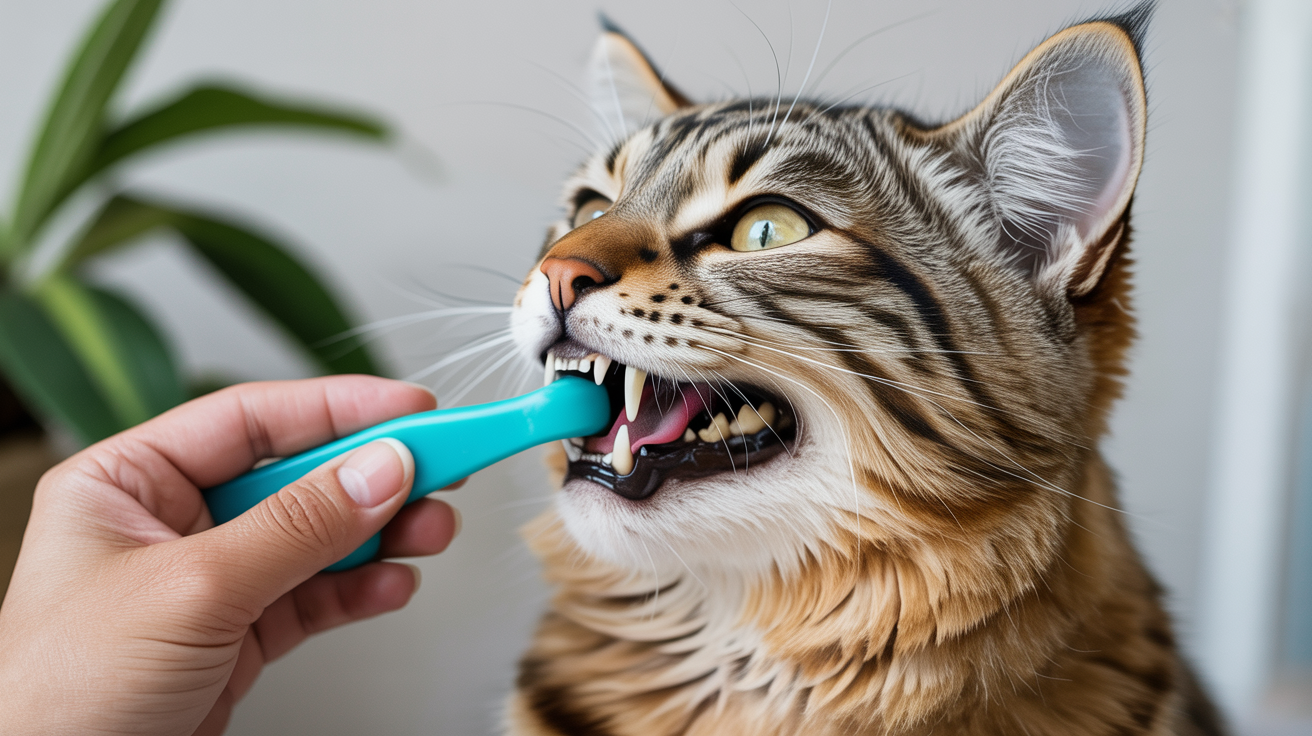
Plaque is the starting point. It's a soft, colorless film of bacteria that coats teeth constantly. If it's not disrupted regularly, it mineralizes into tartar (also called calculus) within days, a hard, yellowish crust that bonds to the tooth surface and can only be removed with a scaler. Tartar buildup irritates the gum line, leading to gingivitis: red, swollen, sometimes bleeding gums.
Left longer, gingivitis advances to periodontitis, where the supporting structures of the tooth, the bone and ligaments, begin to break down. Teeth loosen. Pockets form between gum and tooth where bacteria thrive. This stage is painful, and some damage is irreversible. Cornell's Feline Health Center puts the number of cats over age four with some form of dental disease between 50 and 90 percent, which is a wide range mostly because so much of it goes undiagnosed until a professional exam.
Cats can also develop feline tooth resorption, a condition where the tooth structure itself starts to erode from the inside out. It's surprisingly common (affecting roughly a third of adult cats, and by some estimates as many as seven in ten) and has no reliable at-home prevention. That's one reason professional dental exams under anesthesia catch things home care simply can't; resorption often starts below the gumline and isn't visible or reachable with a toothbrush.
Brushing your cat's teeth: the honest how-to
Brushing is the single most effective at-home intervention. Done consistently, it disrupts plaque before it hardens. Three times per week is the commonly cited minimum for meaningful benefit; daily is better.
You'll need a toothbrush designed for cats, either a soft-bristled finger brush or a small-headed angled brush, and a cat-safe toothpaste. Never use human toothpaste. Fluoride and xylitol (both common in human products) are toxic to cats. Cat toothpastes come in flavors like poultry or malt, which helps with acceptance.
Getting your cat used to it
Rushing this is the most common mistake. The goal the first week isn't brushing, it's just getting your cat comfortable with you touching their mouth.
- Let them sniff and lick a small amount of toothpaste from your finger.
- Once they're relaxed with that, rub your finger along their gum line for a few seconds.
- Introduce the brush with no paste, just letting them sniff it.
- Add paste and touch the brush to the outer surfaces of the teeth, no need to open the mouth wide.
- Work up to short brushing sessions, focusing on the upper back teeth where tartar accumulates fastest.
Go slowly. Some cats take a few days to accept this; others need a few weeks. Keep sessions under two minutes and always end on a positive note, a small treat, play, or a calm cuddle. Realistically, plan on two to four weeks of this step-by-step buildup before you're doing a full, quick brush of all the outer tooth surfaces. Cats that never fully accept a brush can still benefit from steps one and two done regularly, since finger contact along the gumline disrupts some plaque even without the bristles.
What if your cat flat-out refuses?
Some cats won't tolerate a brush no matter how gradual you go. That's frustrating but not the end of the road. There are alternatives, and using more than one type tends to be more effective than relying on a single product.
Before giving up on brushing entirely, try switching the format rather than the whole approach. A finger brush feels less invasive than a handled toothbrush to many cats, since it mimics the shape and motion of a hand already used for petting. Some cats that fight a plastic-handled brush will tolerate a gauze pad wrapped around a finger and worked gently along the gumline instead. If none of that works after a genuine, patient trial spanning several weeks, move on to the alternatives below rather than turning every mealtime into a standoff. A cat that associates its owner's hands with a fight is harder to manage for every other kind of handling too, from nail trims to a vet exam, so knowing when to stop pushing matters as much as knowing how to start.
Dental treats, water additives, and other tools
Nothing replaces brushing, but these options have real (if modest) supporting evidence and are worth using alongside or instead of it when brushing isn't feasible.
| Product type | How it helps | Limitations |
|---|---|---|
| Dental treats | Mechanical abrasion as cat chews; some have added enzymes | Only works if cat actually chews, not gulps; adds calories |
| Water additives | Antimicrobial agents reduce bacterial load in mouth | Mixed palatability; some cats refuse treated water |
| Dental gels/wipes | Applied directly to teeth; enzymatic action breaks down plaque | Less effective than brushing but useful for resistant cats |
| Raw or dental-formula kibble | Larger kibble size encourages chewing | Evidence is modest; doesn't reach the gum line well |
| Enzymatic toothpaste (applied with finger) | Better than nothing if brush is refused | Less mechanical disruption than brushing |
When you're looking at dental treats and products, the Veterinary Oral Health Council (VOHC) seal is a useful filter. It means the product met specific criteria for plaque or tartar reduction in controlled studies, awarded separately for plaque control, tartar control, or both. Not every effective product has the seal, but it's a reasonable starting point, and checking the VOHC website's accepted-products list takes less time than reading marketing copy on a dozen different bags.
Signs that something is already wrong
At-home care is prevention, not treatment. If you see any of these signs, it's time to call your vet rather than wait for the next routine appointment:
- Red, swollen, or bleeding gums (even mild gingivitis warrants a look)
- Yellow-brown deposits along the gum line, especially on the upper back teeth
- Bad breath that's significantly worse than usual
- Dropping food, chewing on one side, or seeming reluctant to eat hard food
- Pawing at the mouth or face
- Drooling more than normal
Cats with advanced dental disease sometimes stop eating altogether. If that's happening, it's an urgent situation. You can find a broader checklist of symptoms that warrant prompt attention in our guide to signs your cat is sick and when to call the vet.
Professional cleanings and what to expect
Even with consistent home care, most cats benefit from a professional dental cleaning every one to three years. The interval depends on the individual cat's genetics, diet, and how well home care goes.
Professional cleanings require general anesthesia. This is non-negotiable, a cat won't hold still for scaling and probing, and the subgingival work (below the gum line, where disease actually progresses) can't be done safely on an awake animal. The AVMA specifically advises against anesthesia-free dental cleanings offered at some grooming facilities: they remove visible tartar from the tooth surface but do nothing for what's happening at and below the gum line, and can actually mask disease by making teeth look cleaner than they are.
Before any anesthetic procedure, your vet will likely want bloodwork to check organ function, especially kidney and liver values. This matters more as cats age. If your cat is managing another health condition, discuss the anesthesia risk openly with your vet. For most cats, the risk of untreated dental disease outweighs the anesthetic risk of a cleaning, but that's a conversation to have with someone who can actually examine your cat.
Keep in mind that staying up to date on general wellness, including routine core vaccines and parasite prevention, is part of the same overall picture of keeping your cat healthy enough to handle any procedure they might need. A cat in good baseline health is a safer anesthesia candidate.
Building a realistic dental care routine
Here's a simple framework for combining home care with professional oversight:
- Daily or near-daily: brush teeth if your cat accepts it; if not, use a wipe or gel
- A few times per week: offer a VOHC-accepted dental treat as part of their routine (factor the calories into their daily total)
- Monthly: take a quick look at the gum line and smell their breath; note any changes
- Annually: mention dental health at the wellness visit; ask for a visual oral exam
- Every 1-3 years: professional cleaning under anesthesia, timing based on your vet's assessment
If you're also dealing with fleas, ticks, or internal parasites, you may find it helpful to read about flea, tick, and worm prevention for cats, staying on top of the full preventive care picture is worth the effort.
Frequently asked questions
How do I know if my cat has dental disease?
The most visible signs are yellowish-brown tartar on the teeth (especially the upper back teeth), red or swollen gums, and noticeably bad breath. Your cat may also chew differently or seem reluctant to eat crunchy food. A definitive assessment requires a vet exam, since much of the damage occurs below the gum line where you can't see it.
Is it too late to start brushing if my cat is already an adult?
No. Older cats can learn to accept tooth brushing, though it may take more patience. Even cats in their senior years benefit from having plaque disrupted regularly. Start slow, use a flavor they like, and keep sessions very short at first.
Do dental treats actually work?
They help at the margins. Dental treats with a VOHC seal have demonstrated some reduction in plaque or tartar in studies. They're not a substitute for brushing, but they're a reasonable supplement, especially for cats who won't tolerate brushing. Just account for the calories.
How often should cats get professional dental cleanings?
The typical recommendation is every one to three years, but some cats need more frequent cleanings due to genetics or diet, and some can go longer with excellent home care. Your vet can give you a realistic sense of your individual cat's needs after examining their mouth.
Can bad teeth affect my cat's overall health?
Yes. Chronic oral infections create a bacterial load that the immune system has to manage constantly, and bacteria can enter the bloodstream through inflamed gum tissue. This is associated with increased strain on the kidneys and heart over time. Treating dental disease isn't just about comfort, it's a genuine part of supporting long-term health.
How much does a professional dental cleaning typically cost?
It varies widely by region, the cat's age, and whether the vet finds problems that need treatment during the procedure (extractions, for instance, add cost). A routine cleaning with pre-anesthetic bloodwork is a meaningful expense, and it climbs if x-rays or extractions are needed once the vet can actually see below the gumline. Asking for a cost estimate range at the pre-anesthetic exam, before the day of the procedure, avoids surprises.
This article is general guidance for cat owners, not veterinary advice. For anything involving your cat's health or treatment, consult a licensed veterinarian who can examine your cat.