Health & Wellness
Hairballs: Causes, Prevention, and When to Worry
Learn why cats get hairballs, what you can do to reduce them, and which symptoms mean a vet visit is overdue.
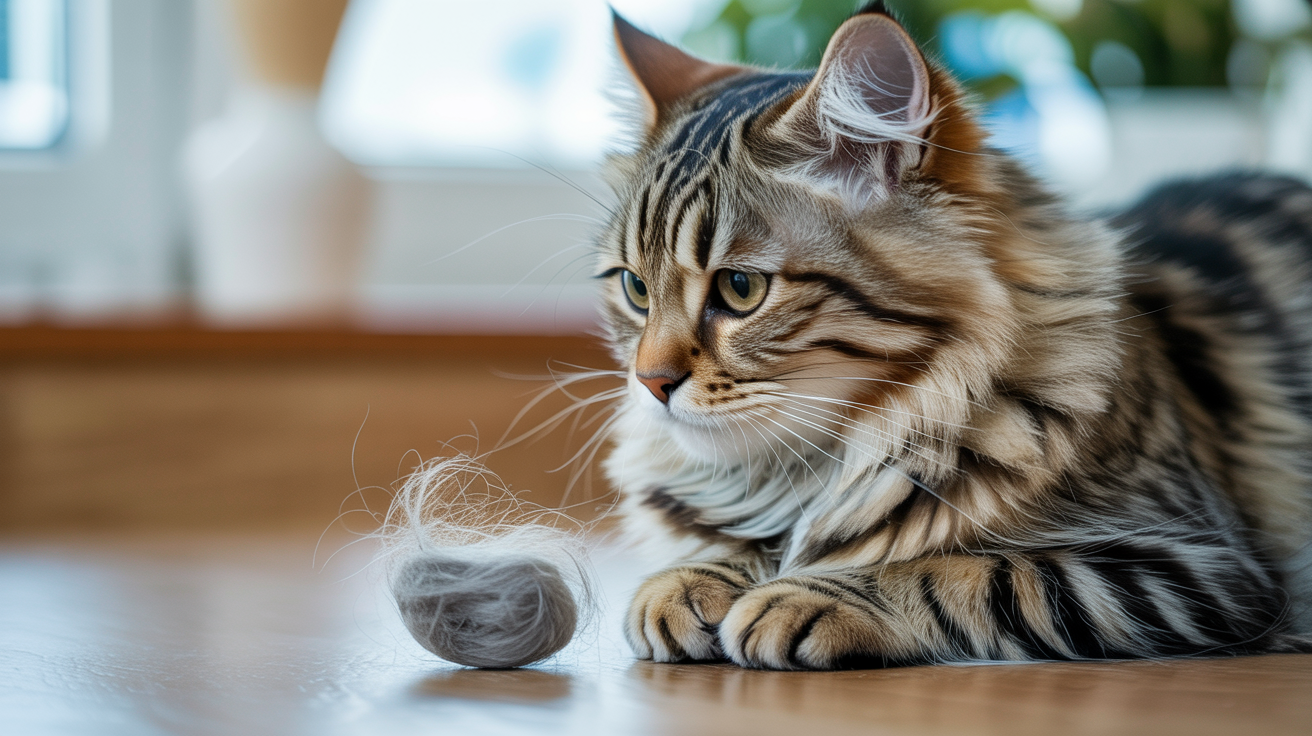
Most cat owners have heard that retching sound at two in the morning, a low, rhythmic hacking followed by a wet thud on the floor. Hairballs are one of the most common feline health topics, and most of the time they're nothing to panic about. But there are real ways to reduce how often they happen, and a handful of signs that tell you something more serious is going on.
What causes hairballs in cats
Cats are meticulous groomers. The backward-facing barbs on their tongues snag loose fur, which they swallow rather than spit out. Most of that hair passes through the digestive tract without drama. Some of it, though, collects in the stomach and doesn't move forward. When the mass gets too large to digest, the cat's body expels it the only way it can: back up through the esophagus.
The result is a wet, elongated wad of compressed fur (not a ball at all, despite the name). It's often mixed with digestive fluid and occasionally a bit of food. Mildly unpleasant, but normal.
A few things make hairballs more likely:
- Coat length and density. Long-haired breeds like Maine Coons and Persians swallow far more fur per grooming session than short-haired cats.
- Seasonal shedding. Spring and fall coat blowouts mean more loose fur to ingest.
- Over-grooming. Stress, skin irritation, allergies, or boredom can drive excessive grooming, which pushes more fur into the stomach.
- Slower gut motility. Older cats or cats with certain health conditions may have digestive tracts that don't move hair through as efficiently.
How often is normal
Once or twice a month is on the common end of the spectrum for a healthy cat. If your cat is producing hairballs weekly or more, that's worth looking at. Some cats produce almost none; others are more prone. Neither extreme on its own is diagnostic, but frequency changes are worth tracking.
Short-haired cats that suddenly start having frequent hairballs may be over-grooming. That's a behavioral or dermatological issue more than a hairball issue, and it's worth a check-in with your vet.
Practical ways to prevent hairballs
No method eliminates hairballs entirely, but several things genuinely reduce their frequency.
Brush your cat regularly
This is the most effective intervention and costs nothing beyond time. Removing loose fur before your cat swallows it is the most direct prevention possible. For long-haired cats, daily brushing during shedding season makes a noticeable difference. Short-haired cats can usually get away with two or three sessions a week.
Most cats can be taught to tolerate brushing if you start slowly and keep sessions short. A slicker brush works well for medium to long coats; a rubber grooming glove can be easier for cats that resist traditional brushes.
Feed a high-fiber or hairball-formula diet
Several cat foods are marketed specifically for hairball control. They tend to be higher in dietary fiber, which helps move ingested hair through the gut rather than letting it stall. Whether a dedicated hairball formula is worth the premium depends on how severe the problem is.
Adding a small amount of plain canned pumpkin (not pumpkin pie filling) to meals a few times a week is a low-cost way to increase fiber. A teaspoon per meal is a common starting point; most cats don't object to the taste.
Use a hairball remedy paste
Petroleum-based hairball gels (the kind you squeeze onto a paw or finger) are widely available and work by lubricating the digestive tract so hair moves through rather than collecting. They're generally safe for occasional use. Most packaging suggests once or twice a week as a preventive dose, increasing to daily if a hairball is clearly forming.
Don't overdo it. Using these gels too frequently can interfere with fat-soluble vitamin absorption. If you find yourself reaching for the tube every day just to keep the problem manageable, that's a signal to address the root cause rather than manage the symptom.
Increase hydration
Cats that eat predominantly dry food tend to have drier stools and slower gut motility, both of which make it harder to pass fur. Adding a wet food component to the diet, or encouraging water intake with a fountain, can help. It also benefits kidney health generally, something worth thinking about if you have an older cat. You can read more about monitoring your cat's overall health in our guide to signs your cat is sick and when to call the vet.
Manage stress and boredom
If over-grooming is the trigger, reducing it requires addressing the underlying cause. Enrichment (puzzle feeders, climbing structures, scheduled play sessions) helps cats that groom out of boredom. For stress-related grooming, identifying the stressor matters more than any dietary change.
Quick-reference: hairball prevention options
| Method | Effort | Cost | Best for |
|---|---|---|---|
| Regular brushing | Medium | Low | All cats, especially long-haired |
| Hairball-formula food | Low | Medium | Cats with chronic issues |
| Fiber supplement (pumpkin) | Low | Low | Mild cases, dry-food cats |
| Hairball remedy gel | Very low | Low | Occasional use, acute episodes |
| Wet food or water fountain | Low | Low–medium | Cats on mostly dry food |
| Enrichment / play | Medium | Low–medium | Over-groomers |
When a hairball is a warning sign
The vast majority of hairballs are not emergencies. But a few scenarios warrant a call to the vet rather than a wait-and-see approach.
Retching without producing anything. If your cat has been heaving repeatedly over several hours without expelling a hairball or vomiting food, that's not a normal hairball. It can indicate a blockage. Gastrointestinal obstructions are serious and require prompt veterinary attention.
Lethargy, loss of appetite, or constipation alongside the symptoms. A cat that won't eat, seems unusually tired, or hasn't defecated in more than 48 hours along with hairball-related symptoms needs to be seen. These can indicate that hair has caused a partial blockage in the intestines.
Bloated or tender abdomen. If you gently press on your cat's belly and it seems distended or your cat pulls away, don't wait.
Coughing that doesn't resolve. Not all coughing in cats is hairball-related. Asthma, respiratory infection, and heart disease can all produce similar-looking symptoms. If the coughing happens repeatedly without any material coming up, it's worth a vet visit to rule out a respiratory cause. Knowing what a sick cat looks like more broadly can help you tell the difference, our guide on signs your cat is sick and when to call the vet walks through the key indicators.
Frequent, sudden increase in hairball production. A cat that jumps from one hairball a month to several a week hasn't suddenly become a more efficient groomer. Something changed. It could be a new stressor, a skin condition, or a digestive issue, all worth investigating.
Frequently asked questions
Is it normal for a cat to retch and not produce a hairball?
Occasional failed attempts happen, but if your cat is retching repeatedly without producing anything, watch closely over the next few hours. Persistent unproductive retching is the main red flag for a possible obstruction and warrants a vet call rather than home management.
Can hairballs be dangerous?
In most cases, no. They're uncomfortable for the cat and unpleasant for you, but they resolve on their own. The uncommon but real risk is when hair accumulates into a mass large enough to block the stomach or intestine. This is more likely in cats that ingest a lot of fur over time without adequate prevention.
What's actually in a hairball remedy gel?
Most commercial hairball gels are petroleum-based (white petrolatum or similar) with added flavoring. The mechanism is lubrication rather than digestion: the gel coats ingested fur and helps it slide through the digestive tract. Some newer formulas use plant-based oils instead. Both work on the same principle.
My cat never gets hairballs. Should I still brush them?
Yes, for reasons beyond hairball prevention. Regular brushing lets you check the skin and coat for parasites, matting, lumps, or changes in coat quality. It also builds a handling routine that makes veterinary exams less stressful. For context on why routine health checks matter, see our primer on the core vaccines every cat needs, the same logic applies to grooming.
Can I give my cat olive oil or butter instead of a commercial gel?
Small amounts of olive oil are sometimes suggested as a home remedy, but there's limited evidence it's effective as a hairball lubricant, and too much fat in the diet can cause diarrhea or contribute to weight gain. Butter is similar. The commercial gels are formulated specifically for this purpose and are the safer choice for regular use.
This article is general guidance for cat owners, not a substitute for veterinary advice, if your cat's symptoms concern you, a vet who can examine them is always the right next step.