Kittens
Kitten-Proofing Your Home Before They Arrive
A room-by-room guide to kitten-proofing your home before your kitten arrives, covering cords, toxic plants, chemicals, gaps, and windows.
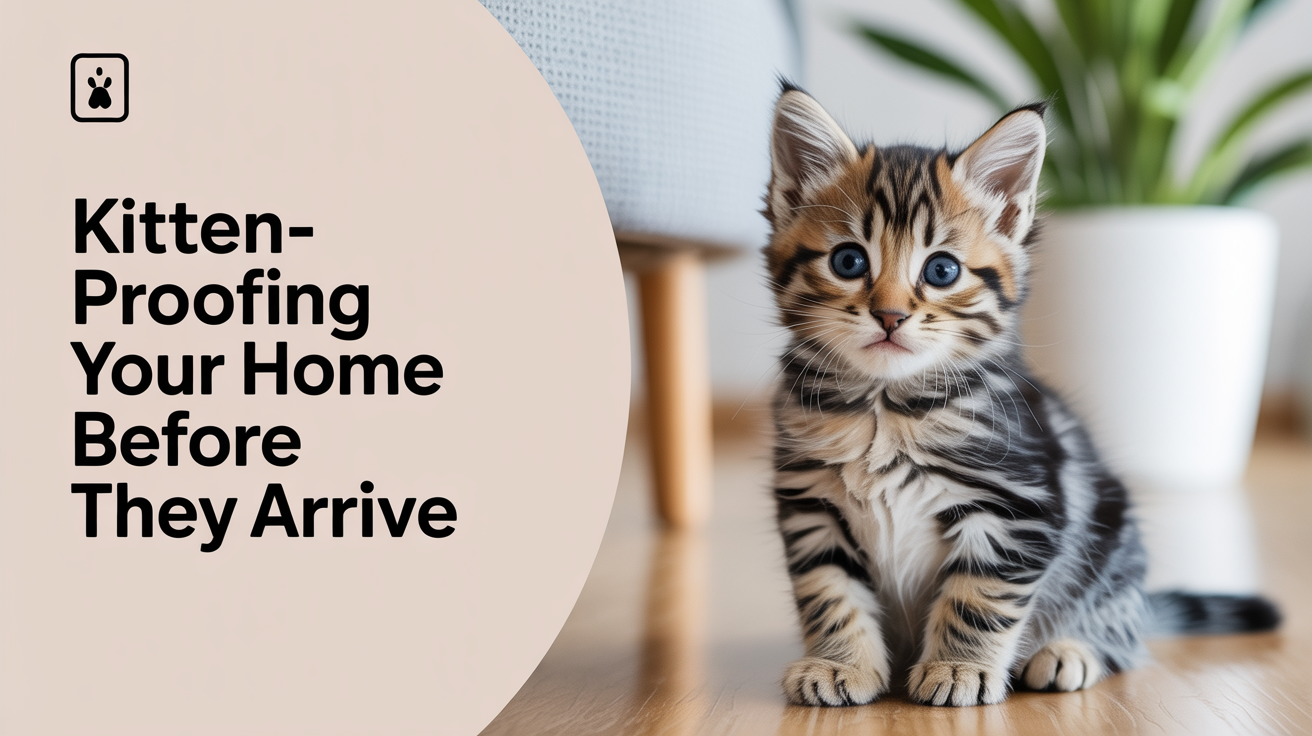
Kittens are quick, curious, and completely without a sense of what could hurt them. Before your new cat crosses the threshold, spending an hour walking your home with fresh eyes will remove the hazards that cause real harm. This guide covers the most common dangers for kittens, room by room, and ends with a checklist you can print or screenshot.
If your kitten ingests anything toxic, contact your vet or an emergency animal poison line right away. Time matters with poisoning cases, so do not wait to see whether symptoms develop.
What Makes Kittens Different From Adult Cats
A kitten's instinct is to mouth, bat, and squeeze into things. Adult cats tend to be more cautious; kittens are not. A gap that a grown cat would ignore looks like a tunnel worth exploring to an eight-week-old. A dangling cord is a toy. A houseplant is something to chew.
Their small size also means a toxic dose is smaller. A nibble that might barely affect a large dog can be dangerous for a two-pound kitten. This is worth keeping in mind when you look at plants and cleaning products in your home.
Cords, Strings, and Small Swallowable Items
Electrical cords are one of the most common household dangers for kittens. Chewing through a live cord can cause severe burns to the mouth, electric shock, or worse. Before your kitten arrives:
- Bundle cords with cable ties or run them through plastic cord-management sleeves
- Push furniture slightly in front of cords where possible, so there is no dangling end to grab
- Unplug chargers and small appliances when not in use
String, ribbon, yarn, rubber bands, hair ties, and twist ties should be stored in closed drawers or containers. These are not just hazards to chew; if swallowed, linear objects like string can cause intestinal damage that requires surgery. This is a genuine emergency, not something that will pass on its own.
Small hard items, such as buttons, bottle caps, coins, and earring backs, should be kept off surfaces your kitten can reach. A kitten will bat small objects off a table just to see what happens.
Room-by-Room Hazards
Kitchen and Laundry Room
The kitchen and laundry room carry the highest concentration of hazards in most homes.
Chemicals and cleaning products: Dishwasher pods, oven cleaners, drain cleaners, and laundry detergent are all toxic to cats. Keep these in closed cabinets. Childproof latches work well for lower cabinet doors.
Washer and dryer: Kittens are drawn to warm, dark spaces. Always check inside the drum before starting a cycle. It sounds obvious until the day it is not.
Stove burners: A kitten can jump to the stove. After cooking, use burner covers if your stove allows, and keep your kitten out of the kitchen during cooking if possible.
Trash bins: Secure the lid or use a cabinet-mounted bin. Food scraps, coffee grounds, and foil wrappers are all attractive to curious kittens and can cause harm.
Living Room and Home Office
Cords and cables: Entertainment systems and home offices often have the worst cord tangles in a house. Cable management boxes are worth the investment here.
Recliner and sofa beds: These have mechanisms that can trap or injure a kitten. Check underneath and inside before operating them.
Candles and essential oil diffusers: An open flame is an obvious concern, but certain essential oils are also toxic to cats, including tea tree, eucalyptus, and citrus-derived oils. Consider whether diffusers are appropriate in rooms your kitten uses.
Small desk items: Paper clips, staples, thumbtacks, and pen caps can all be swallowed. Clear your desk before your kitten is allowed access.
Bathroom
Toilet lid: Keep the toilet lid closed. Kittens can fall in and struggle to get out.
Medications: Human medications, including over-the-counter painkillers like ibuprofen and acetaminophen, are extremely toxic to cats. Store all medications in closed medicine cabinets or drawers.
Razors and sharp items: These belong in drawers, not on the edge of the sink.
Drain hair traps: Check that drain covers are secure so a curious paw does not get stuck.
Bedroom
Under the bed: Kittens retreat under beds when overwhelmed. This is fine, but check that there is no small gap between the bed and the wall where your kitten could get trapped or squeeze behind baseboards.
Drawers and closets: Kittens will climb into open dresser drawers and closets. Always do a quick check before closing them.
Toxic Plants and Outdoor Access
A number of common houseplants are toxic to cats. Some cause mild stomach upset; others can cause kidney failure. Common problem plants include lilies (extremely dangerous, including peace lilies and Easter lilies), pothos, philodendron, aloe vera, dieffenbachia, and jade plants. Before your kitten arrives, look up every plant in your home against a reliable toxic plant list. Your vet can point you to one, or check a veterinary toxicology resource.
Moving toxic plants out of your home entirely is the safest option. Placing them on high shelves is not reliable because kittens climb.
If your kitten will eventually have outdoor access, wait until they are older, vaccinated, and settled in. The outdoors carries its own set of hazards: traffic, other animals, outdoor chemicals such as antifreeze, and plants you cannot control.
Windows, Balconies, and Gaps
High-rise syndrome is a real concern for cats in multi-story homes or apartments. Cats do not always land safely, particularly young kittens who have not yet developed their righting reflex fully. Fit windows with secure screens before your kitten arrives. Check that screens are firmly seated in the frame; a kitten pressing against a loose screen can push it out.
Balconies should be off-limits unless you have installed cat-proof netting. The vertical slats on balcony railings are usually spaced far enough for a kitten to squeeze through.
Gaps behind appliances: Pull out the refrigerator, washing machine, and dryer and check the gaps behind them. Kittens can squeeze into very small spaces and may not be able to get out again. Blocking these gaps with foam pipe insulation or a barrier cut to fit is a straightforward fix.
Fireplace: If you have a working fireplace, keep the screen in place at all times. Even a closed flue is worth checking; older homes sometimes have gaps at the damper that a kitten could climb into.
Room-by-Room Kitten-Proofing Checklist
| Room | What to Check |
|---|---|
| Kitchen | Cabinet locks on lower cabinets; trash bin secured; washer and dryer checked before use; stove burners cooled |
| Living room | Cords bundled or covered; recliners checked before operating; candles out of reach |
| Home office | Desk cleared of small items; cords managed; printer and paper shredder inaccessible |
| Bathroom | Toilet lid closed; medications in closed cabinet; razors and sharp items in drawer |
| Bedroom | Under-bed gaps checked; drawers and closet checked before closing |
| All rooms | Toxic plants removed or out of reach; windows with secure screens; gaps behind appliances blocked; strings and rubber bands stored away |
Frequently Asked Questions
How old should a kitten be before I start letting them roam freely? Most kittens do well being confined to one or two rooms for the first week or two while they get their bearings. Gradual access to the rest of the home reduces stress and gives you time to check each space before your kitten encounters it. See our guide to your kitten's first week at home for a full settling-in plan.
My kitten ate a small piece of a plant. What should I do? Call your vet or an emergency animal poison line right away. Have the plant name ready if you know it, or take a photo of the plant to describe it. Do not wait for symptoms to appear. Some plant toxins cause delayed organ damage, and early treatment makes a significant difference in outcome.
Are there any cleaning products that are safe to use around kittens? White vinegar diluted with water is a common low-risk option for surfaces. That said, allow any cleaned surface to dry fully and ventilate the space before your kitten has access. Avoid pine-based cleaners and products containing phenols, which are particularly toxic to cats. When in doubt, store your kitten elsewhere while you clean and let the area air out before they return.
Should I set up a litter box before my kitten arrives? Yes. Have at least one litter box in place and accessible from the moment your kitten comes home. Kittens need to locate it quickly, especially in an unfamiliar space. Our step-by-step guide to litter training a kitten covers placement, litter type, and what to do if your kitten misses the box.
Does kitten-proofing ever end? The most intensive phase is the first several months. As your cat matures and you get to know their specific habits, some of the precautions become less critical. A few things, such as keeping toxic plants out of reach and managing cords, are worth maintaining long term. The goal is not to create a sterile environment but to remove the hazards that carry the highest risk. Understanding how your kitten learns about their environment, which is covered in our piece on the kitten socialization window, can also help you anticipate where they are likely to explore next.