Kittens
How to Stop Kitten Biting and Scratching
Kittens bite and scratch during play — it's normal, but it needs redirecting. Here's a practical, step-by-step guide to teaching bite inhibition.
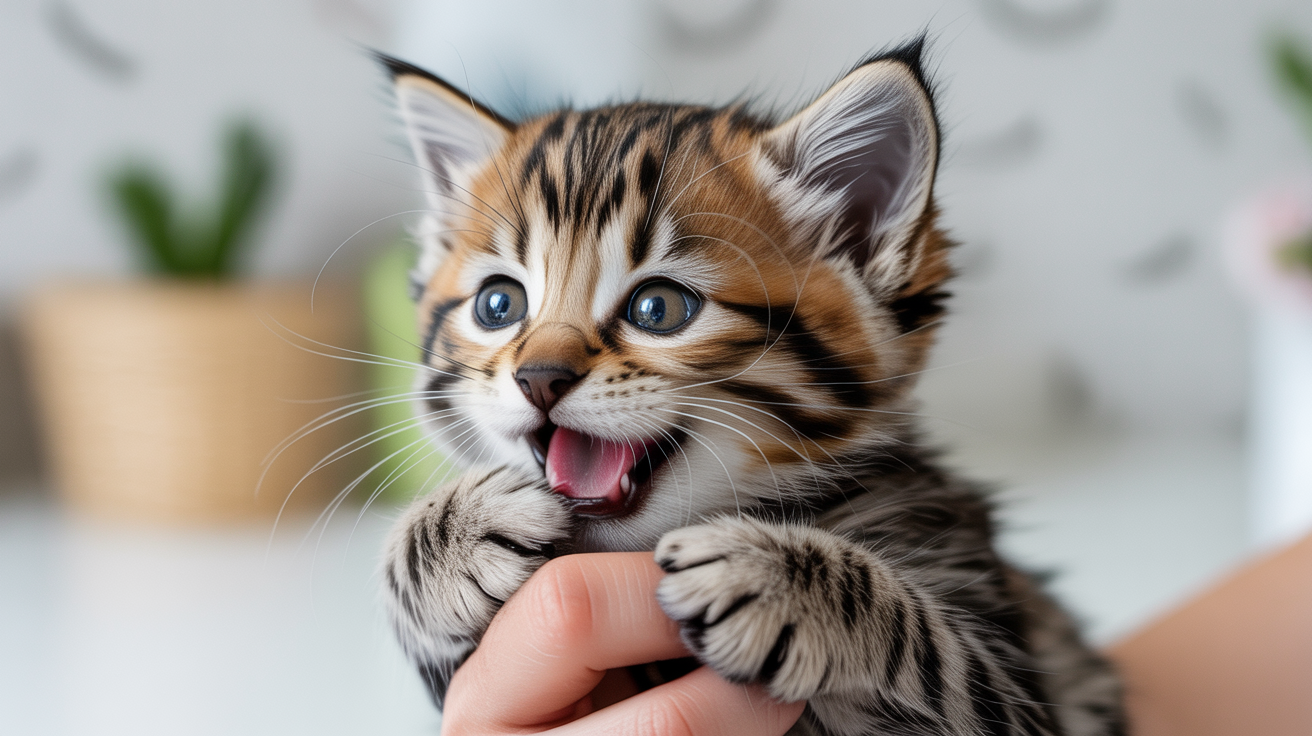
Kittens bite and scratch. That's not a character flaw, it's how they play, explore, and test the world. The problem is that what feels fine at eight weeks (those tiny needle teeth on your finger) becomes genuinely painful by four months. The good news: bite inhibition in kittens is very teachable, and the earlier you start, the easier it gets.
At a Glance
- The single biggest mistake is letting a kitten play with your bare hands, once hands are learned as prey, it takes weeks to unlearn.
- Redirect every bite or scratch to a toy immediately, stop play for 30 to 60 seconds, then resume with a wand toy, not a lecture.
- Play aggression is, in the ASPCA's words, "the most common type of aggressive behavior that cats direct toward their owners," and it's driven by normal predatory instinct, not spite.
- Most kittens mellow noticeably between five and six months with consistent redirection.
- Punishment (spray bottles, nose taps, scruffing) doesn't reduce biting, it just teaches a kitten to be afraid of you.
- Biting that draws blood repeatedly, or aggression aimed at one person or body part, is worth a vet visit to rule out pain or a medical cause.
Why kittens bite and scratch in the first place
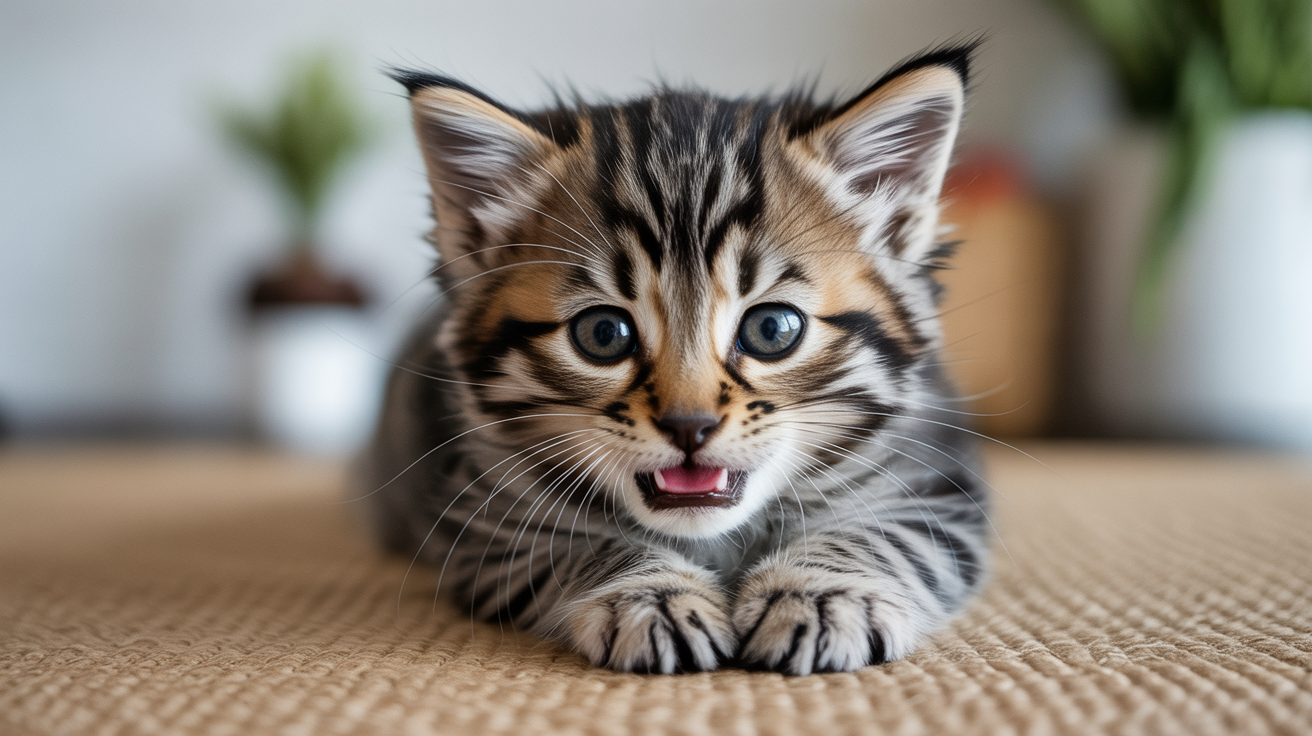
Kittens learn most of their physical limits from their littermates. A kitten who bites too hard during play gets bitten back, or the other kitten walks away, immediate, honest feedback. When a kitten comes home alone, that feedback loop breaks. You become the only playmate, and you don't automatically correct the way another kitten would. Kittens separated from their litter before about eight weeks tend to have the roughest play style as a result, since they missed several weeks of that natural correction.
Scratching follows the same logic. Cats scratch to maintain their claws, stretch their muscles, and leave scent marks. A kitten isn't scratching your couch to spite you; it's doing something deeply wired into its behavior. Redirecting that instinct is much more effective than trying to stop it outright.
Kitten play aggression tends to peak between two and four months and usually settles by six months, especially if you've been consistent. The ASPCA notes that cats "who were orphaned or weaned early might never have learned to temper their play behavior" on their own, which is exactly why the human role in teaching bite inhibition matters so much for a solo kitten. If biting escalates rather than improves, or your kitten seems genuinely fearful or aggressive (hissing, puffed tail, flattened ears outside of play), that's worth a conversation with your vet.
The core rule: never use your hands as toys
This is the single most common mistake people make with kittens. Wiggling your fingers to get a kitten excited, letting them wrestle your hand, or tolerating "playful" nips teaches the kitten that hands are prey. Once that's learned, it's a pain to unlearn, often taking several weeks of strict consistency to reverse what a few weeks of hand-wrestling built.
Keep hands for calm petting and handling. Use wand toys, feather toys, or a simple crinkle ball on the floor for active play. The distinction needs to be clear and consistent, every person in the household has to be on the same page, including kids, since one person's "harmless" hand game undoes the rest of the household's work within days.
If your kitten does bite your hand during play:
- Go still immediately. Pulling away fast mimics prey movement and makes it more exciting.
- Make a short, sharp sound, a single "ouch" or even a hiss works. Keep it brief; drawn-out scolding means nothing to them.
- Stop play entirely for 30 to 60 seconds. Walk away if needed.
- Resume with a toy, not your hand.
Consistency is everything here. One person playing "rough" with their fingers undoes everyone else's work.
Redirect to appropriate targets
Redirection only works if the alternatives are genuinely appealing. A bored kitten will go back to what works, your ankles.
Wand toys are the most effective for kittens who want to grab and bite. A toy that moves unpredictably and lets the kitten "catch" it satisfies the hunting sequence (stalk, pounce, bite, kick) in a way that a ball on the floor often doesn't. Let them catch it regularly, every 30 to 60 seconds during a session. Frustrating a kitten repeatedly during play builds arousal, not calm.
Kicker toys (those long stuffed tubes) give kittens somewhere to bunny-kick and bite hard, which is exactly what they want to do with your arm. Keep one near the sofa.
Scratching posts and boards need to be the right kind. Tall, stable posts (at least as tall as your kitten at full stretch, which grows fast) made of sisal rope or cardboard are preferred by most cats. Put them where the kitten already wants to scratch, near furniture, by sleeping spots. Horizontal cardboard scratchers are worth trying too, since some cats prefer scratching flat surfaces. Understanding what your kitten gravitates toward early on is part of settling them into your home in those first critical days.
Teaching bite inhibition step by step
Bite inhibition means a cat learns to control the pressure of its bite, not just whether it bites at all. Here's a simple progression:
- Immediately stop all play when teeth or claws make contact with skin, no exceptions.
- Make a brief vocal cue (one sound, not a lecture). This mimics how a kitten's mother or littermates would respond.
- Remove attention for 30 to 60 seconds. Leave the room if the kitten follows and keeps nipping.
- Restart play with a toy. Keep sessions short, 10 to 15 minutes, two to three times a day, so the kitten doesn't build up unspent energy.
- Reward calm behavior. If your kitten is playing with a toy and pausing calmly, that's the moment for a small treat or quiet praise.
Punishment doesn't work here. Spray bottles, tapping noses, or holding a kitten down all create fear and can damage trust without teaching anything useful. You want a kitten who chooses not to bite, not one who's too anxious to play.
Scheduled play and environmental enrichment
A lot of kitten biting and scratching comes down to surplus energy with nowhere to go. Kittens are crepuscular (most active around dawn and dusk), so those are good times to schedule longer play sessions, 15 to 20 minutes with an interactive toy. A tired kitten is less likely to launch at your feet.
Environmental enrichment also takes the edge off. Window perches, paper bags on the floor, boxes with holes cut in them, and rotating which toys are out (so they feel new) all reduce the overall arousal level between play sessions. This is also where socialization matters, a kitten who gets safe, positive exposure to handling and novelty during the early socialization window is generally calmer and easier to redirect than one who's anxious or under-stimulated.
Some owners find a second kitten helps, particularly if the first is under six months and very high-energy. Two kittens wear each other out and provide that natural feedback loop that was lost when they left the litter. It's not a solution for everyone, and it doubles your vet and food costs, but it's worth considering if your schedule can't provide enough active playtime on its own.
A rough play schedule by age, adjusted for how much unspent energy a kitten typically has:
| Age | Sessions per day | Length | Focus |
|---|---|---|---|
| 8 to 12 weeks | 3 to 4 | 5 to 10 minutes | Short bursts; naps come fast at this age |
| 3 to 6 months | 3 | 10 to 15 minutes | Peak energy; consistency matters most here |
| 6 to 12 months | 2 to 3 | 15 to 20 minutes | Longer sessions as coordination and stamina grow |
When to talk to a vet or behaviorist
Most kitten biting and scratching resolves with consistent redirection by five to six months. If it doesn't, or if the behavior looks more like genuine aggression than play, a vet visit is the right next step. Pain-related aggression, fear-based biting, and resource guarding all look different from play biting and need different approaches, and a vet or a certified applied animal behaviorist is better positioned to tell the difference than a general internet guide.
Signs to watch for:
- Biting that draws blood regularly, even with consistent redirection
- Growling, hissing, or a puffed tail during interactions that are not clearly scary to the kitten
- Aggression directed at one specific person or after handling a particular body part (possible pain response)
- No improvement at all after four to six weeks of consistent work
A vet can rule out underlying medical causes, and a certified cat behaviorist can help design a specific plan if things aren't improving.
Nail trims: a practical parallel
Scratching hurts more when the claws are sharp. Getting your kitten comfortable with nail trims early makes everyone's life easier. Trim just the curved tip of each claw with a small pair of cat nail scissors or a guillotine-style trimmer, avoid the pink quick (the blood vessel inside). Every two to three weeks is usually enough. Start handling paws during calm moments, well before you need to trim, a few seconds of gentle paw touching during a nap works better than trying it cold. If your kitten is also working through litter training at the same time, handling sessions can serve double duty in building overall comfort with being managed.
| Behavior | Likely cause | What to do |
|---|---|---|
| Biting hands during play | Hands taught as toys | Stop play immediately; switch to wand toy |
| Bunny-kicking and biting your arm | Natural predatory sequence | Offer a kicker toy instead |
| Scratching furniture | Claw maintenance and scent marking | Add a sisal post nearby; use double-sided tape temporarily |
| Ankle ambushing | Surplus energy and prey-movement trigger | More scheduled play sessions; don't run away |
| Biting when petted past tolerance | Over-stimulation | Watch for tail flick or skin twitch; stop earlier |
Frequently asked questions
At what age do kittens stop biting so much?
Most kittens mellow noticeably between five and six months, especially once their adult teeth are fully in and the teething discomfort of three to four months has passed. With consistent training, many kittens are reliably gentle well before that. Without any redirection, some cats carry rough play habits into adulthood.
Is it ever okay to let my kitten bite me?
Tolerating even "soft" biting from a young kitten teaches that biting is fine, and those bites get harder as the kitten grows. It's simpler to hold the same standard from the start: teeth on skin means play stops. You can let a kitten mouth your hand very gently if you want to test their pressure, but the moment it gets uncomfortable, the same rules apply.
My kitten bites me but not anyone else. Why?
Often this means you're the one doing most of the active play, which is actually a sign of a comfortable bond. It can also mean your play style is more exciting (faster movements, more reaction) or that you're more tolerant of early nips. Apply the same redirection rules, and consider whether your play sessions are leaving enough energy on the table.
Should I scruff my kitten to stop biting?
No. Scruffing is used by mother cats to carry kittens, not to discipline them, and using it on older kittens can cause stress and fear. It doesn't teach anything useful and can make your kitten associate handling with something unpleasant.
How do I stop my kitten from scratching the sofa specifically?
Furniture scratching is almost always about location and texture. Put a tall sisal post right next to the spot they prefer, literally inches away. Once they're using the post reliably, you can gradually move it a few inches at a time to a better spot. Double-sided tape on the furniture surface works as a temporary deterrent while the post habit forms. Sticky Paws sheets are a widely available option.
Will my kitten's biting come back after it gets better?
Occasionally, and it's usually a sign something has changed rather than a relapse into normal play. A new pet, a stressful move, boredom from a slower play schedule, or pain from a dental issue can all bring biting back in a cat who had previously settled. If gentle redirection stops working after it had been working, treat that as a signal to look for a cause rather than just repeating the training.
This article is general guidance for cat owners and is not a substitute for veterinary advice, if you have concerns about your kitten's behavior or health, please consult a licensed vet.